
Author Archives: princetonsjp

Hearing Stories from the Voices of Princeton

By Ipichiesimhe I.

Pam Wakefield, a longtime community member of Princeton, describes what the moments following the devastating terrorist attack on September 11, 2001 felt like. “Everyone gravitated towards Princeton University,” says Wakefield. “Hearing the church bells, funeral after funeral after funeral of people who had died.” 

In that moment, people felt isolated; families were torn apart, businesses closed, and community morale was at an all-time low. Then, more than ever, people needed a means to share how they felt. This feeling of isolation and uncertainty loomed over the busy streets of Princeton, filled with citizens going in and out from work.

Many years later, an initiative was born to capture stories from the community like what unfolded after 9/11. Voices of Princeton stands as a medium for people to share the intimate details to the world that they were too afraid to share with their family.

The journey of creating Voices of Princeton was not a linear one. Wakefield previously proposed the idea to the staff of the Princeton Public Library in 2004, when the library was just being built; however, it did not work out. Still, Wakefield is considered the inspiration: “a part of the Voices of Princeton since before it was born,” says Cliff Robinson, the Princeton Public Library’s Public Humanities Specialist. Originally, Wakefield suggested the idea as a means of expression amongst the various individuals who lived and worked in Princeton. She was previously heavily involved in religious organizations, including as a member of her church community, along with contributing to churches surrounding hers.

It is apparent that Wakefield cares deeply about the program. She cares about her community, the people living in it, and the progress it has made over the years. But she also has a relationship with the city’s main attraction. When asked how the community has affected her life, Wakefield first lists the fact that she “[worked] for the university” and says that her former employer changed her life.

Voices of Princeton is one thing that Wakefield is proud about. She sees how much it’s impacted the lives of the many people around her. Even as the interview was coming to a close, Wakefield urged us to explore the library and the many resources available for us throughout it.

But Wakefield isn’t the only one who cares deeply. Library staff, including the program’s organizers, were interviewed: Cliff Robinson; Kim Dorman, the library’s community engagement coordinator; and Stephanie Schwartz, the Historical Society of Princeton’s curator of collections and research.

Over the years, each organizer contributed to the project in different ways. Their expertise ranged from areas of history to human connection. Schwartz talked about why she appreciated Voices of Princeton so much, stating that she was “really fascinated by the creation of history and what we choose to remember, and how the historical narrative is written.” She also says that “it tells us as much about the person at the time they’re telling the story as it does about the stories they are telling.”

Even though Voices of Princeton is a relatively new program, its effects are still being felt by those sharing their stories, those listening to stories, or those doing the work behind the scenes to ensure that the legacy of the people last.
Community and Clothes at The Nearly New Shop

By Rania S.

I made my way down an alleyway that I might’ve missed without the help of Google Maps and climbed up the black staircase of the New Jersey thrift shop. I couldn’t help but think how creepy this all was. It almost felt like a kidnapping scheme of a ‘90s serial killer. I hesitantly creaked open the door.

Almost instantly, my eyes were drawn to the display at the very front. Three fabric mannequins dressed in Y2K-style clothing, antique teabag tins, a poster of an old Apple ad featuring an image of Albert Einstein, and a coffee table piled high with vintage magazines. This scenery was a complete turn-around in comparison with what I’d previously walked through, and I was compelled to find out more. 

“Hi!” said a woman in a faux-denim dress at the cashier register. We were greeted enthusiastically by Toni Maher, who wore a bright smile on her face.

Maher, owner of The Nearly New Shop in Princeton, reflected on where thrifting was ten years ago. She recalled middle and high school students “turning their noses up” when walking into the store, fearful of the unwritten social consequences that came with being caught shopping at a second-hand clothing store.

Today, thrifting is among the most popular fashion trends, skyrocketing by a whopping 117 percent since 2018 according to Capital One Shopping. Social media has successfully rebranded second-hand shopping as chic and ethical.

The Nearly New Shop has seen substantial growth since second-hand shopping arose as a trend among young people, namely, Gen Z. When COVID-19 hit, the internet came to life as people stuck at home shared their concerns regarding sustainability and began pushing people to switch from fast fashion to second-hand. Thrift stores across the United States saw a significant increase in retail sales and just like that, the store was back in the game.

I decided to discuss the sudden shift in the fashion industry with none other than the owner of The Nearly New Shop. Maher began telling me about what separates her store from the 25,000 other thrift stores in the country. “The store has been here for eighty years,” she says. Considering the mass bankruptcy of small businesses and even large corporations during COVID-19, surviving the apocalypse-like years of the 2020s is impressive. 

Maher went on to describe the changes the store had undergone alongside the shift in trends in order to maintain its success. “My husband’s a contractor, so all the wood that you see, he custom made,” she says, pointing to the renovated wooden floors.  She added that her children started up a social media account for the store and posted consistently on popular platforms like Instagram, Snapchat, and Facebook. It was a family effort to advance their marketing technique as the world around them rapidly grew. 

The local thrift shop in itself was like one large family. There was a sense of close friendship — a dynamic you don’t see often in the retail world — between Maher and her co-worker Emily, who was attending to a customer. Local customers seemed to agree. “We came here before we even lived here,” says Kristin Mossinghoff, a long-time shopper at The Newly New Shop who was there with her daughter. The unique collection of items and kindness of the staff kept them coming back. 

Joeleen Corrales, another customer who has been coming for a year, says that the constant “refresh of clothing and organization” of the thrift shop was quite impressive to her. Notable brands like La Perla, J.Crew, Cole Haan, and even Chanel could be seen on the racks. She discussed how after her transformative weight loss journey, instead of replacing her entire wardrobe, she decided to go thrifting and was pleased with what she found. 

For others, what makes the little store so special is the comfort of familiarity among a rapidly changing world. 

Princeton, being among one of the wealthiest towns in the U.S., is home to expensive brands like J Crew, Rolex, Urban Outfitters, and more. The prices at The Nearly New Shop, however, have remained remarkably low, especially considering the increasingly common trend of nationwide gentrification among upper-class neighborhoods. Special discount days highlight the thrift store’s generosity; twice a year, they host something called “Bag Day” where customers can grab a large shopping bag and stuff it with whatever they want, the entire thing costing just $20. On another major discount day, the store offers half off all items.

In a world filled with uncertainty and chaos, The Nearly New Shop offers a sense of calm and collectedness, tight-knit community, and most importantly, flashy deals.

Nearly New Knows Their History, but They Aren’t Afraid of the Future

By Diego G.

When faced with that narrow alley off of Nassau Street, I knew I could only go forward.  Walking down the dingy path, bordered by a shady fence of pines and a rust-stained brick wall with protruding window AC units, I could only hope a brighter future would lie ahead. And it did. Mecca was the cyan sign and cartoony butterfly icon that read in white serifed letters: Nearly New Shop.

The chic restaurants, designer boutiques, and the cozy liberal arts institution down the road vanished as I climbed a set of rustic black stairs into the charm of Toni Maher’s fashion haven.  A fluorescent orange door opened with a ring, and Princeton itself took a sigh of relief.

“Thrifting” is somewhat of a recent development, according to Maher.  She states–in subtle Jersey twang, complete with a large brunette blow-out and beaming white smile–that fifteen years ago, many teens would just “turn their nose up at thrifting”.  Things were obviously different now as I stood shoulder-to-shoulder with the checkout line. 

Long before then, however, adversity was a cornerstone of Nearly New’s identity.  It was previously owned by the Princeton Day School to fund scholarships for low income students.   Maher, whose 4 children attended PDS, combatted the thought of it closing twelve years ago.  In 2012, she assumed ownership with the mission to serve her community and ensure that–while adding a few disco balls herself–Nearly New was still ultimately Princeton’s.  

With the wisdom of 80 years under her belt, Maher likely wasn’t used to explaining her business model in a curated world of color-coded tags and regulars–all of whom she knew by name–but did so gladly:  “We start from scratch twice a year.  Saturday, our $20 bag day, it empties the store.  I can show you pictures.”

I struggled to imagine the torso-height racks behind me–now teeming with an explosion of color-coded suits, jackets, and t-shirts–desolate.  But every February and August, Princeton showed up for Maher the same way she did for them year-round.  In a city where the average home price borders one million dollars, Maher’s devotion to low prices and local charities (who receive excess clothing) is nothing short of admirable.

She extends most of the credit to her support-system, which includes her husband, who had handcrafted wooden shelves and installed a custom floor, and her daughter, Alexis, who was responsible for their formidable social media presence. (I’d never seen a small business with a Snapchat profile before that day.) Her sons helped set up Square Space, upon noticing the rise of contactless payment.  Say what you want, they were with the times!

That day, customers flooded in and out, gawking at the $5 deal that applied to everything save furs and fine jewelry (the week before, everything was half off, Maher explained).  Even for locals, these sales fostered an infinite sense of excitement.  One regular beamed over a pink pair of peep-toe pumps.  Another perused the aisles with a burgeoning basketful of clothes, which Maher had specifically reserved for her.  

But the only person who benefited more than these women, their wallets, and the newly adopted pieces that day was Emily Battle.  Maher’s right hand woman worked in silence for the duration of our interview, except for the moments when her boss was particularly stumped.  “What’s the most unique thing we sell, hmm…Emily?”  The rugged woman jumped in, her quick, baritone speech bouncing off the walls while recalling memorable days at work and the function of what was apparently an antique lamb chop holder.  Her strong posture was framed by a layer of straight dirty-blonde hair; her tough demeanor concealed a certain kindness I struggled to pinpoint.  And while initially reserved, Battle revealed herself to be much more than just an eager, passionate salesperson.  She credits her job for having, quite literally, changed her life.  

She hopes to serve her community similarly.  Battle recalls a particularly vibrant day when a customer really needed something with a parrot on it.  Luckily, they had just that.  The parrot dress hiding somewhere in Nearly New’s infinite vault had fed them both: the customer with her niche request and Emily, who gained a story and a smile from the experience.

“It’s just a good scene.  I’m in the right place,” she stated decisively.

And that’s what keeps people coming back.  Emily Battle was not the kind of woman with a subscription to Vogue.  Toni Maher did not know that the back-aisle La Perla nightgown was probably worth more than the Chanel shopping bags and 2010 Michael Kors glasses in the display.  People like Maher and Battle aren’t in it for the Gucci watch in the big glass case.  They aren’t glued to their history, however many stories a near century of business may bring.  Their ultimate devotion is to the future of their community, whether that entails new friends or new shop improvements like fresh oak wood floors and Square Space; but they’ll never be without window ACs and your mother’s low-rise jeans.  It was a masterclass in modernization.  Beyond the physical realm, Nearly New is a place of community and kindness in its greatest form: from strangers.  However, beware that purchases may lead to membership in Maher and Battle’s thrifting family.

Before I left, I hesitantly checked out a fashion photography book.  Where I’m from, the unique cover–adorned with a giant, risque leg and blunt description reading LEG–would have never made its way to my local thrift store.  Then also, in my small central California town, buying such a suggestive book might be more embarrassing than buying a 30-pack of adult diapers.

“You got the ‘Leg’ book?” Emily beamed. “That’s so cool!”

As I re-entered the real world of downtown Princeton, my hand slowly let down to proudly display the provocative cover: boldly charismatic, old but new, and quirky.  Just like the Nearly New Shop.  I smiled.  Their work was done.

The Potential Project: A Space for Mourning and Imagination

By Brianna A.

The board in Bentrice Jusu’s studio room is covered in faces, some smiling, some impassive, but all still in time. Every photograph on the wall has its own story that was cut short. Each of a person lost to gun violence, their potential never reached. Yet for Bentrice Jusu, their stories haven’t ended, instead taking a new form, as she spins tragedy into something beautiful and inspiring. 

Bentrice Jusu, a Trenton-based artist, educator, and firefighter, is working on her latest endeavor, The Potential Project, a mixed-media memorial that transforms grief into public art and interactive digital storytelling. Her mission is simple: to acknowledge the stories and lives of those who have been lost to violence and to heal the community. 

Back in 2016, Jusu survived the mass shooting at Pulse nightclub in Orlando, Florida, the deadliest attack on LGBTQ+ people in U.S. history. It was her birthday. She was supposed to be celebrating. Instead, 49 people were murdered that night. Jusu lived, but the experience stayed inside her.

“That was one of the main reasons this whole thing started,” Jusu says. 

Three months later, back home in Trenton, one of her students, 16-year-old Jahday Twisdae, was shot and killed. Another life cut short. Another future and potential unrealized. 

“From love and existence to the actual state of Trenton, New Jersey, the amount of deaths that were faced,” Jusu says. “So you’ll see Jahday is the start of this work.” 

Today, a yellow portrait of Jahday Twisdae sits outside Jusu’s studio room door to be visualized with the new app Artivive. Twisdae’s image is joined by many others. Yellow squares with faces reveal videos, audio clips, photos, and memories recorded—making the once two-dimensional art more alive and personal.

Bentrice Jusu’s vision is deeply personal, but it doesn’t stand alone. Artists from the community helped bring it to life, each adding their voice and own personal expression of grief, memory, and potential. 

One of those artists is Hana Sabree, a storyteller, writer, and singer, based in Trenton, New Jersey, who has been pursuing her passion of music ever since she was a young girl in grade school.

Sabree recalled her experience in kindergarten, singing a song for the talent show at her school, where she froze in lack of belief in herself. Yet Sabree didn’t give up. She persisted, gaining confidence as she grew. Now she is happy to present something she is enormously proud of.

In the search for other artists, Jusu reached out to Hana Sabree, having known her previously from the art scene in Trenton. Sabree felt excitement and immense pride to be involved in such a project.

In June 2025, Sabree released Just A Lil EP, a three-song offering of tender, soul-healing belief, love, and vulnerability through warm melodies and heartfelt lyrics. 

Sabree hopes her work inspires people to believe in themselves. “I think what I want people to feel is the strength that’s within them,” she says. “Continue to have faith.”

Her work, like the exhibit itself, exists in that in-between space: In the questions we ask when we walk through it, how we hold both sorrow and possibility in the same breath.

Through visuals, sound, and writing, The Potential Project becomes more than an art installation. It becomes a mirror for the city’s grief and a gesture of love back to it. With artists like Bentrice Jusu, Hana Sabree, Umar Alim (Big Ooh), Jennet Jusu, Raven George, Aslin Laureano, Terra Applegate, and Dean “RAS” Innocenzi, at its core, the project doesn’t just preserve memory. It transforms it. And it reminds us that healing isn’t about forgetting.

The Potential Project doesn’t shy away from the hardest parts of grief. It asks viewers to confront what we lose when a life is taken. That’s what The Potential Project ultimately offers: Not just remembrance, but space. A space for mourning, imagination, and art. A place for holding up the lives lost to violence not only as tragedies, but as reminders of what could have been, what still can be, and the potential in ourselves if we choose to see it.

Honoring Lives through The Potential Project

By Kateryna S.

Historically, art has often served as a way to portray the personal experience of the artist or the struggle of a community, whether it’s poetry, music or painting. Art is a reflection of the artist’s mind, their values in society, and their sense of the things that require more attention from the public. For Bentrice Jusu, it is about telling the stories of people whose voices would not otherwise be heard — a serious responsibility she took on when starting the Potential Project, which focuses on remembering homicide victims in Trenton, New Jersey, through the eyes of their loved ones using visual art and photography.

In 2016, Jusu stood close to death as she watched 49 people get killed by a gunman in one of Orlando’s nightclubs. Three months after the incident, Jusu lost one of her students who never had a chance to finish his artwork, leaving a big mark on her heart. Those losses led to something bigger, something that connects hundreds of experiences. As part of the Potential Project, Jusu will place yellow squares in significant locations around the city and passersby will be able to see photos and information about the people who are being honored. 

Born and raised in Trenton, Jusu is not only an artist, but also a firefighter, a teacher, a rapper, and a poet. There are many aspects to her talent. I visited one of her main studios where most of the artwork is displayed, which felt like being inside her mind. Unfinished projects, paint, “creative mess,” pictures and music revealed Jusu to be a unique individual from the very first moments. Her love of drawing came from her father who laid the foundation, leading Jusu to where she is today. Jusu is also inspired by many artists and singers, including Carrie Mae Weems, who is a well-known photographer. Through her work, Jusu portrays the experiences of people and engages the local youth, encouraging their talents and potential. 

Using her skills and experience, Jusu raises awareness of important issues and tells the stories of people with very different perspectives. In a small city like Trenton, where everyone is connected, the problem of gun violence became a trauma in a community. In 2021 alone, 21 people were killed in Jusu’s hometown. This is not an uncommon occurrence; gun violence has become normalised across the United States because it became very usual to see homicide happen at schools, nightclubs and other public places. 

In her studio, Jusu cooperates with other artists to interview the families and friends of people who were murdered. As a founder of the Potential Project, Jusu faced the most daunting pushback — from herself. “I was scared,” she says. “’Cause who am I to take these pictures, take these images, and then, you know, illustrate it and then introduce it to people?” Because the project touches on such a sensitive topic and tells the stories of people who were unfortunate enough to lose their lives — people who had so many dreams, potential, and talent — Jusu finds it very difficult mentally. 

Being able to see behind the scenes of the project left me with a lot of emotions and feelings. Each story is unique and different; each individual had something to bring to this world. While the Potential Project’s purpose is to bring attention to the issue and honor the people who died from homicide, putting an end to gun violence is not the responsibility of the artists who engage in the project. One of the participating artists, Hana Sabree, who is also a singer and a close friend of Jusu’s, shared her thoughts about the project and Jusu’s work. “I don’t think it’s Bentrice’s responsibility to bring hope to the city, especially now,” she says. ”Because it could, it continued to happen.” 

In order for art to express the voices of people, their feelings and struggles, it’s extremely important to show the community from a more intimate perspective. Jusu is one of the artists who brings up an important conversation that is often silenced in society. Art connects people in a lot of ways, but each piece is outlining difficulties, hopes and changes. “Mass media does a great job creating films,” she says. “Art work creates a more intimate conversation.” In a small city like Trenton, everybody can see their friend, neighbor, classmate, coworker, or relative in the project. It is not about personal benefit; it is about feeling the need to share the experience and bring the community together.

The Challenges and Resolve of Undocumented Students

By Gabriela Q.

Gabriela once imagined what it was like to grow up American. Not, of course, in the sense of the picturesque Fourth of Julys, but through living out what she saw on TV: brightly colored lockers and roaring crowds at basketball games, reminiscent of High School Musical.

She quickly learned that this was only a dream. 

For Gabriela, a rising junior at a liberal arts college in Oregon who has chosen to withhold her last name for personal reasons, moving to the United States came with reminders of home. 

“I came to a Latino neighborhood that was very ghetto—there’s a lot of crime, and I thought it felt a little bit like home. I saw people from my country,” she says. 

Maryland, despite its inclusivity, did not feel like home. Back in Guatemala, being a kid felt simple.

“I used to play on the dirt without shoes on the rocks,” she says. When they played soccer, “we used to mark the goals with rocks and sticks,” she says. 

After being told that her family would move to a different country at 13 years old, she left everything she had ever known behind. Her experience isn’t an outlier — it speaks to the challenges undocumented students face in finding community and accessing necessary resources.

Gabriela didn’t enroll in school for over a year upon arriving in the U.S. When she did, she realized there was a blossoming Spanish-speaking community, but she still felt behind. Her English Language Learning (ELL) classes were meant to teach her English, but were taught at a slower pace than most of the other classes at her school. 

A.H., a rising junior at the City University of New York, faced a very different challenge after arriving in the U.S. at 16 years old. In Bangladesh, she was taught to speak English at a very high level in school. But after arriving in the U.S., she felt that because she was undocumented, she was expected to know little to no English. “People would say ‘Oh, your English is so good,’” A.H. says. “It’s a microaggression.”

On the other hand, speaking Bangla, her mother tongue, also led to judgment. “There was a lot of stigma in speaking your second language at high school. It seemed like you were fresh off the boat,” she says. 

A.H., who used a pseudonym for personal reasons, arrived in the U.S. at 16. Unlike Gabriela, she came without her parents. She was accompanied only by her siblings in 2020, two months before the pandemic.

She explains that her brother and sister struggled to make ends meet after they got laid off from their jobs. Due to their immigration status, they weren’t able to access the unemployment benefits that 1 out of every 4 workers in the U.S. took advantage of during the pandemic. 

A.H. and her family weren’t alone. Over 50 percent of the city’s immigrants were unemployed during the pandemic.

Exclusion from resources isn’t rare for undocumented students and families. As states start to revoke in-state tuition waivers meant for undocumented students to cut college costs, many are faced with hurdles to enroll in two- and four-year higher education institutions. 

When Gabriela and A.H. began to apply for college, they faced challenges. For Gabriela, studying for standardized exams made her feel behind in the process. 

“Many exams, like the SAT, were hard to read. I remember that we were asking for extra hours,” she says. “We needed more time.” 

Although A.H. was able to receive a full ride through her honors college, she was unable to apply for internships and work-study programs. Instead, she relied on outside opportunities and wished throughout the process that there were more grassroots support initiatives.

“There is a lack of understanding of how faculty can support students,” she says. “I’m tired of therapy circles; I need actual organizing efforts.”

But what does the American Dream mean if not the opportunity to create a new reality?

For A.H., this came as an opportunity to join local organizing initiatives in New York City, including Desis Rising Up and Moving, a social justice movement centered around providing an outlet for change for South Asian immigrant youth, starting in her junior year of high school. DRUM Beats, the organization’s sister program, was one of various grassroots initiatives leading Zohran Mamdani’s campaign for the city’s democratic mayoral nominee. 

Although Gabriela grew up wanting to be a surgeon, she settled on becoming a social worker after being inspired by her own experiences as an immigrant, feeling that stories like hers can be forgotten.

“When you don’t have any legal records or any case open, you could be gone and nobody would know you existed,” she says. “That’s my fear.” 

Gabriela’s future may not reflect the imagination of her teenage self, but it embraces the identity she has built along the way and the stories of younger generations of undocumented students.

“I know that I have the potential to help people, I have always helped people, and I want to work with them,” she says. “I know that I [can] be an inspiration to other students.”

How Undocumented Students Experience College

By Tahia F.

The Trump administration’s crackdown on illegal immigration affects millions of immigrants, including the 408,000 undocumented students at American colleges and universities. A.H., who requested to be anonymous, is a student at City University of New York, and Gabriela, who attends a university in Oregon, are just two of the many undocumented students who share this struggle. Their experiences paint a bigger picture about the association between immigration status and education in the United States.

Gabriela’s family uprooted themselves from Guatemala and moved to a majority-Hispanic neighborhood in Maryland when she was 13. She missed the leisure of playing soccer outside without fear of deportation. “I loved going next door and sitting there for hours until my mom picked me up, or playing with the kids in the neighborhood,” Gabriela says of her hometown in Guatemala. “I used to play on the dirt without shoes on. The football balls were made out of plastic, just plastic with air.” 

In Maryland, she was surrounded by Spanish speakers, but having no prior English education, she was placed in specialized classes for English language learners.

The language barrier was just one of many obstacles in her path. But with the odds against her, Gabriela knew her dream was to help people in any way possible. This dream led her to take an interest in becoming a surgeon, however she ultimately decided against it. “You cannot ask for loans, you cannot ask for aid,” Gabriela said. “Most of the scholarships require status.” Ultimately, she was forced to reshape her dream, which led to her newfound interest in social work. 

On the other side of the country resides A.H, a biochemistry major from Bangladesh. A.H. came to the U.S. unexpectedly five years ago with her two older siblings, leaving their parents behind. She planned to apply for asylum but that turned out not to be possible. “I was told I would be documented,” she says, “but that wasn’t the case.” 

Similar to Gabriela, A.H. didn’t experience much cultural shock after moving to the U.S. The bustling city of New York reminded her a lot of her home in Dhaka. Her fluency in English and the rigorous education she received in Bangladesh’s school system helped her thrive in U.S. schools.

While both A.H. and Gabriela are striving to achieve their goals, they remain uncertain about their futures. Things for each of these students — financial stability, physical safety, job security — can change in an instant.

“Every year when I have to do the FAFSA it is scary,” Gabriela says, referring to the inconsistency of financial aid. “Okay, if this is the amount I have to pay then I am not continuing my education.”

A.H. agreed. “It’s kind of hard for me to envision a job job because I’m undocumented,” she says.

A.H., who is able to attend college with the support of a generous scholarship, hasn’t been deterred from pursuing her initial career choice: becoming a professor. It is more than just a personal goal. “The reason that we don’t feel seen is the reason that we try,” she says. “Where is a Bengali career woman? I think a lack of representation is a motivator for me.”

A.H. shows this dedication by volunteering with various political movements, including Desis Rising Up and Moving, one of the first groups to support New York City Democratic mayoral nominee Zohran Mamdani. 

Gabriela, too, expressed a desire to help others. “I know that I have the potential to help people, I have always helped people and I want to work with them. I know that I could be an inspiration to the students,” she says. “I have that mentality that other people are looking up to me.”

Both students dedicate their time to support others in spite of the lack of support they receive themselves.  “There’s no guarantee,” A.H. says. “If ICE shows up on campus, there could be a collateral arrest.”

The constant threat of deportation and loss of financial resources has taken a toll on both Gabriela’s and A.H.’s mental health.

“I don’t get any mental health resources or [support from my class],” Gabriela says. “When the presidential election was going on, it was a time when I really needed support. There were no ways for me to stay on campus.”

A.H. expressed similar concerns. “There is a lack of understanding on how faculty can support students. I’m tired of therapy circles, I need actual organizing efforts,” she says.

Despite the hurdles, Gabriela and A.H exemplify the courage, perseverance, and resilience it takes for undocumented students to succeed. Undocumented people are more than just statistics. By continuing to pursue their dreams in a system that works against them, they challenge narratives that reduce them to numbers.

Gabriela and A.H. are just one part of a larger story, as undocumented students continue to rise above intolerant policies to keep learning and accomplishing their dreams.

Summer Fun in Princeton

By Zahra A.

With their sandals and drinks to the side and their beaming smiles on full display, a family of four sits in the middle row. The parents sit in camp chairs, enjoying live music as their two kids, one daughter and one son, read comics on a picnic blanket.

This is what a typical week-end afternoon at Palmer Square looks like during the Summer Music Series, which kicks off in June and continues through August. The small series began after the COVID-19 pandemic, when the larger festivals they used to host were no longer appropriate.

Palmer Square events are free and coordinated by Palmer Square Management LLC, a property management company that owns real estate in the heart of Princeton. Director of Marketing Elizabeth Egan organizes the events, which range from a tree lighting during Christmas time to movie nights to outdoor concerts and arts showcases. Along with all the fun, the main goal of the events is to promote a sense of togetherness.

“We’re looking to bring people to town and make things flourish, and there’s nothing better than seeing a packed square, of course,” Egan said. She saw how community members came together to shop at small stores during the COVID-19 pandemic. “What are we doing if not giving back to them?” she said. “And that’s our mentality as we move forward.”

Community mutual aid happens in many ways, but the promotion of local artists doesn’t normally get a lot of attention. Those artists include the Erik Daab Trio, a local band started after 2020 when Erik Daab, the lead guitarist, started making music with Wilbo Wright, the bassist, and Michael Castro, the drummer. The band has played at Palmer Square four times a year for the past three years, but it’s more than just a gig for them.

“It’s just rewarding to know that people like what we do and that we could give back to the community, because this is the community I grew up in,” Erik Daab said.

The Trio intentionally cultivates a relaxing and family friendly atmosphere, aiming for the audience to be able to make themselves part of the music. They avoid singing lyrics so no one has to worry about their kids hearing a bad word. 

“You can play the words on the guitar,” Daab likes to say. While Castro drums, he closes his eyes and in between every song, Daab tells a little joke. The calming nature of their music seems to come from their attitude towards it.

“There’s no wrong notes for us. If you play something that sounds crazy, you’ll think ‘Oh, was that crazy or was that cool?,” Daab said. “Also, if youdo it twice, it becomes a [thing],” said Castro.

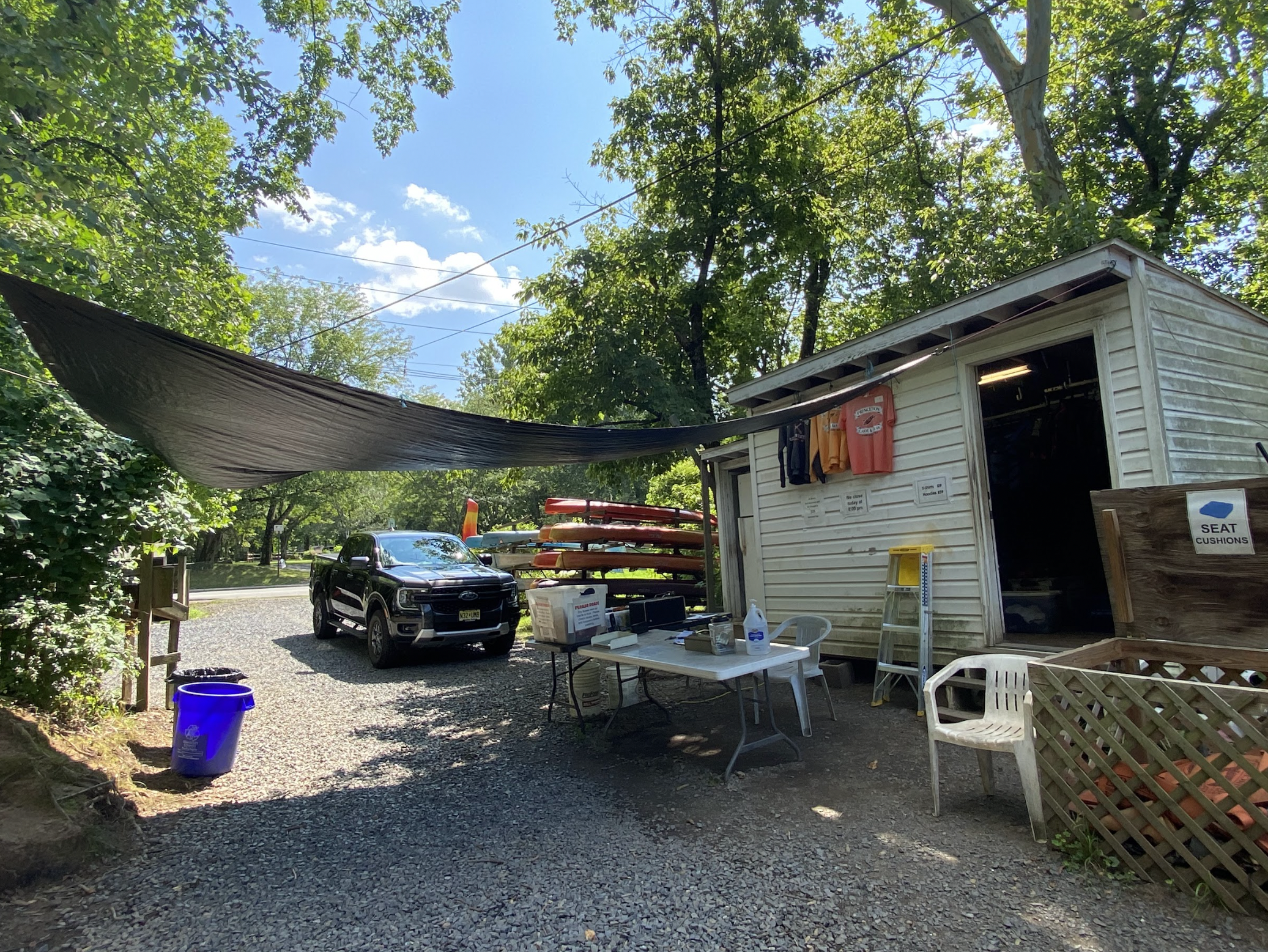
But the compassion in Princeton goes far beyond Palmer Square. Another option to enjoy the summer fun is to go kayaking and canoeing. Owned by Stephen Androsko, Princeton Canoe & Kayak Rental has been around for 32 years and is the perfect way to disconnect and see some turtles, which many say are the stars of the canal.

However, it is important to note that once, just once, an otter jumped into a canoe and bit its

riders.”[It’s important to] disconnect from all the different types of media and all the different types of distractions that people have, whether it’s work or family, and just to be able to go out and see nature and look at turtles and get the joy out of that,” Androsoko said.

During the COVID-19 pandemic, Princeton Canoe & Kayak Rental became a big attraction,

as there were few options to maintain social-distancing during outdoor activities. For many, it’s a community staple because of Androsko’s care for his customers. 

One woman lives near a kayak rental, but comes to Princeton Canoe & Kayak Rental because of the amenities they offer, from free dry boxes for phones and keys to laminated maps and seat cushions.

So whether it is Danielle Daab swaying along to her husband’s music at Palmer Square, the rows of camp chairs, or the beaming smiles of children, summer in Princeton isn’t just summer. It’s a time of togetherness. But beware of the otters when canoeing, they might just bite.

Beyond its Campus, Princeton Is So Much More

By JaeHa (Justin) K.

Between the smiles of couples munching on The Bent Spoon’s vanilla ice cream and groups of children playing cornhole stand three men. Each is colorfully adorned with his instrument: Erik Daab, the main vocalist, with his dark red electric guitar; Willbo Wright, with his blue bass; and Michael Castro on his mustard yellow drum kit. This is the Erik Daab Trio, who claim to be “not your average jazz band.” Under the bright evening sun, the trio makes smiles larger and brings laughter to Palmer Square in Princeton. 

Upon hearing “Princeton,” most people are instantly reminded of the prestigious Princeton University. However, there is so much more to Princeton than just its university; in fact, it’s a town that boasts its own culture, traditions, and ventures.

Palmer Square is a public park-like space at the heart of Princeton, featuring multiple restaurants, luxury stores such as Hermès and Rolex, and the centuries-old Nassau Inn. It’s filled with a sense of community, unity—and most of all, love. A family of four hosts a picnic on a blue-striped blanket with strawberry patterns, while behind them lies an elderly couple sitting in their blue-and-green Coleman chairs, holding hands. “We just want to create a lively atmosphere, a really cool outdoor environment to be in,” says Elizabeth Egan, the director of marketing of Palmer Square.

Egan works alongside Melissa Thompson to plan events at Palmer Square, including movie nights, annual Christmas tree lightings, and the Summer Music Series. Most recently, they hosted a movie night showing “Ratatouille,” which was chosen by Palmer Square’s Instagram followers. “We want them to see something that they’ve chosen and make them feel special and heard,” Thompson says. They are planning to host their next movie nights on August 1 and August 15. 

Their Christmas tree lighting, annually on Black Friday, is also a big hit. According to both Egan and Thompson, the lighting celebrations are “always very successful,” with thousands of individuals attending. Egan emphasized her efforts to follow Palmer Square’s own motto—that in everything they pursue, they always keep in mind that “just because it’s always been done a certain way doesn’t necessarily mean that it needs to continue,” highlighting her desires to continuously bring change and progress. 

At this year’s Summer Music Series, the Erik Daab Trio, who have performed at Palmer Square for nearly a decade, returned. The band formed after the COVID-19 pandemic and have gradually evolved since releasing their first, eponymous album. They are planning to release their second album in 2026. Princeton is a special place to perform for Erik Daab, the trio’s vocalist and leader. “I spent most of my life here… for about 40 years, so to play right in the center of Princeton, is absolutely fantastic,” says Daab. “Especially when we have a great crowd, everybody’s listening; it’s great [and] very rewarding.” During their mini-concert, the band covered many well-known hits such as Lil Nas X’s “Old Town Road” and Santana’s “Maria Maria.” The trio performs at Palmer Square about three to four times annually. 

On a recent July afternoon, the crowd seemed pleased to listen to the band at Palmer Square. “I was really into rock-and-roll when I was younger,” says Barry Cron, 89. “I’m only a year away from being 90 years old … [and] it’s amazing to have this kind of music, even under the very hot weather.” 

A little more than a mile away from Palmer Square lies the Princeton Canoe & Kayak Rental, a long-standing shop where visitors can rent canoes and kayaks throughout the year to float on Carnegie Lake. It’s a perfect place to relax with family, friends, and Mother Nature for an hour or two (or more!). Stephen Rosko, the owner of the shop, has managed the site for the last 32 years, after being introduced to the location by the previous owner. “It wasn’t something that I was actively seeking,” says Rosko, who admits that he now loves being “his own boss.” Rosko listed many absurd memories from owning the shop, including a time when beavers jumped onto customers’ boats at the lake. 

But most of all, Rosko finds it very rewarding to host a service for the Princeton community. “I love it just because I just like seeing, you know, kids excited, and seeing people laughing or bonding with their town and kids,” Rosko says. He especially finds delight when kids ask him questions about nature, and hopes more adolescents will be drawn to the outdoors instead of technology. 

Although Princeton boasts a plethora of cultures and activities, it’s lamentable to hear that most people—even Princeton University students—are unaware of just how much they can do across the town. Just by looking around, you can find something for everyone.

Still Spinning: 45 years of Princeton Record Exchange

By Michelle F.

Covered in a sporadically placed assortment of stickers, the windows of the Princeton Record Exchange sit patiently, waiting to see the reflection of its regular customers, sometimes up to twice a day. Situated in a quiet corner of downtown Princeton, the magnetic pull of the store can  be undeniably felt from blocks down Nassau street. For regulars, these welcoming walls contain a sanctuary for first dates, marriage proposals, and even wedding ceremonies. Since 1980, the store’s 3,800 square feet of over 100,000 vinyl records and CDs have been home to the widest imaginable variety of customers, stretching from locals to tourists. “People enjoy being there as an event. It’s like going bowling or getting a drink, it’s going to the record store. You put your dirty clothes on, you say hello to your favorite people. It’s real,” explains owner Jon Lambert.

Following the 2020 COVID pandemic, businesses all over the world took a hard hit, with over 700,000 establishments shutting down in the second quarter, according to the Federal Reserve. After re-opening for the first time since the pandemic, Lambert was greeted by a line of 40 masked, socially-distanced people that stretched “almost all the way down” the street,” he said. 

“Thank you so much for being here. Thank god you made it” were the first words Lambert heard after swinging ajar his stickered doors. When asked how he felt about the sight, Lambert explained he felt “relief, and happiness that maybe we could make it.” Lambert expressed that though he was still struggling financially after the closure, he held onto hope of the business recovering. But overcoming these strenuous obstacles only grew stronger connections between the customers and their safehouse. “It was nightmarish, but to watch the transition, and feel an increase in loyalty and an increase in appreciation for what we can offer to people, that’s really important. It’s really important to people, and I love that. It’s great to be able to [provide that].”

The town of Princeton is home to around 30,000 residents, with the entire population admittedly not being record collectors. Lambert explains that the exchange relies on the bigger community to keep business booming. “People that come to our place, everywhere they go, they talk about this wonderful store. One of my customers said he wouldn’t move. He needs that [record] fix. There’s people who regularly come from New York, Washington, Boston, and of course the tourists when they come to town.” On Nassau Street, the record store acts as an anchor. A place that people can trust and rely on. “It’s fun to be a part of the community. At this point, we have three generations of people shopping at [the Princeton] organizations.” elaborates Lambert.

The loyalty that customers have for Princeton Record Exchange is not one-sided. Lambert asserts he has a strong passion for customer service, reciprocating the same level of commitment by deliberately listening and responding to customer needs, a characteristic unique to the freedom that comes with owning an independent business. “I totally remodeled the store to make it more comfortable,” Lambert said. He emphasized that spending $30,000 to replace the air conditioning unit in the store wasn’t an easy decision, but it was worth it for the sake of his customers’ comfort. “When you’re independent, you can try things. You’re like, hey, let’s rearrange this section, let’s try incorporating soul and thumb. You can try things and see if they work or not, and then you can pivot. It’s fun not to be constrained.” As for the tight knit team, Lambert follows a thorough interview process, handpicking 17 employees, ensuring that the intentions of the people working for the store align with the passionate motives of Princeton Record Exchange. “You know what I care about? I care about people who can be warm and welcoming, who can look people in the eye, who want to make it an enjoyable experience for people in the store.”

The undeniable charm of Princeton Record Exchange fosters a sturdy sense of loyalty and commitment from both customers and merchants. On the quiet corner of Nassau, its stickered doors are always open. However, when visiting the establishment, it is important to follow Lambert’s strictly enforced policy. “In the store, no [playing] death metal,” he said. “We’re not here to piss people off.”