
By Alya M.
Sonder is the abstract feeling and realization that each person walks around with their own life just as complex and vivid as your own. Through Voices of Princeton, this abstract becomes real. Each story plays as a reminder of how deeply interconnected we really are even as we walk silently past each other.
The oral history initiative was a result of collaborations between the Princeton Public Library, the Historical Society of Princeton, the Arts Council of Princeton, and the Witherspoon-Jackson Historical and Cultural Society. The goal of the initiative is to collect, save, and store the stories of Princetonians. Princeton is a small town with a population of roughly 30,000, but it is made up of a diverse community with over 50 languages spoken. With the help of Voices of Princeton, all these different people are able to combine their experiences to create culture within the town, strengthening the community.
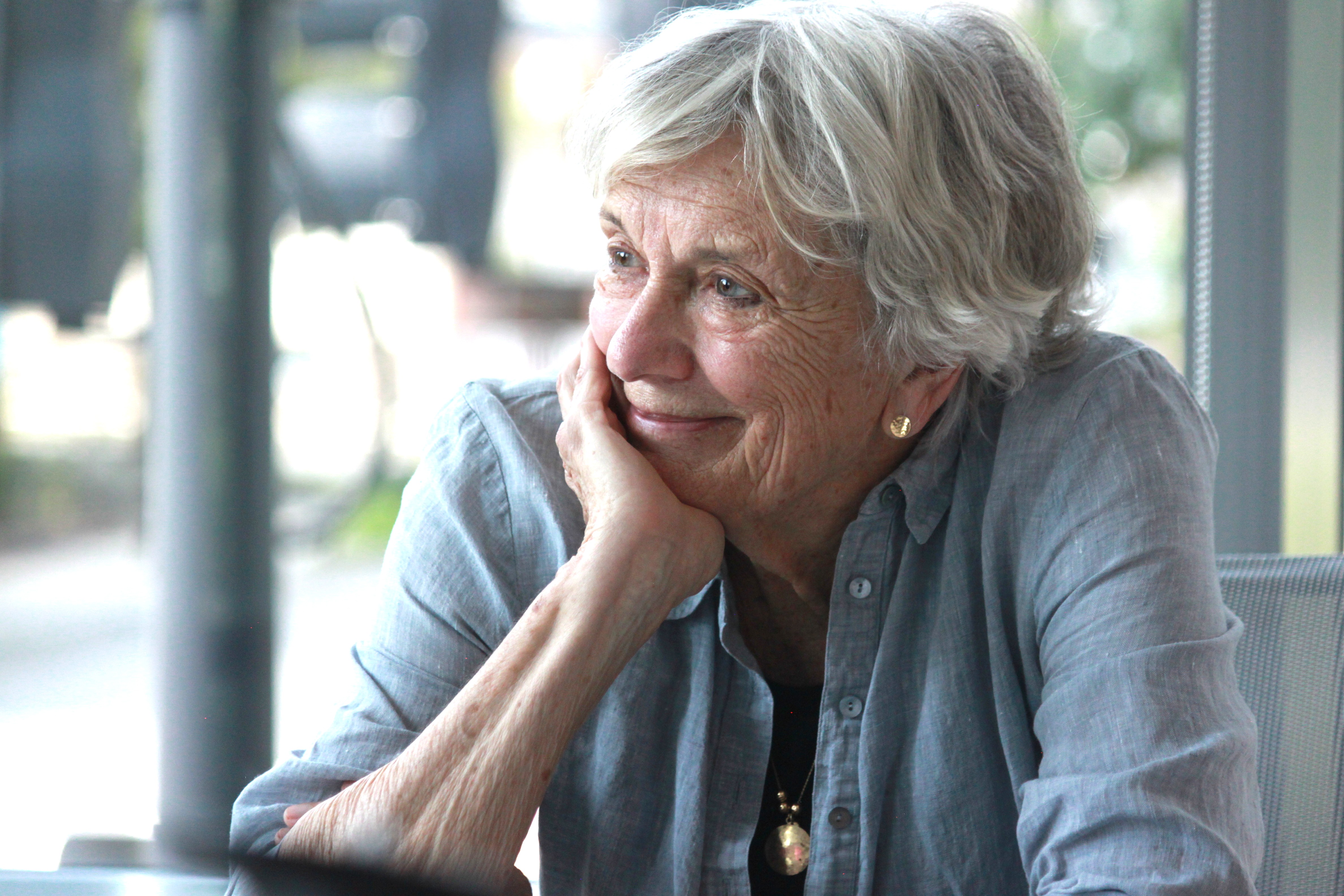
“When populations from really different backgrounds, different cultural histories, talk together, we become solidly supportive of each other,” said Pamela Wakefield, the inspiration behind Voices of Princeton. Wakefield went on to explain the importance of storytelling when it comes to building a more solid community by allowing people to see each other, not just for who they currently are, but also for who they’ve been and what they’ve experienced. Stories, she emphasized, help uncover the shared humanity beneath our differences, making space for empathy and deeper understanding. In a town like Princeton storytelling becomes not just a form of preservation, but a bridge that connects generations, cultures, and individuals who might otherwise remain strangers. Through Voices of Princeton, that bridge is being built one story at a time.
“I would say that if like in 20 years you have little kids and they say what would it have been like to live here, you can say, let’s listen,” Wakefield said. To her, storytelling is more than memory; it’s a gift we pass on.
Stephanie Schwartz, Curator of Collections and Research at the Historical Society of Princeton, also shared her thoughts on what oral history makes possible. “We’re collecting today for what will become the historic record tomorrow,” she said. Schwartz explained that these stories are valuable not just because of the content, but because of who is telling them and when: “It tells us as much about the person at the time they’re telling the story as it does about the stories they are telling.”
Not everyone feels their voice matters in the bigger picture. “Not everyone thinks their story belongs in history,” Schwartz added. “It’s our job to say: yes, it does.” Voices of Princeton makes that message clear. No one is too new, too quiet, or too ordinary to be remembered.
Cliff Robinson, Public Humanities Specialist at Princeton Public library, reflected that idea. “Just because you’ve been here for a short time doesn’t mean this isn’t your community or that you’re not responsible for it in some way,” he said. In a place like Princeton, where people move in and out often, that reminder matters. Everyone has a place. Everyone contributes to the larger story.
Robinson also spoke about how special it is that the stories are recorded in audio form. “I’ve always been enchanted by the fact that they’re just audio. It requires a different kind of attention—you can close your eyes and just listen.” That kind of listening, quiet and focused, builds a kind of connection.
Kim Dorman, Community Engagement Coordinator at the Princeton Public Library, added that accessibility is an important part of the project’s mission. “As a public library, we’re making these stories publicly available in a way that’s much more accessible than most oral history projects,” she said. That means anyone in the community or even outside of it can listen to it, learn and reflect.
Through Voices of Princeton, stories are no longer just something people keep to themselves untold, they become part of something stronger. The initiative is a reminder that history is not made only by the powerful and famous. It’s made by the same people we see everyday. Every person carries a story that matters.
In a town where diversity lives on every block, storytelling becomes not just a form of preservation but a bridge that connects generations, cultures and individuals who might otherwise remain strangers. Through Voices of Princeton, that bridge is built one story at a time.
 The Princeton Summer Journal