
Tag Archives: psjp 2025

How Undocumented Students Experience College

By Tahia F.

The Trump administration’s crackdown on illegal immigration affects millions of immigrants, including the 408,000 undocumented students at American colleges and universities. A.H., who requested to be anonymous, is a student at City University of New York, and Gabriela, who attends a university in Oregon, are just two of the many undocumented students who share this struggle. Their experiences paint a bigger picture about the association between immigration status and education in the United States.

Gabriela’s family uprooted themselves from Guatemala and moved to a majority-Hispanic neighborhood in Maryland when she was 13. She missed the leisure of playing soccer outside without fear of deportation. “I loved going next door and sitting there for hours until my mom picked me up, or playing with the kids in the neighborhood,” Gabriela says of her hometown in Guatemala. “I used to play on the dirt without shoes on. The football balls were made out of plastic, just plastic with air.” 

In Maryland, she was surrounded by Spanish speakers, but having no prior English education, she was placed in specialized classes for English language learners.

The language barrier was just one of many obstacles in her path. But with the odds against her, Gabriela knew her dream was to help people in any way possible. This dream led her to take an interest in becoming a surgeon, however she ultimately decided against it. “You cannot ask for loans, you cannot ask for aid,” Gabriela said. “Most of the scholarships require status.” Ultimately, she was forced to reshape her dream, which led to her newfound interest in social work. 

On the other side of the country resides A.H, a biochemistry major from Bangladesh. A.H. came to the U.S. unexpectedly five years ago with her two older siblings, leaving their parents behind. She planned to apply for asylum but that turned out not to be possible. “I was told I would be documented,” she says, “but that wasn’t the case.” 

Similar to Gabriela, A.H. didn’t experience much cultural shock after moving to the U.S. The bustling city of New York reminded her a lot of her home in Dhaka. Her fluency in English and the rigorous education she received in Bangladesh’s school system helped her thrive in U.S. schools.

While both A.H. and Gabriela are striving to achieve their goals, they remain uncertain about their futures. Things for each of these students — financial stability, physical safety, job security — can change in an instant.

“Every year when I have to do the FAFSA it is scary,” Gabriela says, referring to the inconsistency of financial aid. “Okay, if this is the amount I have to pay then I am not continuing my education.”

A.H. agreed. “It’s kind of hard for me to envision a job job because I’m undocumented,” she says.

A.H., who is able to attend college with the support of a generous scholarship, hasn’t been deterred from pursuing her initial career choice: becoming a professor. It is more than just a personal goal. “The reason that we don’t feel seen is the reason that we try,” she says. “Where is a Bengali career woman? I think a lack of representation is a motivator for me.”

A.H. shows this dedication by volunteering with various political movements, including Desis Rising Up and Moving, one of the first groups to support New York City Democratic mayoral nominee Zohran Mamdani. 

Gabriela, too, expressed a desire to help others. “I know that I have the potential to help people, I have always helped people and I want to work with them. I know that I could be an inspiration to the students,” she says. “I have that mentality that other people are looking up to me.”

Both students dedicate their time to support others in spite of the lack of support they receive themselves.  “There’s no guarantee,” A.H. says. “If ICE shows up on campus, there could be a collateral arrest.”

The constant threat of deportation and loss of financial resources has taken a toll on both Gabriela’s and A.H.’s mental health.

“I don’t get any mental health resources or [support from my class],” Gabriela says. “When the presidential election was going on, it was a time when I really needed support. There were no ways for me to stay on campus.”

A.H. expressed similar concerns. “There is a lack of understanding on how faculty can support students. I’m tired of therapy circles, I need actual organizing efforts,” she says.

Despite the hurdles, Gabriela and A.H exemplify the courage, perseverance, and resilience it takes for undocumented students to succeed. Undocumented people are more than just statistics. By continuing to pursue their dreams in a system that works against them, they challenge narratives that reduce them to numbers.

Gabriela and A.H. are just one part of a larger story, as undocumented students continue to rise above intolerant policies to keep learning and accomplishing their dreams.
Summer Fun in Princeton

By Zahra A.

With their sandals and drinks to the side and their beaming smiles on full display, a family of four sits in the middle row. The parents sit in camp chairs, enjoying live music as their two kids, one daughter and one son, read comics on a picnic blanket.

This is what a typical week-end afternoon at Palmer Square looks like during the Summer Music Series, which kicks off in June and continues through August. The small series began after the COVID-19 pandemic, when the larger festivals they used to host were no longer appropriate.

Palmer Square events are free and coordinated by Palmer Square Management LLC, a property management company that owns real estate in the heart of Princeton. Director of Marketing Elizabeth Egan organizes the events, which range from a tree lighting during Christmas time to movie nights to outdoor concerts and arts showcases. Along with all the fun, the main goal of the events is to promote a sense of togetherness.

“We’re looking to bring people to town and make things flourish, and there’s nothing better than seeing a packed square, of course,” Egan said. She saw how community members came together to shop at small stores during the COVID-19 pandemic. “What are we doing if not giving back to them?” she said. “And that’s our mentality as we move forward.”

Community mutual aid happens in many ways, but the promotion of local artists doesn’t normally get a lot of attention. Those artists include the Erik Daab Trio, a local band started after 2020 when Erik Daab, the lead guitarist, started making music with Wilbo Wright, the bassist, and Michael Castro, the drummer. The band has played at Palmer Square four times a year for the past three years, but it’s more than just a gig for them.

“It’s just rewarding to know that people like what we do and that we could give back to the community, because this is the community I grew up in,” Erik Daab said.

The Trio intentionally cultivates a relaxing and family friendly atmosphere, aiming for the audience to be able to make themselves part of the music. They avoid singing lyrics so no one has to worry about their kids hearing a bad word. 

“You can play the words on the guitar,” Daab likes to say. While Castro drums, he closes his eyes and in between every song, Daab tells a little joke. The calming nature of their music seems to come from their attitude towards it.

“There’s no wrong notes for us. If you play something that sounds crazy, you’ll think ‘Oh, was that crazy or was that cool?,” Daab said. “Also, if youdo it twice, it becomes a [thing],” said Castro.

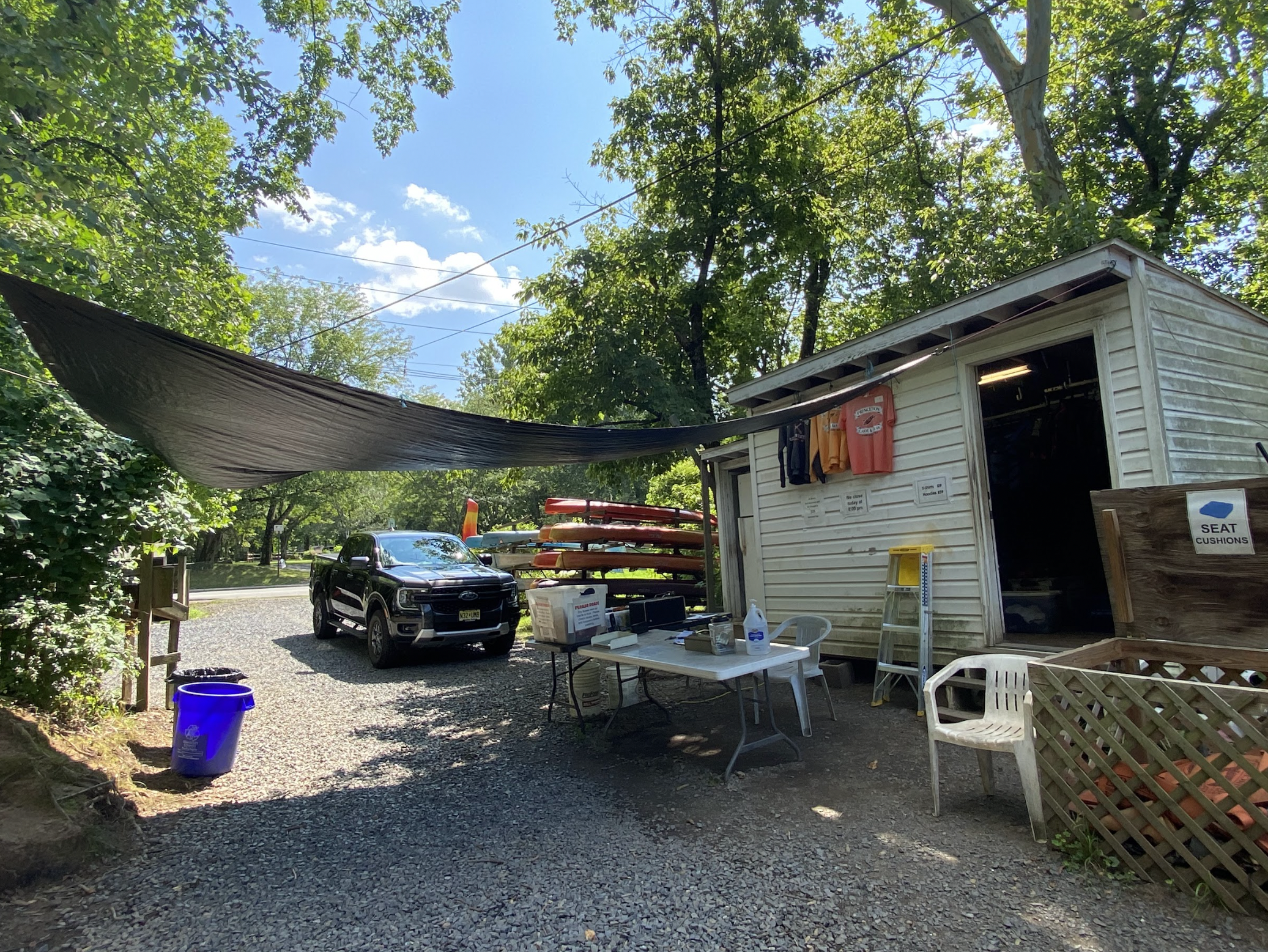
But the compassion in Princeton goes far beyond Palmer Square. Another option to enjoy the summer fun is to go kayaking and canoeing. Owned by Stephen Androsko, Princeton Canoe & Kayak Rental has been around for 32 years and is the perfect way to disconnect and see some turtles, which many say are the stars of the canal.

However, it is important to note that once, just once, an otter jumped into a canoe and bit its

riders.”[It’s important to] disconnect from all the different types of media and all the different types of distractions that people have, whether it’s work or family, and just to be able to go out and see nature and look at turtles and get the joy out of that,” Androsoko said.

During the COVID-19 pandemic, Princeton Canoe & Kayak Rental became a big attraction,

as there were few options to maintain social-distancing during outdoor activities. For many, it’s a community staple because of Androsko’s care for his customers. 

One woman lives near a kayak rental, but comes to Princeton Canoe & Kayak Rental because of the amenities they offer, from free dry boxes for phones and keys to laminated maps and seat cushions.

So whether it is Danielle Daab swaying along to her husband’s music at Palmer Square, the rows of camp chairs, or the beaming smiles of children, summer in Princeton isn’t just summer. It’s a time of togetherness. But beware of the otters when canoeing, they might just bite.

Beyond its Campus, Princeton Is So Much More

By JaeHa (Justin) K.

Between the smiles of couples munching on The Bent Spoon’s vanilla ice cream and groups of children playing cornhole stand three men. Each is colorfully adorned with his instrument: Erik Daab, the main vocalist, with his dark red electric guitar; Willbo Wright, with his blue bass; and Michael Castro on his mustard yellow drum kit. This is the Erik Daab Trio, who claim to be “not your average jazz band.” Under the bright evening sun, the trio makes smiles larger and brings laughter to Palmer Square in Princeton. 

Upon hearing “Princeton,” most people are instantly reminded of the prestigious Princeton University. However, there is so much more to Princeton than just its university; in fact, it’s a town that boasts its own culture, traditions, and ventures.

Palmer Square is a public park-like space at the heart of Princeton, featuring multiple restaurants, luxury stores such as Hermès and Rolex, and the centuries-old Nassau Inn. It’s filled with a sense of community, unity—and most of all, love. A family of four hosts a picnic on a blue-striped blanket with strawberry patterns, while behind them lies an elderly couple sitting in their blue-and-green Coleman chairs, holding hands. “We just want to create a lively atmosphere, a really cool outdoor environment to be in,” says Elizabeth Egan, the director of marketing of Palmer Square.

Egan works alongside Melissa Thompson to plan events at Palmer Square, including movie nights, annual Christmas tree lightings, and the Summer Music Series. Most recently, they hosted a movie night showing “Ratatouille,” which was chosen by Palmer Square’s Instagram followers. “We want them to see something that they’ve chosen and make them feel special and heard,” Thompson says. They are planning to host their next movie nights on August 1 and August 15. 

Their Christmas tree lighting, annually on Black Friday, is also a big hit. According to both Egan and Thompson, the lighting celebrations are “always very successful,” with thousands of individuals attending. Egan emphasized her efforts to follow Palmer Square’s own motto—that in everything they pursue, they always keep in mind that “just because it’s always been done a certain way doesn’t necessarily mean that it needs to continue,” highlighting her desires to continuously bring change and progress. 

At this year’s Summer Music Series, the Erik Daab Trio, who have performed at Palmer Square for nearly a decade, returned. The band formed after the COVID-19 pandemic and have gradually evolved since releasing their first, eponymous album. They are planning to release their second album in 2026. Princeton is a special place to perform for Erik Daab, the trio’s vocalist and leader. “I spent most of my life here… for about 40 years, so to play right in the center of Princeton, is absolutely fantastic,” says Daab. “Especially when we have a great crowd, everybody’s listening; it’s great [and] very rewarding.” During their mini-concert, the band covered many well-known hits such as Lil Nas X’s “Old Town Road” and Santana’s “Maria Maria.” The trio performs at Palmer Square about three to four times annually. 

On a recent July afternoon, the crowd seemed pleased to listen to the band at Palmer Square. “I was really into rock-and-roll when I was younger,” says Barry Cron, 89. “I’m only a year away from being 90 years old … [and] it’s amazing to have this kind of music, even under the very hot weather.” 

A little more than a mile away from Palmer Square lies the Princeton Canoe & Kayak Rental, a long-standing shop where visitors can rent canoes and kayaks throughout the year to float on Carnegie Lake. It’s a perfect place to relax with family, friends, and Mother Nature for an hour or two (or more!). Stephen Rosko, the owner of the shop, has managed the site for the last 32 years, after being introduced to the location by the previous owner. “It wasn’t something that I was actively seeking,” says Rosko, who admits that he now loves being “his own boss.” Rosko listed many absurd memories from owning the shop, including a time when beavers jumped onto customers’ boats at the lake. 

But most of all, Rosko finds it very rewarding to host a service for the Princeton community. “I love it just because I just like seeing, you know, kids excited, and seeing people laughing or bonding with their town and kids,” Rosko says. He especially finds delight when kids ask him questions about nature, and hopes more adolescents will be drawn to the outdoors instead of technology. 

Although Princeton boasts a plethora of cultures and activities, it’s lamentable to hear that most people—even Princeton University students—are unaware of just how much they can do across the town. Just by looking around, you can find something for everyone.

Still Spinning: 45 years of Princeton Record Exchange

By Michelle F.

Covered in a sporadically placed assortment of stickers, the windows of the Princeton Record Exchange sit patiently, waiting to see the reflection of its regular customers, sometimes up to twice a day. Situated in a quiet corner of downtown Princeton, the magnetic pull of the store can  be undeniably felt from blocks down Nassau street. For regulars, these welcoming walls contain a sanctuary for first dates, marriage proposals, and even wedding ceremonies. Since 1980, the store’s 3,800 square feet of over 100,000 vinyl records and CDs have been home to the widest imaginable variety of customers, stretching from locals to tourists. “People enjoy being there as an event. It’s like going bowling or getting a drink, it’s going to the record store. You put your dirty clothes on, you say hello to your favorite people. It’s real,” explains owner Jon Lambert.

Following the 2020 COVID pandemic, businesses all over the world took a hard hit, with over 700,000 establishments shutting down in the second quarter, according to the Federal Reserve. After re-opening for the first time since the pandemic, Lambert was greeted by a line of 40 masked, socially-distanced people that stretched “almost all the way down” the street,” he said. 

“Thank you so much for being here. Thank god you made it” were the first words Lambert heard after swinging ajar his stickered doors. When asked how he felt about the sight, Lambert explained he felt “relief, and happiness that maybe we could make it.” Lambert expressed that though he was still struggling financially after the closure, he held onto hope of the business recovering. But overcoming these strenuous obstacles only grew stronger connections between the customers and their safehouse. “It was nightmarish, but to watch the transition, and feel an increase in loyalty and an increase in appreciation for what we can offer to people, that’s really important. It’s really important to people, and I love that. It’s great to be able to [provide that].”

The town of Princeton is home to around 30,000 residents, with the entire population admittedly not being record collectors. Lambert explains that the exchange relies on the bigger community to keep business booming. “People that come to our place, everywhere they go, they talk about this wonderful store. One of my customers said he wouldn’t move. He needs that [record] fix. There’s people who regularly come from New York, Washington, Boston, and of course the tourists when they come to town.” On Nassau Street, the record store acts as an anchor. A place that people can trust and rely on. “It’s fun to be a part of the community. At this point, we have three generations of people shopping at [the Princeton] organizations.” elaborates Lambert.

The loyalty that customers have for Princeton Record Exchange is not one-sided. Lambert asserts he has a strong passion for customer service, reciprocating the same level of commitment by deliberately listening and responding to customer needs, a characteristic unique to the freedom that comes with owning an independent business. “I totally remodeled the store to make it more comfortable,” Lambert said. He emphasized that spending $30,000 to replace the air conditioning unit in the store wasn’t an easy decision, but it was worth it for the sake of his customers’ comfort. “When you’re independent, you can try things. You’re like, hey, let’s rearrange this section, let’s try incorporating soul and thumb. You can try things and see if they work or not, and then you can pivot. It’s fun not to be constrained.” As for the tight knit team, Lambert follows a thorough interview process, handpicking 17 employees, ensuring that the intentions of the people working for the store align with the passionate motives of Princeton Record Exchange. “You know what I care about? I care about people who can be warm and welcoming, who can look people in the eye, who want to make it an enjoyable experience for people in the store.”

The undeniable charm of Princeton Record Exchange fosters a sturdy sense of loyalty and commitment from both customers and merchants. On the quiet corner of Nassau, its stickered doors are always open. However, when visiting the establishment, it is important to follow Lambert’s strictly enforced policy. “In the store, no [playing] death metal,” he said. “We’re not here to piss people off.”

People over Profit at the Princeton Record Exchange

By Sosena T.

Refreshing, gentle, welcoming. After leaving the uncomfortable heat of Princeton, New Jersey, and stepping into the conditioned air of the Princeton Record Exchange, you can’t help but feel all of these things. That also extends to how Jon Lambert approaches every aspect of his craft, running the famous record store — from the way he buys records to the weddings that take place in the store to the healthcare he covers for his employees. 

After sitting down with Lambert, he expressed a sense of responsibility to repair the previously broken AC unit, even though it would require $11,000. Money that could’ve been used, he wished, for buying new records — a way to increase profits. But he couldn’t let his customers or his community lose their haven from the scorching temperatures. Lambert serves the Princeton area through the passionate work he does at his store. He’ll pay any price if that means people of all backgrounds feel comfortable in the Princeton Record Exchange.

Throughout the sit-down interview, the local music enthusiast opened up gradually about his passions. When asked about his workers and work environment, he lit up with excitement, a glimpse into his motivation for continuing the work he does. 

In some ways, small businesses bear the same financial expectations as large corporations but operate on smaller capital. On top of rent, cash-flow management, and taxes, Lambert provides health insurance to all 17 of his workers, in addition to the fair wages he pays them. To him, these people aren’t just minds and hands that make his business succeed — they’re family. “Hey, you pay them fair, you treat them fair, and maybe you make a little less money, and you spread that around so that people can be human,” he says.  

Human. It’s something we all are, but sometimes the idea gets muddled in the business world. However, Lambert makes the value of human life central to his work. This isn’t a strategy to attract customers but a genuine reflection of his character. Lambert shared a personal memory from 2020, the hardest year for small businesses. The pandemic didn’t single out who it affected: Young or old, poor or rich, it impacted everyone. COVID-19 affected both large and small companies, but to different degrees. After informing us that the Princeton Record Exchange was forced to shut down, he took a deep breath before continuing. The lack of cash flow forced Lambert to lay off his entire staff. Without their workplace and amid a global crisis, especially for Lambert—whose core principles include “courtesy and respect and kindness” — this was profoundly difficult. Despite these hardships, he stayed true to his values by continuing to pay for his employees’ health care for as long as he could after they were laid off. For nearly everyone, one major concern during the pandemic was access to healthcare. While Lambert couldn’t keep the store open, he made sure no one who helped make his business special was left alone in a nightmare.

Several days after my interview with Lambert, a press conference was held with Mayor Mark Freda of Princeton City. Sitting in the makeshift briefing room, I kept in mind the noble character of the owner of 20 S Tulane St, Princeton, NJ, and decided to ask about policies that support local small businesses, such as the city’s “music fairy-godfather.” Mayor Freda responded with enthusiasm, proud to highlight major contributors to Princeton’s community and economy. He mentioned the special improvement districts (SIDs) and how they benefit the city, noting that businesses make up 20 percent of the tax base, which helps reduce the tax burden on homeowners, a critical issue in the state. This shows how diverse and supportive local businesses can be for their community.

Overall, it’s safe to say that owning an independent business has clear challenges, like the absence of corporate funding, but are those trade-offs worth it? For Lambert, the answer will always be yes.

Building Relationships at the Farmers Market

By Jace L.

Gabriel Siciliano is a farm owner who grows fresh produce to sell at farmers markets. His farm is named after his great-grandfather, Abraham Feldsher, who was a Jewish immigrant from Russia. Feldsher fled to the United States in the 1800s because he couldn’t own land in Russia as a Jew. He eventually bought farmland, which was his dream, in Hightstown, New Jersey. Sicilicano now runs the family farm with his mom’s help (plus her dog) to keep his great-grandfather’s memory and efforts alive. 

Siciliano is passionate about his work and how it affects not only his customers, but the world as a whole. Farmers markets are a great way to get fresh produce at a decent price, Siciliano says: “We try and price everything so that we’re still able to stay solvent and stay in business, but we’re able to have folks who may not have quite as much money have access to our produce.” Siciliano believes that as inflation increases, farmers markets are seeming to get more business because they don’t have excess fees such as the ones that are added to the price at a grocery store. Some of these fees are resale and transportation fees, which customers don’t have to deal with when they’re buying straight from the source. 

With the Trump administration proposing a nearly $7 billion reduction in the budget of the United States Department of Agriculture, people like Siciliano rely on customers to keep the farm afloat. “When I go to a farmers market, the customer that I’m looking for is not necessarily someone who’s going to come and spend $100 and I never see them again,” he says. “I’m looking for someone who’s going to come spend $20 every single week for the whole season. And it’s that kind of reliable cash flow that we look for.” Siciliano says that he tries to get to know regulars to show that he cares about who they are as people. 

Siciliano took the time to get to know some of his customers and he found that some were immigrants. “The men, the women, and the other folks who I’ve worked with over the years, you know, whether they’re documented, whether they’re undocumented — are some of the kindest, most hard-working people I’ve ever met and I haven’t heard from a number of these people in quite some time,” he says. He expressed he’s concerned for their safety due to the new immigration policies being put into place by the Trump administration. He considers his regular customers his community and it is tough for him to see harm come to the people he’s grown fond of over time. 

From the customer’s perspective, getting to know the person who sells them cheaper and healthier food is beneficial. They can get any questions they have about quality answered right there through the vendor of the product. They can gain a sense of just how much thought and care is put into the food they’re buying as well. They gain a sense of trust with the vendors that carries into transactions. Trust can lead to friendships such as the ones Siciliano has mentioned. 

One customer, Emma Eisenveil, recognizes vendors from her area at different markets, including Terhune Orchards. Terhune Orchards sells a variety of fresh produce such as fruits and vegetables, but they are also a winery. “I visit there kind of frequently,” she says. Some customers at the farmers market were asked if they had a favorite vendor or two. “Inside the Columbus Farmer Market there is a toy store,” Leia Acosta says. “I think that’s one of the nicest memories I’ve had because the woman was very sweet to me— she still is.”Acosta explained that when she was growing up, her dad would give her a little bit of money to spend at this toy store almost every weekend. “I saw that as my Toys R Us,” she says. It was clear that she thought of this vendor as a significant part of her childhood. 

Building a space of familiarity can be important for both vendors and customers, several people at the farmers market said. Trusting someone enough to buy groceries from them creates a bond. Being close to a vendor doesn’t necessarily mean knowing how many pets they have, who their uncle is, or being invited to a family wedding. But, for regular customers, it’s still nice to know something about the person who is putting food on their table. 

The Debate of Meritocracy

By Ipichiesimhe I. and Michelle F.

In America, does success derive from hard work, or merely connections and loyalty? Are leadership positions handed out like Costco freebies to the elites or can years of education and passion earn you prestigious responsibility? 

Citizens on the streets of Princeton, New Jersey were asked their views regarding the debate over whether the United States is a meritocracy.

It is clear that the public’s view is divided; some think that the country does a good job awarding people the outcomes they deserve, while others believe it is unfair how hard work is rewarded.

“If I’m honest, maybe I’m a little cynical,” says New Jerseyan Vanyah Harrigan when asked how she feels about the way merit is valued in leadership roles of the U.S. 

“I immediately think of the president’s office, right?” Harrigan says, noting what candidates should be expected to do to succeed but aren’t doing now. “You have to go to really difficult places to earn it. If you want to run for the highest office, that should be an expectation.”

Samuel Makino, a former Marine, shared his views on the changes he observed since he left the military. “For me, having guys who I served with that had the qualification to save lives, and for the leadership position [we relied on] the people in government—now, it’s a complete joke,” Makino says. “You need to have competent people in leadership, which unfortunately right now, we don’t have.”

But another man, who chose to be referred to as Mero, disagreed, saying he believes meritocracy does exist in politics. “There were elections and apparently merit is coming back,” he said.

Mandy Duffy, a tourist from the United Kingdom visiting Princeton with her children, said that the U.S. is not truly where it wants to be. “My understanding is that the U.S. is already a meritocracy society, well, at least in theory. In practice, it could be something different.