
Category Archives: Features

How Can We Mitigate Bias In AI?

By Mahbuba Sumiya

Detroit, Mich.

Facial recognition software—used by millions—doesn’t properly identify people of color. This technology was meant to provide accurate results, but alarmingly, “nearly 40 percent of the false matches by Amazon’s tool … involved people of color,” according to Queenie Wong, a staff reporter for CNET News. Amazon’s face-ID system recognized Oprah as male, wrongly matched 28 members of Congress to a mugshot database, and detected a Brown University student as a Sri Lanka bombing suspect.

Algorithms are learning to adapt to society’s stance on racial biases. They’re programmed and trained by showing millions of human pictures; however, if the algorithms are trained with only white faces, they won’t be able to recognize any other types of faces. Artificial intelligence (AI) can only be smart if they are trained with fair data. If an AI is trained with millions of faces that are people of color, then it would not have a hard time recognizing those faces accurately.

Joy Buolamwini, founder of the Algorithmic Justice League, researches the social implication of artificial intelligence, and recognized the biases that companies like Microsoft, IBM, and Amazon have in place for AI services. While at MIT as an undergraduate, Buolamwini tried out an algorithm called Coded Gaze as part of an assignment. She learned that the system recognized her light-skinned friend’s face better than her own. When Buolamwini put on a white face mask, it was able to detect her face.

Racism exists in computer algorithms because of individual values. If people did not care about how the person next to them looked, racism would not still be America’s biggest problem. People being wrongly arrested because of false detection is not ethical. If people are fighting for justice, they must fight for justice in everything. Racial justice must equal algorithm justice.

Plus, even if algorithms are trained with antiracist databases, accuracy continues to be an issue. The National Institute of Standards and Technology (NIST) stated in May 2020 that Asians and African Americans had false positive rates even when they programmed computers with 8.49 million faces. Will AI ever be fair to people of color?

Growing up in a generation where algorithms are becoming more and more prevalent, it’s hard to recognize machine bias—a problem that will continue to amplify inequality in future generations, if left unchecked. We must train AI to be fair and neutral. But with the current state of the field, this may prove difficult. Computer science tends to attract more men than women—only about 25 percent of computer scientists in the United States are women. Minority racial groups are also not represented equally in tech industries. Having more diverse points of views in this field can prevent us from training computers with biased data. In society, a woman might be associated with teaching, childcare, or nursing, but we should not use these existing societal assumptions when building an algorithm.

Luckily, some businesses are taking small steps to measure and minimize bias, including IBM’s Fairness 360 (an open source allowing developers to examine, report, and mitigate bias within the machine learning model), according to Macy Bayern, as associate staff writer for TechRepublic.

After all, the only way we can eventually move forward with AI fairly is by allowing diverse people to be engaged with tech industries.

Asians Face Growing Racism

nicholas wu sjpNicholas Wu (l.), a reporter with USA Today, was accosted while running on the National Mall.

By Stephen Kim

Los Angeles, Calif.

Nicholas Wu was on a morning run on the National Mall when a woman started shouting at him. “Stay away, stay away, stay away,” Wu recalled her yelling. But when a
white person ran by her—much closer than Wu had—she made no similar comments.

These days, Wu said, he gets weird looks and people moving away on the subway. Other Asian Americans have experienced even worse treatment amid the COVID-19 pandemic: physical altercations, racist slurs, and other racially motivated, hateful incidents.

“COVID has acted as an accelerant on existing inequities in American life,” said Wu, a 24-year-old congressional reporter for USA Today. He attributes it to the “forever foreigner” phenomenon: Even if Asian Americans were born in the United States, they will always be considered an “other,” a foreigner, in this country. No matter the hard work they may do, the amazing accomplishments and successes they may achieve, Asians in this country will never be identified as “real Americans.”

Growing up in Grosse Pointe, Michigan, a suburb of Detroit, Wu was one of few Asians in a predominantly white part of town. “Teach us kung fu,” kids would say to him. They chanted “ching chong ching ling” when imitating speaking Mandarin. Wu was even asked if he was adopted because the only other Asian kids his classmates knew were adopted into white families.

Racism against Asians in both explicit and implicit forms has been present in this country ever since the first Chinese immigrants came across the Pacific to build the
railroads.

Mos Neammanee commutes to class at Rutgers by public transportation. But in the wake of COVID-19, he has sensed a difference in the treatment from fellow students. As he entered the bus, and tried to find a seat on his way to class, he overheard a fellow pas-
senger saying, “Why are they letting these people into the country?” People routinely seemed uncomfortable with the presence of Neammanee on public transport, he says.

He chuckled as he recounted these memories in a Zoom call, but he acknowledges that they put great strain on him. Neammanee is an active member of an organization called RAISE that advocates for young Asians who are undocumented and trying to apply for DACA status, and a DACA recipient himself. When he encounters people like the man on the bus on his way to school, it adds additional insecurity and anxiety on top of his undocumented status, which has been the subject of controversy under the Trump administration.

Twenty-three-year-old community organizer Audrey Pan works with Neammanee at RAISE. While Pan said she doesn’t experience explicit racism, she does feel “hyper-visible,” she said. She experiences the “feeling of people watching” when she goes outside. If she wears a face mask, people stare at her. If she doesn’t, the same thing
happens.

Pan agreed that the “accelerant” of COVID-19 has accentuated the feeling of otherness experienced by Asian Americans.

Students Face Abrupt Trips Home After Virus Strikes

By Lia Opperman

Galloway, N.J.

Over the past five months, COVID-19 has disrupted millions of American lives. But college students were hit especially hard: They were forced to rush out of their dorms and adapt to a new, virtual experience. Low-income students, even those at Harvard University, scrambled to find affordable flights, housing, and storage with little notice.

On March 10, Ryan Morillo, a Harvard freshman and Princeton Summer
Journalism Program alum, was about to walk to class when he received the email
that brought his short-lived time on campus to a halt. Harvard was canceling in-
person classes. “Everything was kind of rushed,” he said. “We were kicked out
on a Tuesday, and they said that by Sunday, everybody had to leave.”

Harvard’s spring break was scheduled a week after in-person classes were canceled, so Morillo already had a flight booked home to Miami. He still felt that the university’s last-minute message was irresponsible. “It was very abrupt the way they did it. And it was just kind of scary.”

Daniel Lobo, president of the group First Generation Harvard Alumni, said that the pandemic has put campus inequalities in sharp relief. “This whole experience is just a
reminder that low-income students don’t have as many resources and the form of disposable income to get through this sort of crisis,” he said.

In response to the Harvard campus emptying out, the group launched a relief grant program for low-income, first-generation undergraduates. Lobo realized that many
students didn’t have a safe home to go to and needed alternate accommodations. He also knew that some needed to store their belongings, but couldn’t afford to pay for storage.

“We had alumni volunteering to open up their homes to students to let them stay with them until they could figure out more permanent accommodations,” he said.

Eventually, the university began providing students with storage, boxes, and alternate lodging, arranging for some to remain on campus if they had no other option.

“The school was generous enough to cover the cost of storage,” Morillo said. “They took care of a lot of expenses and then eventually gave the students a partial refund on room and board [and] tuition.”

For the fall, Morillo has decided to accept a $5,000 stipend that Harvard is offering to students who choose not to move back to campus in the fall.

“To me, as a very low-income student, it’s a lot of money,” he said. “It kind of incentivizes me to stay home, even though that’s really damaging to education.”

As Virus Rages, Essential Workers Seek Protection

willy solis essential workersWilly Solis has spearheaded the Gig Workers Collective, which seeks to organize Shipt, Instacart, Lyft, and other gig platforms.
By Brianne LaBare

Orlando, Fla.

Every morning, Willy Solis, a worker for Target’s Shipt delivery app, wipes down his dashboard and steering wheel with disinfectant wipes and slips on his gloves and mask, which he bought himself.

Then Solis drives to the grocery store, discards his used gloves in a garbage bag, and heads inside to begin filling orders.

At a time when essential workers are going above and beyond to serve the public, Solis can’t help but think about the hardships working for Shipt has brought upon him. Or the trash bag of used gloves sitting in his backseat.

Because of this, Solis has spearheaded the Gig Workers Collective, which includes workers for Shipt, Instacart, Lyft, and other gig platforms. Their main demand is that corporations provide personal protective equipment, such as masks and gloves, to help keep them safe.

“The major thing that shoppers try to do is make sure that they wear the proper PPE and have it at all times,” Solis said. “We have been providing that for ourselves for the most part during the pandemic, and a large majority of shoppers do express concern about spreading it to customers or to their families. That’s a major concern for us.”

In a statement to The Princeton Summer Journal, a Shipt spokesperson disputed this, saying shoppers can pick up face masks and gloves from their local Target store for free.

Concerns about safety span many essential jobs. Ada Fuentes is a senior membership organizer from Jobs with Justice, a nonprofit that advocates for worker rights. She
said Uber drivers were informed via email that they would get PPE. But many drivers were unable to access the equipment because Uber’s in-person driver help centers were closed due to the pandemic.

Uber said in a statement that drivers could request masks and sanitizer by mail or pick them up at reopened Greenlight Hubs. The company added that it had distributed more than 9 million masks, wipes, and containers of hand sanitizer, and that it had “never run
out of supplies.”

Still, through social media coverage, blog posts, and advocacy efforts, stories about mis-
treated essential workers abound. Solis of the Gig Workers Collective said that, during the pandemic, Shipt even made a temporary pay cut permanent. (The company said that, under its “updated pay model,” shopper base pay in most metro areas has remained the same, or even increased.)

“The CEOs of these companies are definitely not the ones out there doing this job on a daily basis and exposing themselves and their families to this,” Solis said. As for their treatment of the people who are: “to put it bluntly, it’s despicable.”

Program Builds Racial Literacy

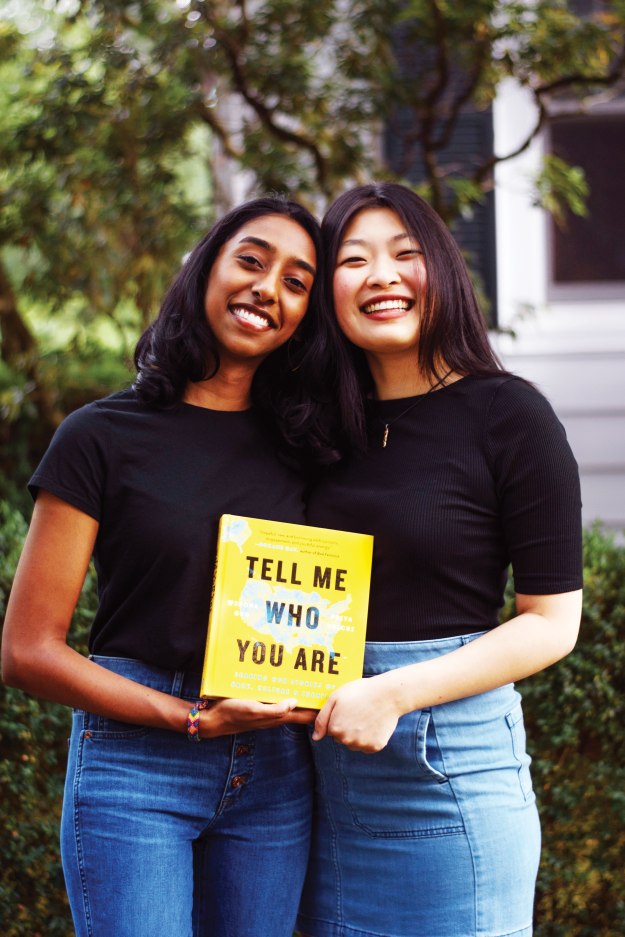
Choose-hand-out-Credit-Brenna-Kennedy-Moore.jpg

Priya Vulchi (left) and Winona Guo co-founded CHOOSE, which aims to build racial literacy among students. Photo credit: Brenna Kennedy-Moore

By Nellie Ghosheh and Yelena Serrato 

Burbank, ILL. and Floydada, Texas

While walking laps around their high school’s track during gym class, Winona Guo and Priya Vulchi began a conversation that exposed a deep interest in racial literacy. This connection arose from their shared experiences as children of immigrants and women of color.

These conversations led them to co-found CHOOSE in 2014 when they were both sophomores at Princeton High School. The nonprofit aims to drive meaningful conversations about race among grade-school students by creating a curriculum based on racial literacy.

“We had a personal responsibility to do something,” Guo said.

Guo and Vulchi define racial literacy as improving the world by sharing stories about race and identity. They want people to feel proud of their own background while also taking the time to listen to other people’s stories, no matter who they are. To them, racial literacy is not something that can just come to you, you need to aspire to search for it.

Racial literacy, they said, has two different barriers: a heart gap and a mind gap. The heart gap is an inability to understand other people’s experiences, while the mind gap is the inability to understand the systematic racism of many different countries, especially the United States.

Both have given two TED talks and published a book, “Tell Me Who You Are,” which features interviews with more than 150 Americans across the country about race and forms the backbone of the organization.

In order to pursue their understanding of racial literacy, Vulchi and Guo decided to take a gap year before they started college.

Vulchi and Guo are now sophomores at Princeton and Harvard, respectively. By going their separate ways, they were able to reach a wider audience, they said, and spread their message to even more people. “We thought splitting up would be the smarter thing to do,” Vulchi said.

Vulchi and Guo are hoping to expand their knowledge of racial literacy into law enforcement and business, and they are planning to visit Puerto Rico as they vow to immerse themselves in a wide variety of lives.

“This has been a tough challenge for us,” Guo said. “We really love learning.”

Vulchi and Guo said that other students shouldn’t be afraid to start something similar in their own community.

“Do not wait,” Guo said, “until you are out of school to do what you want to do.”

In thesis, Mueller stressed rule of law

By Ngan Chiem

Pennsauken, NJ 

Special Counsel Robert Mueller has been preparing for the Russia investigation for more than 50 years.

Mueller is currently investigating Russian interference in the 2016 election, including possible collusion by President Donald Trump’s campaign, but 52 years ago, when Mueller was an undergraduate at Princeton, he was fixated on another question.

The future FBI director, then 22, was thinking about Africa.    

In 1966, the International Court of Justice, the judicial branch of the United Nations, ruled on a case deciding whether South Africa had the right to expand apartheid—a system of racial segregation—to nearby Southwest Africa, now known as Namibia. At the time, South Africa had authority over the area, which came with the condition that South Africa would govern humanely and promote peace. It was this promise that encouraged Ethiopia and Liberia to bring the case to the United Nations, claiming apartheid was unethical.

Mueller’s thesis focused on one question: Did the International Court of Justice—or, the World Court —even have the right to rule on the case? The majority opinion at the time was that the Court did.

Historically, the World Court was designed to be a place where sovereign states could request the legal opinion of the United Nations. But the dissent argued that South Africa was completely within its rights under an agreement signed after South Africa took the territory after World War I.

In his thesis, Mueller recognized the legal strength of the dissenting judges’ opinion that the Court had no right to interfere with South Africa. But he also argued that the Court’s ethical responsibility to intervene was written into its mandate. In the face of strong legal arguments on both sides, Mueller turned his attention to the moral issue at the heart of the case: apartheid.

“He’s really saying, when the law is ambiguous, you should do the ethnically right thing,” said Mueller’s thesis adviser Richard Falk, an emeritus professor at Princeton’s Woodrow Wilson School of Public and International Affairs. “That’s an issue that many lawyers don’t understand. And he understood it and at a very early age.”

In the end, Mueller concluded that despite the strength of the argument denying the court’s authority to rule on the issue, it was outweighed by the court’s ethical obligation to preserve human rights. The Court’s decision to take South Africa’s case, he wrote, “was a positive contribution … to the ultimate goal of a world peace founded upon a rule of law.”

Now, more than 50 years later, Mueller stands on the precipice of a decision in the Russia investigation, which is how to handle any potential misconduct by the President of the United States and his campaign. To predict a man’s judgement based on his writing from decades ago can be precarious, especially considering the high stakes. But at least during his undergraduate days, Mueller saw flexibility in the law. “What he wrote as a Princeton senior,” Falk said, remains “quite interesting—and relevant.”

At Princeton, Mueller tackled rule of law issues in thesis

By Prettystar Lopez

Bronx, NY 

During his final year at Princeton University, in 1966, Robert Mueller wrote a senior thesis about the role of the law in a dramatic international crisis. Half a century later, as Special Counsel for the Russia investigation, Mueller finds himself at the center of another complex legal fight, fraught with political and ethical questions. It’s hard not to see parallels between the cases.

Mueller’s thesis concerned a narrow case with global implications. The World Court, or the International Court of Justice (ICJ), was called to rule on a legal complaint against South Africa’s extension of apartheid—the country’s brutal segregationist policy—to neighboring South West Africa (now Namibia). The Court was split on whether it even had the right to rule on the matter. Mueller, too, was conflicted. But he ultimately argued that the court’s job was not just to rule on narrow legal disputes, but large-scale moral questions, like apartheid.

Professor Richard Falk, an emeritus professor at Princeton’s Woodrow Wilson School of Public and International Affairs, and Mueller’s thesis advisor at the time, thinks Mueller’s conclusion may shed light on his handling of the Russia investigation. “What he does is examine these legal arguments carefully and then he said, ‘This court is not just interested in legal analysis, it’s also a court set up to contribute to a more peaceful world, and to help with the promotion of human rights,’” Falk said. “The underlying question [of the Russia investigation] is, did [Trump] or did he not, do things that were subversive to the constitutional democracy? If [Mueller] was consistent with the way he handled his thesis, he would say, ‘We hold president Trump accountable for what he did because it’s very damaging to the quality of democracy.’”

But what if American democracy has bigger problems than Russia? While meddling in the 2016 election is antithetical to the democratic process, it is of little relevance to those who find themselves entangled with problems in their own communities. America isn’t an apartheid state, like South Africa was. Nor is it as racially segregated as when Mueller attended Princeton. But the rise of Donald Trump—with or without Russian help —has inflamed racial divisions that persist from that era.

Mueller built his thesis on the idea that legal bodies have moral responsibilities. And he may well apply those principles in his investigation. Yet, as a nation we face internal dilemmas around race and poverty that have barely been mitigated with the passing of time. To argue that our democracy is suddenly at stake, and that Mueller can save it, our country would have had to be doing well before. And it certainly wasn’t. Whatever Mueller concludes in the Russia investigation, there are broader societal problems he is unlikely to solve.

Princeton a more inclusive place under Lempert

By Jennifer Garcia

Los Angeles, CA

As a Latina, walking down the street anywhere that isn’t home can be frightening and dissociative, with the feeling of not blending in with those around around me. Today, there’s a special layer of sensitivity among the community, which often clouds our mindset and distorts how we navigate the world. 

In Princeton, the narrow, busy streets are filled with small local shops. The cleanliness of the atmosphere makes clear that its residents have money. The people I see walking down the street are mostly white. A person of color, especially one with brown skin and dark hair like me, does not blend in. But the woman who greets me with a smile at the door makes me feel comfortable. She offers information with empathy in her soft voice, treating everyone as equals in her office. 

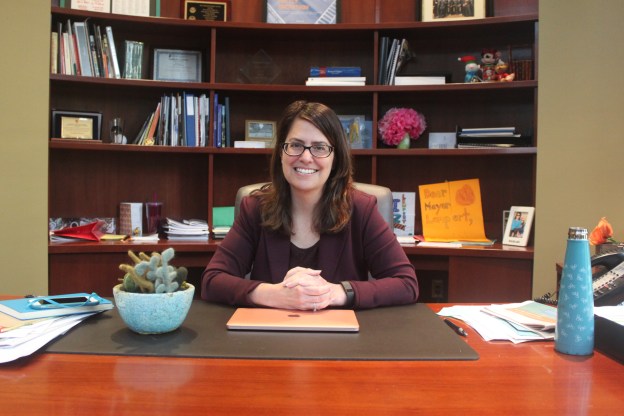
The woman is Princeton’s mayor, Liz Lempert. Under her leadership, Princeton does not cooperate with Immigration and Customs Enforcement in immigration cases. Lempert advocates against the detention and deportation of immigrants in Princeton—or anywhere. 

The mayor’s office itself is a representation of her values. Behind Lempert’s desk are compartments decorated with books and family photos. Letters, one of which appeared to be written by a very young child, said “Dear Mayor Lempert” in crayon, with a rainbow and happy face in each corner. 

When discussing the current presidential administration, frustration and disbelief appear on Lempert’s face before she even speaks. When asked about her favorite publications and podcasts, the happiness and lighthearted nature of her persona returns and radiates the room. Lempert’s eyes glimmer as she recalls her childhood in California. Her parents and grandparents were Jewish immigrant, and Lempert still remembers her family’s struggle to assimilate in the United States. Though Lempert is short and slim, she draws attention toward her. Her voice is both quiet and confident, gentle but firm.

Despite the upheaval surrounding immigration across the country, the mayor is proud of her town. She recalls the numerous rallies held in front of the town’s library on June 30, the start of a municipal ID program for immigrants, and ceremonies held for the citizenship for immigrants. While Princeton residents have been supportive, the mayor receives letters filled with hatred sent from elsewhere.

Lempert emphasizes the protection of children and the need to keep immigrants as well as their family and friends informed of their rights and options for protection. “If you’re the victim of a crime,” Lempert explains, “we don’t care what your immigration status is.”

Walking back from her office, I saw the clean streets differently, the white people differently. I didn’t feel so out of place anymore. 

Lempert seeks more welcoming atmosphere

By Julieta Soto

San Diego, CA

Immigrants help make Princeton a better place to live. That’s the message second-term Mayor Liz Lempert emphasized recently in a sit-down interview in her office. 

Lempert, who began her second four-year term as mayor in January 2017, said she aims to create a more welcoming atmosphere for immigrants in the town of nearly 32,000. She enlists the help of organizations who hold events to reach out to minority groups to inform them about resources and their rights. 

That welcoming attitude isn’t only good for the community, but also benefits public safety, Lempert said. Immigrants in Princeton aren’t the source of a lot of crime, but do tend to be victims of crime because assailants assume that undocumented citizens will be too scared to report, she said. To make immigrants feel safer, Lempert said, the town’s police officers are specially trained to build relationships and trust so witnesses feel comfortable talking to law enforcement. 

“If you’re the victim of a crime, we don’t care what your immigration status is,” she said.

Lempert said Princeton is technically not a sanctuary city, because there is no jail in town and thus law enforcement does not face a choice about whether to send detainees to the Immigration and Custom Enforcement. Instead, Princeton is a sanctuary city in spirit, and Lempert aims to make it a place that feels safe and welcoming to immigrants, many of whom have been living in the town for generations.

For Lempert, immigration is personal. Her grandparents were Polish immigrants who experienced culture shock when they arrived in America as teenagers, then managed to build a successful life in America. 

Growing up in San Francisco also showed Lempert the value of a diverse population. “I grew up in a place that was multicultural and that just seemed normal and you see the advantages of that,” she said. 

She has found those same benefits in Princeton, where she said residents speak nearly 50 different languages at home. She loves that her children are able to interact with people from diverse backgrounds. “You can’t learn things like that in a book,” she said. “It’s like there’s something different about having a relationship with somebody, being able to talk to them about their experiences and I think it helps you see where you live in a broader context.”

Teach for America alums recall ‘trial by fire’ of first days in class

By Zahrea Smith 

Dudley, NC

For the first few weeks that Luke Goodwin was teaching for Teach for America, he felt unprepared. 

Goodwin, 32, a Princeton alumnus, said the only teaching experience he had was a “bootcamp” given by the national program. 

 “The first weeks were trial by fire,” he said of teaching history at Felisa Rincon De Gautier Institute for Law and Public Policy in Bronx, New York. “The students were skeptical. I had just graduated and was teaching a couple of 21-year-olds.”

Despite recent controversies surrounding the Teach for America program, such as claims that it’s a resume builder and allegations that TFA teachers are replacing current staff at the schools they serve, two recent participants, including Goodwin, said the program was a positive experience. 

Teach for America is a national teaching organization founded in 1989 by Princeton University graduate Wendy Kopp. Frequently dubbed TFA, it’s a program in which students of select colleges or universities can be deployed to underserved and underemployed schools to teach for two years. As a result of the program, Goodwin said he was even inspired to get a Master’s degree in education. 

Another participant, Dylan Ackerman, 26, worked at a high school called Mariana Bracetti Academy in Philadelphia, Pa. teaching environmental sciences. Ackerman also coached a sports team at the academy. 

Ackerman applied for the program early in his junior year at Princeton and was able to prepare for teaching the next summer. Like most TFA teachers, he completed a five-week training course to prepare for the school year. 

“People in TFA being underprepared is neither right or wrong,” he said. “You’re not prepared until you’re in the classroom. We’re as good if not better than other teachers. No teacher is completely ready.” 

TFA has more resources, and they make sure their teachers understand the community they’re going to be teaching in beforehand, Ackerman said. “You can’t serve your students adequately if you have no knowledge about underserved kids,” Dylan added. 

Another controversial issue surrounding TFA is that there’s sometimes friction between teachers with four-year degrees and TFA teachers. Ackerman said that there are misconceptions surrounding the program, namely that TFA makes it so teachers with four-year degrees get replaced. 

“Those who were laid off weren’t replaced by TFA teachers,” Ackerman said. “Once people actually learn something about the program that’s truthful, they think it’s a good program.” 

Goodwin, a history major, learned about the program through a TFA recruiter his senior year of college. He said his first semester teaching was “rocky.” 

“I feel bad for my first semester students, I was so inexperienced,” he said. 

After the first few months, he said he gained a significant amount of confidence which helped his teaching. 

Goodwin said that TFA is an organization with the goal of promoting social justice. He said his colleagues at school weren’t dismissive of him, but rather “warm.” 

“I wish I could’ve partnered with some of them,” he said. 

When asked about the controversies surrounding the program, Goodwin said he felt too disconnected to give accurate feedback. 

Instead, Goodwin complimented the program and said that TFA makes sure that grades say something meaningful.