Category Archives: Opinion

With #MeToo, we find our voices

By Magda Abdi

Minneapolis, MN.

As the #MeToo accusations against prominent Hollywood producer Harvey Weinstein stacked up, Weinstein stayed mostly silent. Big Hollywood names like Angelina Jolie and Gwyneth Paltrow accused him of inappropriate behavior. He lost his job. He checked into rehab. But he didn’t specifically respond to their claims. 

Then Lupita Nyong’o penned an op-ed in the New York Times describing how Weinstein sexually harassed her and told her if she wanted to be a famous actress, she would have to sleep with him. This time, Weinstein responded specifically to her. Through a spokesperson, he told E! News that Weinstein has a “different recollection of events.” 

Although the #MeToo movement has empowered women and men to speak out about their own instances of sexual harassment, assault and mistreatment, the reactions to some of the victims have not been compassionate. When an accuser has not fit into the mold of what society thinks a victim should be, their stories have been more readily dismissed—and that’s unacceptable. 

Megan Fox and Corey Feldman are two people who have spoken up about their #MeToo experiences for years. Prominent director Michael Bay has dismissed Fox’s claims, calling her a “porn star” and “dumb as a rock.” 

After the #MeToo movement gained steam, a clip from ‘The View’ resurfaced of Corey Feldman. For years, he said, he was abused by older men in the film industry. In the interview, he said that the people who abused him and another former child star, Corey Haim, are “still working” and are still powerful. 

“You’re damaging an entire industry,” Barbara Walters told him.

When Brendan Fraser accused Philip Berk, the former president of the Hollywood Foreign Press Association, of groping him, Berk admitted he had touched Fraser, but dismissed it as only a joke. The action star, remembered for his roles in ‘George of the Jungle’ and ‘The Mummy,’ was seen as a masculine figure. Fraser said the experience led him to retreat from public life. 

Terry Crews, the former NFL star now known for his role on ‘Brooklyn Nine-Nine,’ also opened up about his own #MeToo experience. He said he was groped at a party in 2016 by a top Hollywood agent. 

Crews told People Magazine that he faced “blowback” for sharing his story and blamed it on “toxic masculinity.” 

As a society, we need to use the #MeToo movement as a way to empower people, and pay attention to the responses of the accused.

Meeting a Trump voter

By Maliyah Lanier 

Philadelphia, PA

“He spoke for the working man.”

“Hillary could have won if she appealed to the everyday American.”

“He was the only candidate that advocated for the blue-collar worker.”

During my first ever experience in political interviewing, I was faced with the task of being introduced to the unimaginable. Since the 2016 presidential election, the stereotypical image of a Trump supporter has fit simple characteristics that are often accompanied by irresponsible pre-judgment. Racism, misogyny and xenophobia are associated with individuals who support Trump. To me, as a 17-year-old African American, and an aspiring political journalist from inner-city Philadelphia, these assumptions seemed logical. Until last week, when I learned that being a Trump voter and being completely irrational were not synonymous.

While roaming the streets of Princeton, New Jersey, a mostly liberal community, I asked strangers their political stance on President Trump. I led with two questions: “What do you like about Trump?” and “What do you hate about Trump?” Most of the responses included reasonable dislike for the president, recalling some of his more destructive policies such as the travel ban and the separation of immigrant families at the US-Mexico border. When I asked what people liked about the president, I mostly received answers like “nothing” and a few jokes, until I proceeded to interview a family sitting at a table outside a restaurant.

A white woman, dressed casually with short blonde hair, greeted me with welcoming eyes—excited because she herself had studied journalism in college. She sat with her 93-year-old father and kindly included him in the conversation. Claudia George, a 59-year-old from West Virginia, was the nicest person I met that evening. When asked about her political party, she proudly presented herself as an independent. Because of her warm, welcoming manner, I wasn’t expecting the answers she gave to my questions. She explained that she had “struggled with her vote” and that her moral identity ultimately determined her decision. Trump was her only option. He had been the only candidate, she said, that advocated for working-class America. While this reason isn’t uncommon within the pro-Trump community, her position didn’t offend me or threaten me like I expected.

When asked about the Trump administration’s recent immigration policies, she stated, “I’m not for families being separated. I am a human being.” When discussing immigrants, she explained, “Many of them are hard working.” When discussing education, she exclaimed, “Build more schools, not walls.” My first encounter with a Trump supporter wasn’t expected. Nor was it distasteful.

As politics has become a conversation in hell and Trump has become the poster child of prejudice, the idea of productive conversation has been lost. Conversation free of logical fallacies and dismissal seemed impossible to me. We indulge ourselves in false premises as we go into defensive mode while trying to make people understand the struggles we face. Therefore, we become lost in justification and the slightest disagreement causes extreme uproar. While there is no excuse for the constant discrimination and ignorance displayed by President Trump, we should be open to listening to his supporters. Everyone’s story is different.

SJP students speak

STAFF EDITORIAL

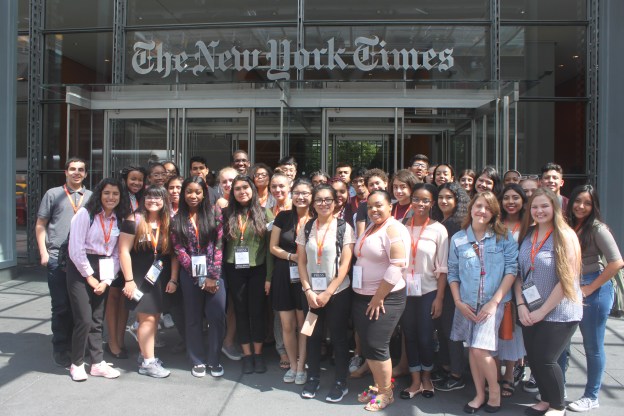
While spending ten days at Princeton University, we participated in a program designed to give us insight into multiple areas of journalism. Toward the end of the program, we spent some time talking about what we enjoyed and what can be improved. We are appreciative for the support from the counselors and speakers, and for the knowledge we gained. We also think that improvements can be made regarding scheduling, interaction time, and campus experience.

SJP’s reliable counselors and encouraging support system were major highlights of the program. We really enjoyed having SJP alumni as part of the staff; they provided the “inside scoop” on what to expect from SJP. The staff constantly encouraged us to believe in the potential of our abilities; we found their guidance on the college application process very insightful and full of tips. The counselors explained that the second half of the program starts after students leave Princeton’s campus, when students will be in constant contact with their designated counselor, who will assist them through the college application process. The program also provided us with a network of sources to help navigate journalism, which was also very useful. Students attended varying workshops, on topics including photojournalism, food journalism, sports journalism and investigative journalism. Students also attended talks on basic skills that a journalist will need—things such as interviewing, researching, remaining ethical, and writing opinions. After experiencing something new every day, students are now prepared to succeed in the world of journalism. 

As a result of the super productive schedule that we had the opportunity to experience, lack of sleep was also a factor. Sleep deprivation is common and a genuine concern among students. Our argument is that, if you are going to have us working all day, at least supply coffee every morning. Lol. Moreover, students would have appreciated a full tour of the campus. Most of the program took place in two locations: the dining hall and the classroom. A campus tour would have provided students with a general idea of Princeton, and the beautiful aspects that make it a great place. Group discussions were popular among students, and we suggest adding more discussion time for bonding between students and counselors. Similarly, students wished for more social collaboration among their peers. Even though students were interested in listening to speakers during the workshops, we would have liked more time to interact with each other.

Over the past ten days, we—students from all over the country—have had the opportunity to learn about a field that interests us. We know we will be assisted in our college admission process this fall, and we now know the importance of sleep. We return home with strong mindsets—and the ability to seek knowledge and to document the world around us.

It is time to do away with the SAT

By Aurora Rivera

Los Angeles, CA

I am a rising senior at an under-resourced charter school in Los Angeles. Our school currently offers an SAT-prep course that all students are required to take. Unfortunately, the teachers in this course were inexperienced and didn’t prepare us sufficiently for the exam. I understood at the time that SAT and ACT scores were a major factor in college admissions, so as a result I became extremely stressed and worried after the class. I was scared about not being able to compete with other students who were better prepared and had higher test scores. My “college preparatory” school made me feel as if I didn’t have a chance in the battle for college admissions. 

Bates College conducted a 20-year study about whether making SAT scores optional in college admissions affected the quality of admitted students. William C. Hiss, Bates’ former vice president of admissions, asked, “Does standardized testing narrow access to higher education, significantly reducing the pool of students who would succeed if admitted?” The study found that the difference in graduation rates between applicants who did and did not submit test scores was 0.1 percent. and the difference in GPAs was 0.05 on a four-point scale. 

Staff editorial: Embracing diversity, in journalism and beyond

By Princeton Summer Journal staff

Journalism in general is a struggling enterprise, one which can unfortunately deter plenty of hopefuls. Historically popular media outlets have seen a steep decline in their finances, and many American public schools do not provide students with a course in journalism or media. The declining popularity of traditional journalism among the millennial generation may spell doom for the industry. However, there is potential for aspiring young writers.

Continue reading

Opinion: Don’t use white women to sell black hair products

By Jessica Simpson
Chicago, IL

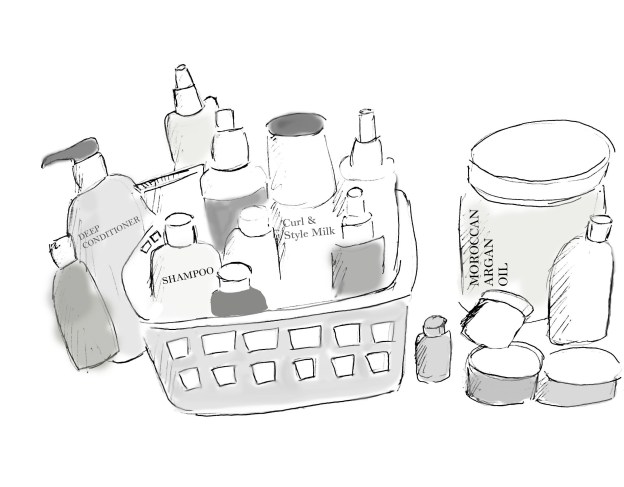
From the time an African American girl is born, she’s told that she must aspire to have “good hair.” She is told that her hair is nappy and should be relaxed because it’s too difficult to style naturally. Years of relaxing hair developed the notion that black hair is “bad” and not as beautiful as it’s other counterparts. The hatred of natural black hair lasted for years, until recently.

Continue reading

Opinion: The scourge of environmental racism

By Yamilet Velez
Los Angeles, CA

In the low-income neighborhoods that surround the worst factories in the United States, smoke fills workers’ lungs, clogs the environment, and paints the skies grey. As dystopian as that sounds, harsh factory conditions are a reality in many communities of color.

My own parents moved into East Los Angeles, near the Tesoro Oil Refinery, not because it had the cleanest air, but simply because they couldn’t afford homes in the “rich areas” of Los Angeles, California. That was their only option, and unbeknownst to them, it was a dangerous one.

Continue reading

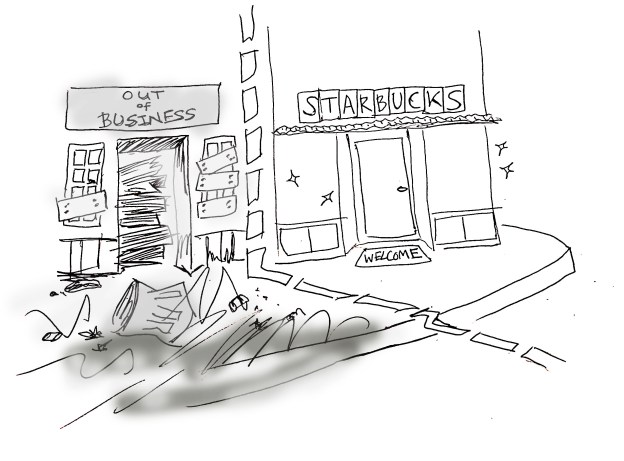
Opinion: Gentrification erodes authentic communities

By Gabby Santana
New York City, NY

In the 1980’s my grandmother emigrated from the Dominican Republic to the South Bronx, carrying her belongings, her wedding photographs, and jewelry passed down through several generations, all packed into three suitcases. She took any job she could, working as a waitress, a home attendant, and a babysitter. It wasn’t much, but she built a comfortable household. The South Bronx was a place where you could build a life for yourself.

Continue reading

Opinion: Wikipedia as a scholarly source: More reliable than you might think

By Jadyn Vizcaino-Bishock
Jersey City, NJ

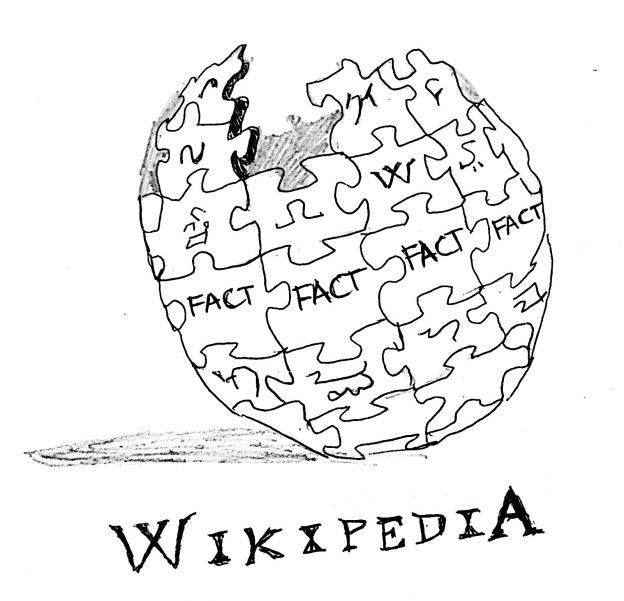
To the academic world, Wikipedia is synonymous with unreliable information. But that’s not really the case.

The major problem people have with Wikipedia is that anyone can edit any page on the website. This leads to misconceptions that the site is full of lies and exaggerations. However, these faults are the natural result of democratizing information.  

Continue reading

Opinion: Social media squashes self-esteem

By Kimberly Gray
Martinsburg, WV

Waking up, I got dressed for school in a new outfit I had bought the day before, a black-and-white striped shirt with black distressed jean shorts. I felt cute.

At school, my friends complimented me on my outfit. It wasn’t everyday that I tried to dress nicely.

Continue reading