Category Archives: Uncategorized

Staff Editorial: Leaving As Different People

Ten days ago, 36 students from all around the United States boarded planes, trains, and cars to come to the Princeton Summer Journalism Program. Leaving our homes behind, we felt a strange mix of excitement and anxiety at what the next 10 days would hold. Looking back at passionate debates, inside jokes, and learning more—and sleeping less—than any reasonable person can squeeze into a week and a half, we have built a home among each other.

PSJP is a unique experience. Students come from states ranging from Alaska to Florida, each bringing a unique story waiting to be heard. Our striking curiosity, love for challenges, and resilience— along with the passion and talent of the staff—transform the classroom into a learning paradise. Journalism is a field built on trust and honor, and that same feeling prevails within everyone in the program. On the first day, we were complete strangers, but we became more than acquaintances or friends—we became a family. A family that will provide each other with the emotional support they need in order to complete the odyssey of college applications. A family that will send each other memes, cat pictures, and gossip in the group chat. A family that will stay strong even if there are hundreds of miles in between them. This program is a treasure that everyone will keep forever.

PSJP is not about where we come from—it’s about giving students the opportunity to learn and thrive. Here, we are not just low-income students: We are writers learning investigative journalism, crime reporting, and topics such as sports and entertainment. We are people who are not afraid to take a stand. At PSJP, we learned to flourish and to not allow societal stereotypes to define or discourage us. From traveling to three states, to talking to strangers on the street, every experience was transformative, and helped us grow stronger. The road to college is stressful, but having a counselor to encourage and guide us makes students feel supported. No matter the obstacle, we will always have our army of counselors rooting for us.

However, not everything about PSJP is sweet. Time management is a huge issue. When the clock hits midnight, students are just walking back to their dorms, carrying with them an aura of exhaustion. There’s not enough time to explore the Princeton campus, meals are too close together, and there’s not enough time to cover every topic. But these are small tradeoffs for the experience of a lifetime.

By the end of the program, students leave as different people. We return to where we came from, but the effects of the relationships we built at Princeton will be everlasting.

Gen Z Struggles With Anxiety

By Zandrea Evans

San Antonio, Texas

Young people are under so much pressure to surpass their peers. They’re anxious. They’re depressed. You don’t need scientific studies to prove this. The evidence is walking around America’s high schools.

I attend a school with an intensive curriculum. Schools like mine do help prepare students for the challenges of college, such as approaching teachers for help and developing critical thinking skills. However, they cause many students to develop mental health issues at a young age. According to a study by the American Psychological Association in 2018, members of Generation Z (ages 15 to 21) are the generation least likely to describe their mental health as “excellent or very good.”

My peers and I suffer from excessive stress that comes from at least five hours of homework a night—not including studying for tests and quizzes. In 2009, high school seniors took an average of 3.6 more credits than they did in 1990, according to The National Center for Educational Statistics.

On top of that, the pressure for students to score well on standardized tests like the SAT, AP, and ACT exams heightens stress levels. Some students find themselves stuck taking a slew of exams with little time to study. For instance, as a junior, I needed to study for the ACT and three SAT subject tests on top of the homework that came with my five AP classes. Because of the pressure high school students are constantly under, anxious and depressive statements are common. There are even memes about the prevalence of suicide jokes made by young adults.

This is an issue that should concern schools across the country, many of which are without a designated mental health counselor. The Washington Post recently reported that, in public schools, there is one psychologist for every 1,381 students. The National Association of School Psychologists recommends one for every 500 to 700 students. By not giving students the proper tools to deal with their mental health issues, schools negate their efforts to push students to higher levels of achievement. Mental health problems can hurt students’ grades, relationships, and quality of life.

The mental health of students is of vital importance, not just for their well-being, but for society’s. Today’s overtaxed teenagers will be tomorrow’s leaders.

Why America Isn’t Great

z-IMG-2008.jpg

Illustration by Francin Vasquez

By Justin Fajar 

Brooklyn, N.Y.

Every day, thousands of people—some forced through social coercion or otherwise—put their hands on their hearts and pledge their allegiance to the United States flag. While some would see this as a beautiful showing of people who love their country, in reality this is an undeserved show of nationalism. The reality is that, while America has some strengths, it isn’t nearly as admirable a country as many of its citizens think it is.

The United States has one of the bloodiest histories in the world, having invaded or fought in dozens of countries around the globe. This would be fine if the U.S. made efforts to acknowledge and try to remedy the damage it has caused. But instead high school history textbooks often skew our country’s history. A prime example of this can be seen in the South, where many textbooks make sure that the Confederacy looks more sympathetic.

Discrimination against minorities is also common, particularly in the education system, including higher education. Dan-el Padilla Peralta, a classics professor at Princeton, recently shared his experience as a “token minority” in higher education and how he has had to deal with “a general aura and practice of exclusion.” He also discussed how bad he felt knowing how few minorities had the same opportunities he did. “It took me a long time to reconcile my place in being here [Princeton] with the fact that with the unluckiest of dice rolls I could have been dead at 24,” he said.

Meanwhile, our democracy is deeply flawed. In the United States it is constantly put into our heads that our votes matter. But if we look closely at the 2016 election we can see that is far from the truth. Although Hillary Clinton won the popular vote by a few million, Donald Trump was selected as the president through the Electoral College. The ability to vote is also a huge issue. Voter suppression is a real and ongoing issue, particularly for minority voters. A country cannot call itself a democracy until all voices are heard.

And what about how we spend our money? According to NationalPri- orities.org, a recent budget deal calls for military spending to be 54 percent of federal discretionary expenditures in 2020. Historically, military spending dwarfs the amounts spent on energy, the environment, housing and community. How federal money is spent is a great indicator of what the United States prioritizes—apparently, it values invading countries over helping its citizens.

To be sure, there are a lot worse places to live, and there are positive aspects to this country. People around the world aspire to immigrate here and to live the American Dream. The United States has a Constitution that guarantees many rights. It also has thriving economic sectors, from technology to film to finance. Many people are making efforts to address the problems listed above: Many universities are trying to increase diversity, and reparations for the descendants of slaves are being seriously talked about as a way to rectify what has happened in history.

But Americans often put forward a facade in which we are a perfect country—and that is tragically far from the truth. We as a society have to demand better from our government, so that one day when we stand for our flag, hand on heart, we can truly mean it.

Building My Confidence, Question By Question

By Savannah Joyner

Barnwell, S.C.

I was burning with embarrassment as I walked the humid streets of New Jersey. It was only my first day at the Princeton University Summer Journalism Program, but I still felt disappointed with myself.

My rapid footsteps on the paved sidewalk matched the pace of my heart. My person-on-the-street story about the 2020 election was not going so well. I breathed out.

A good journalist doesn’t give up on the first failure, so I couldn’t give up. I saw another person coming. I tried to speak but the words got caught in my throat. Time and again, I would find the courage to speak, and then I would choke.

My group and I walked to a small park, where I saw a woman with a dog. With a little push from my counselor, I approached.

“Hi, my name is Savannah and I’m a student journalist. Can I ask you a few questions about the 2020 Democratic debates?”

“Yeah, sure.”

My heart leaped with joy. Her dog shared the same emotion, as he jumped on me excitedly.

The woman’s name was Louise and she was 24, a native of Princeton.

“Who are your favorite candidates so far?” I asked.

“I would have to say Bernie Sanders and Elizabeth Warren. They agree about work, unions, civil liberties, and they know that the current administration is toxic.”

“Who do you think would win the 2020 election?”

“Umm, I’d have to say Bernie.”

My heart was racing but this time in a good way. Success.

As I left the park, I felt my anxiety begin to leave, and in its place, I felt confidence begin to bloom. I began to believe that I could do it. My heart rate slowed. I walked further, ignoring potential interviewees, because I didn’t want to lose this victory.

Eventually I stopped in front of a cute brick restaurant, which was where I met George, a 69-year-old Princeton resident. He said that his favorite candidates were Elizabeth Warren and Kamala Harris.

Most people associate Elizabeth Warren with Bernie Sanders. I asked him to explain his picks.

“I like how professional Elizabeth Warren is. She has a plan and goes point by point. And I like Kamala because of her experience in government.”

Walking away, I felt the self-doubt creeping back. What if I wrote a terrible article? What if I didn’t do well enough?

When I got back to my dorm, I went to sleep conflicted. I felt success for doing two interviews, but I also felt failure for not doing more.

Three days later, I found myself having to do person-on-the-street reporting again. But this time, the game was different—and the pressure even greater. I would have to walk the streets of New York City and ask its denizens how they felt about their mayor running for president. I felt the same feeling of despair and panic that I had felt on my first day. But I had to get out of my feelings.

In New York, I interviewed five people. Yes, I got rejected a lot but I managed to not let it get to me. I felt different. I felt proud of myself.

The thought of having to do this a third time completely terrifies me, but I have a feeling that I will interview even more people next time.

Eagles Should Sign ‘Ready’ Kaepernick

By Angela Nguyen

Pennsauken, N.J.

The Eagles’ loss to the Titans in Thursday’s preseason game wasn’t their worst loss of the night: Backup quarterback Nate Sudfeld broke his left wrist in the second quarter and could miss the next six weeks. The Eagles need a strong, seasoned backup quarterback. The team would be wise to consider Colin Kaepernick.

Though Kaepernick hasn’t played since 2016, his past performance with the 49ers outshines the Eagles’ current options to back up Wentz. If the Eagles want to win another Super Bowl, signing Kaepernick could provide a much-needed sense of security.

In six years with San Francisco, Kaepernick guided the 49ers to two playoff berths, including a Super Bowl appearance in 2013. He gained notoriety for his running ability, but he was also a good passer, completing 59.8 percent of career attempts and throwing 72 touchdowns, with an 88.9 career passer rating. He led seven comebacks and seven game-winning drives.

Kaepernick decided to kneel during the national anthem in 2016 to protest police brutality, and he has not been signed to any NFL team since. Kaepernick’s demonstration and his continued social activism have drawn critics, including President Trump, but that shouldn’t concern the Eagles. Not afraid of protest themselves, most of the team refused to visit the White House after their Super Bowl title, and defensive back Malcolm Jenkins has raised his fist during the anthem in solidarity with Kaepernick’s cause.

Last week, Kaepernick posted a video showcasing his training, declaring he is “still ready.” Considering his NFL accomplishments, it’s more than clear that he is.

It’s Time For Journalists To Respect Women’s Soccer

By Alberto Lopez

Mission, Texas

When the U.S. Women’s National Team beat the Netherlands 2-0 in July’s Women’s World Cup final, 16 million Americans tuned in. The white home uniforms the USA wore that day in Lyon, France, became Nike’s top-selling soccer jersey of all time for a single season. Four years earlier, 25 million people watched the U.S. women beat Japan in the 2015 final, a record for a men’s or women’s match. But despite the obvious popularity of the team, the media still treats women’s soccer like a sideshow.

That doesn’t have to be the case. Fans may not be aware, but all 23 players who won the Women’s World Cup play in the National Women’s Soccer League, a collection of nine teams across the country.

But with the exception of Portland Thorns FC, who averaged 16,578 fans in 2018, NWSL teams struggle to draw crowds. Seven teams averaged fewer than 5,000 fans, including New Jersey’s Sky Blue FC, which averaged a league-worst 2,390.

Some journalists cover the women’s game with the enthusiasm it deserves. But far too many sports networks and publications overwhelmingly favor men’s soccer, even covering foreign leagues more than female teams—stacked with star footballers, from both the national team and elsewhere—in the U.S. That includes social media: @ FOXSoccer tweets eight or more times a day about men’s soccer, but the account’s last tweet about women’s soccer was on Aug. 3, during the USWNT’s win over Ireland on their World Cup victory tour.

But there are signs that the media is starting to appreciate the women’s game. The NWSL recently signed a television deal with ESPN to broadcast 14 games. And while those matches will be broadcast on ESPN News or ESPN2 rather than ESPN, it’s a step in the right direction.

After the announcement of the deal, ESPN executive Burke Magnus said, “We are pleased to once again televise the National Women’s Soccer League and showcase many of the world’s top female players when they return to their professional club teams.” It’s long overdue, but it’s a positive sign that ESPN is recognizing the value of pro women’s soccer.

Despite the inadequate coverage, fans are showing more interest in the league. NWSL attendance rose by 70 percent after the Women’s World Cup, according to USA Today, and even long-struggling Sky Blue had to relocate its upcoming match against Reign FC—featuring USWNT star Megan Rapinoe—to Red Bull Arena because of high ticket demand.

But as the World Cup fades from memory, the media needs to continue covering the NWSL. Women don’t just play soccer once every four years—they play every day.

Tanguay Brings It On As Eagles’ Male Cheerleader

_IMG_4281.jpg

Kyle Tanguay is the first male cheerleader on the Eagles squad in 35 years. Photo credit: Brian Rokus

By Jacky Huang

Simpsonville, S.C.

Backstage, a line of women in cocktail dresses with asymmetrical hemlines and off-the-shoulder straps waited anxiously, hoping for an announcer to call their number. Some of the 61 hopefuls would make the 2019 Philadelphia Eagles cheerleading squad. Some would not.

“Contestant number 32!” an announcer called out. “Kyle!”

A man in a black suit ran onto the stage, beaming, and took a bow. The crowd roared.

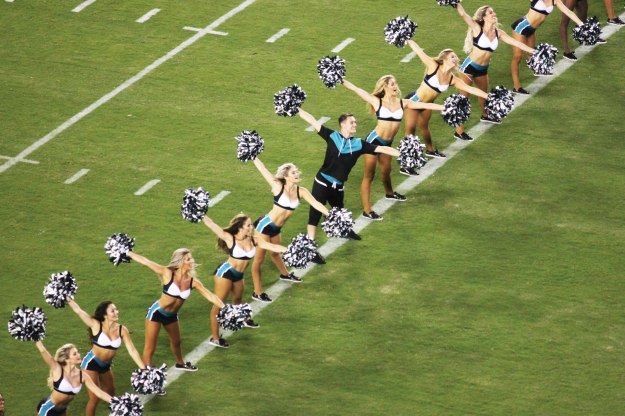
Kyle Tanguay had become the first male cheerleader on the Eagles squad in 35 years. As one of a small but elite group of NFL dancers, Tanguay challenges preconceived notions of cheerleading in the macho world of professional football. “All too often, whether it’s cheerleading or not, men that are going into dance often think about how other people are going to receive them,” Tanguay said. “I’m guilty of that, as I get nervous and sometimes think, ‘what if they don’t like me?’”

By all accounts, Philly likes him. A New Jersey native, Tanguay grew up with sports. He was a Boy Scout who played T-ball, hockey, and soccer. None of them stuck. Then he found dance. There was something about the gold floor and mirrors, and the twists and turns of his first jazz class that made him keep going back. He never felt like he was marginalized or outcasted because of his gender.

Later, Tanguay pursued dance at the University of the Arts in Philadelphia. There, he became a fan of the Eagles after watching them play every Sunday with his friend and her boyfriend. Those two worlds combined on New Year’s Eve last year, when, while waiting for the ball to drop, he took a chance and emailed the Eagles.

They responded. An official told Tanguay they “were open to the idea of men trying out for the squad.” As it turned out, the team had had male dancers in the 1970s and ’80s. The Eagles, the team official said, have “always been inclusive and diverse.”

For weeks, Tanguay practiced with his roommate Rae Holtz, who was also auditioning for the squad. Tanguay and Holtz made it through three rounds of auditions before final cuts. He waited to hear his number called. “I was very nervous. I was shaking. I was very quiet,” Tanguay said.

He made the squad. “The world has never stopped spinning since,” he said, “and it’s been such an honor.”

It’s Time For Equality In The WNBA

By La’Nisha Richardson

Yazoo City, MISS.

Last Summer, LeBron James signed a four-year, $154 million contract with the Los Angeles Lakers. A’ja Wilson, a forward for the WNBA’s Las Vegas Aces, responded to the news on Twitter: “154M… must.be.nice. We over here looking for a M but Lord, let me get back in my lane.”
Have you ever noticed that WNBA players don’t live in big mansions and ride in lavish cars like NBA players? The reason is that they can’t afford it. While 50 percent of NBA revenue goes to player salaries, WNBA players only receive an estimated 22 percent. The minimum starting salary in the NBA is nearly $600,000. In the WNBA: $50,000. Female basketball stars get paid much more overseas.

I’m a point guard on my high school team, which takes dedication and hard work. I can only imagine what it’s like for a WNBA player. I’m sure the top stars wonder why they’re spending so much time practicing to get paid so much less than an NBA benchwarmer.
To be sure, the NBA brings in more money than the WNBA. But the women put in the same amount of training, practice, travel, and time as the men, and should be compensated accordingly. Gender equality starts with income equality. Being a woman shouldn’t determine your pay rate.

WNBA players like Wilson and Skylar Diggins-Smith of the Dallas Wings have spoken out about the pay gap. But it feels like league officials haven’t heard them. They need to give players 50 percent of league revenue and find more marketing opportunities, such as sponsorships and commercials, for them. The league is trying to fix this, but it’s not moving fast enough, and it might take a strike to get equal pay.
And though the NBA’s Chris Paul and Russell Westbrook—as well as LeBron James—have attended games to show support, an NBA player shouldn’t have to show up to get people talking about the WNBA. This is sexism, plain and simple. Everyone should speak out.

Titans Trounce Eagles, 27-10

_IMG_4333.jpg

The Tennessee Titans kicked off their 2019 preseason with a resounding victory over the Philadelphia Eagles on Thursday.  Photo Credit: Brian Rokus

By Ella Wilkerson

Philadelphia, PA.

Walking in the parking lot of Lincoln Financial Field, or the Linc, as native Philadelphians call it, you could feel the excitement of Eagles fans. Green was in view everywhere. It was just a preseason game be- tween the Eagles and the Tennessee Titans, but Philadelphia fans did not seem to care.
That level of energy from the fans didn’t transfer to the Eagles, who ended up losing their preseason opener 27-10 on Thursday.
With Nate Sudfeld starting at quarterback for the Eagles in place of Carson Wentz, the first quarter was a bit slow. Jake Elliott scored the first points of the game in the first quarter with a 53-yard field goal to give Philadelphia a 3-0 lead.
But Tennessee soon took control. In the second quarter, tight end MyCole Pruitt caught a one-yard touchdown pass from Ryan Tannehill to give the Titans a lead, though Austin Barnard missed the extra point. The Eagles responded with a 75-yard touchdown pass from Nate Sudfeld to Marken Michel, but the Titans reclaimed the lead with Anthony Firkser’s 23-yard touchdown catch. A successful two-point conversion attempt gave Tennessee a 14-10 lead at the half.
Perhaps the most significant moment of the game came right before the quarter ended, when Sudfeld suffered a left wrist injury. The third-year quarterback was expected to take over as Philadelphia’s backup after Nick Foles’ departure this offseason, but he’ll reportedly miss several weeks while he recovers.
The Titans dominated the second half. Eagles fans started to leave during a scoreless third quarter, and two touchdown passes from Titans quarterback Logan Woodside in the fourth quarter put the game out of reach.
Meanwhile, Cody Kessler and rookie Clayton Thorson struggled at quarterback for Philadelphia. Kessler finished the game with three completions on six attempts, and Thorson completed two passes on nine attempts.
Could this preseason game be a glimpse of Philadelphia’s regular season? No one can say for sure, but Wentz is the starter, and if he stays healthy, they could have a chance to win some games. Otherwise, especially considering Wentz’s injury history, the season is not looking as pretty as 2017, which ended with the Eagles winning the Super Bowl.

Expired drugs found in stores

This story was reported by the staff of The Princeton Summer Journal and written by Fernando Cienfuegos, Jayda Jones, and Evelyn Moradian.

There is a 7-Eleven located on a busy commercial thoroughfare in New Brunswick, next to a dollar store and across the street from a pub. Near the 32-ounce Slurpees and over-warmed pizza is an aisle devoted to health products. And several of these health products may not be as healthy as advertised.

Two boxes of 7-Eleven brand Migraine Formula Pain Relief expired in September 2017. Another box of Migraine Formula Pain Relief expired this July. A pair of All Day Allergy Relief boxes, also 7-Eleven brand, expired earlier this summer. And a cough suppressant sat six months past-due on the shelf. None of them should have been there.

The problem isn’t limited to 7-Eleven. This August, a team of reporters from The Princeton Summer Journal surveyed pharmacies and grocery stores in central New Jersey to investigate whether they were stocking outdated drugs, baby products and food. They found 75 expired products in 12 stores. The products ranged from dietary supplements to infant medication.

Eight stores were in the Trenton area: CVS, at 1100 Liberty St., Trenton; ShopRite, at 1750 N. Olden Ave., Ewing; CVS, 1618 N. Olden Ave., Ewing; Rite Aid, 201 N. Hermitage Ave., Trenton; Healthcare Pharmacy, 225 E. State St., Trenton; Rite Aid, 127 E. State St., Trenton; Episcopo’s Pharmacy, 1125 Chambers St., Trenton; Colonial Farms Food Market, 137 E. State St., Trenton. Four were in the New Brunswick area: CVS, 959 Livingston Ave., North Brunswick; Walgreens, 20 Jersey Ave., New Brunswick; Tropical Supermarket, 959 Livingston Ave., North Brunswick; 7-Eleven, 358 George St., New Brunswick.

Federal law requires manufacturers to label drugs with expiration dates, which reassure customers that they are safe and fully potent. According to the Federal Drug Administration, using expired medication can be ineffective or even dangerous. Certain drugs, for example, are susceptible to bacterial growth if past their expiration date. In New Jersey, state law bars stores from stocking outdated drugs.

CVS, Rite Aid, and 7-Eleven did not respond to requests for comment. ShopRite and Walgreens responded to the Summer Journal’s queries, but were not able to address them before publication.

To be sure, Princeton Summer Journal reporters did not attempt to buy any of the products; they merely identified the products on the shelves. If a customer had attempted to buy any of the expired products, it is possible that the expiration date could have been flagged at the checkout counter.

It is not entirely clear why this problem persists. When Sue Berrian, an assistant manager at the New Brunswick 7-Eleven, was asked why the store stocked outdated products, she explained that deliveries could be erratic. Asked when she expected the next delivery of health products, she said, “I have no idea,” before telling the Summer Journal that “we have one new [delivery] guy that keeps messing up.”

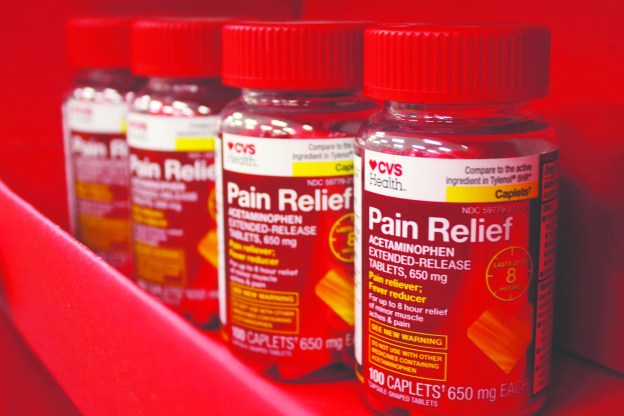
Expired items found at three CVS stores included acetaminophen capsules, multivitamins, foot creams, melatonin pills, probiotics, and condoms. “It could have just been an error or someone rotating the product incorrectly,” said Devin, a manager at a Trenton CVS, who didn’t give her last name. She then asked group of Summer Journal reporters, “You don’t have to announce yourself when you come in?”

CVS has been repeatedly penalized for allegedly stocking expired products. In 2016, the company settled with the Pennsylvania attorney general for $450,000 after investigators found out-of-date infant formula and over-the-counter medication at five of the six stores they visited. CVS did not acknowledge any wrongdoing, but did agree to institute training for certain employees and give coupons to Pennsylvania customers who find an expired product. Earlier, the New York attorney general’s office found that 142 CVS and 112 Rite Aid stores in more than 41 counties sold expired products—some of them two years past their expiration dates. As a result, CVS settled for $850,000.

Large corporations are not the only ones who appear to struggle with this issue. Episcopo’s Pharmacy, a small business in Trenton, sold an array of items, from sweets to toys. It also stocked expired medicine. These included gas relief medicine, nasal decongestant and vision supplements. Pharmacist John Berkenkopf said he checked his shelves “every few weeks,” but conceded that expired products sometimes slip through. “It just happens,” he said.

Shah Alkesh, who manages Colonial Farms Food Market in Trenton, explained why expired products can stay on his shelves past their sell-date. “Everybody [is] going to Amazon,” he said, noting that he has difficulty replacing his inventory.

No expired products were found at the CVS on Nassau Street in Princeton. Customers exiting that store were disturbed by the Journal’s findings. “I feel like it’s a disservice to consumers who are trusting these companies and are purchasing something that they think they can use,” said 31-year-old Brigid Gardner, after learning some New Jersey pharmacies were stocking expired drugs. Arifa Khandwalla, 47, of Princeton, New Jersey, agreed: “I don’t think they should be doing that. They don’t have the right to sell it to me.”