Category Archives: Uncategorized

Cops Prioritize Outreach

IMG_4542.JPG

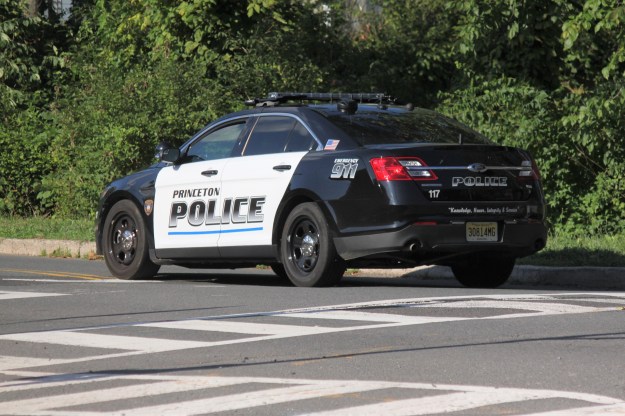
The Princeton Police Department has prioritized community engagement. Photo Credit: Brian Rokus

By Farinna Izquierdo 

Hialeah, FLA.

Lt. Johnathan Bucchere wears a gun in his holster, a weapon that often makes people feel threatened. But in an interview with The Princeton Summer Journal this week, Bucchere was anything but threatening: He sported a small smile and a fresh sunburn around the bridge of his nose.

Bucchere said that increasing the number of positive interactions the Princeton Police Department has with the community is a priority. They focus on reaching out to residents and establishing relationships with those around them, ensuring the safety of their fellow residents while also being shoulders to lean on.

Bucchere, who has been with the department for two decades, said the department has made progress since he started. When he was a young officer, the department was less connected with residents. “We’ve made adjustments to how we do things,” he said. “The community trusts us because we’ve given them reasons to. We’ve grown a lot in the last several years.”

A Princeton native, Bucchere detailed how one of the main priorities of the police department is to try and build trust among the people they serve. Aside from typical police work, each of the department’s four squads carries out a community project every year. One of these projects was “Coffee with a Cop,” where officers drank coffee with residents. Although this project was a great start, it wasn’t sufficient. Officers felt as if they were only meeting people rather than establishing true connections with them. They decided to put additional efforts into deeper engagement.

One day, off-duty officers bagged groceries for older shoppers. They brought burgers and hot dogs and served them for a local Little League game. The department also paid for a pool night for Princeton residents, complete with an officer dunk tank. At all of these events, officers presented themselves not as law enforcement, but as members of the community.

Police officers come into contact with many people on a daily basis. These experiences can often be negative—even if it’s just issuing a traffic ticket. Bucchere doesn’t want all of those interactions to be bad ones. “It’s critical that you police with a guardian mentality and rehabilitate those encounters,” says Bucchere, “so that it’s a positive experience.”

ICE raids and police brutality have given officers a bad reputation and ignited fear and resentment toward them. According to Bucchere, police brutality is not an issue in Princeton. While police face criticism on front-page head- lines, Bucchere reminds residents that a corrupt minority does not represent them all. Rather, the Princeton Police tries to live up to a sign hanging in their headquarters. It reads: “Police like a champion today.”

New Eviction Lab Closes Data Gap For Policymakers

By Sarah Wang

San Gabriel, Calif.

I could hear the distinct rumble of Baba’s construction truck approaching. He came home every day with cuts from glass, calluses on his hands and an aching back, but he always greeted me with a warm smile.

When my father moved to America, he didn’t know any English, so he worked as a laborer. It didn’t pay much, so we frequently moved around.

One day, as Baba washed the rice for steaming, I finally asked the question I’ve been wondering for years. “Why do we move so much?”

“That’s just how it is,” Baba said.

My father’s hopelessness is not uncommon. According to collected data from the Princeton University Eviction Lab, displacement and poverty is a way of life for those immersed in the eviction crisis. Joe Fish, a research specialist at the facility, said that between 2000 and 2016, there were 84 million eviction cases in the U.S. That estimate does not take into account the number of evictions left unfiled. “In reality, that number should be higher,” Fish said.

Before the work of the Eviction Lab, estimates like this simply did not exist. Federal and local representatives, journalists, and the general public did not have access to clear data about the crisis occurring in their communities. It takes immense resources and time to sort out documents that provide valid evidence of the issue, Fish said. Due to this, individuals living in these communities endured a cycle where reform was not a priority. No one was aware of how immense the eviction crisis was. “[When] you don’t know, you don’t think about it,” Fish said.

Princeton sociology professor Matthew Desmond founded the Eviction Lab after writing “Evicted: Poverty and Profit in the American City.” To close the knowledge gap, the team analyzed millions of eviction records and published the first-ever nationwide dataset of evictions. Their findings showed that there is a direct relationship between poverty and housing. Yet that doesn’t necessarily mean eviction causes poverty. The housing system in America keeps low-income individuals in unstable economic conditions. This can eventually lead to their eviction because they are no longer able to afford rent.

The Eviction Lab’s work extends beyond providing the public with information. “Most everything we do is an attempt to sway policy,” Fish said. On a grassroots level, Fish emphasized the need for communities to start pressuring local officials with the facts. Now that Americans have tangible evidence, representatives must listen. “[We need to] protect what we have and push for what we don’t,” he said. “It’s about holding power accountable.”

Ultimately, uplifting those in poverty is like a construction site. The Eviction Lab holds the nail and hammer, restructuring broken communities one fact at a time.

Princeton Mayor Discusses Keeping the Peace

xIMG_2435.jpg

Before becoming Princeton’s mayor, Liz Lempert was an environmental journalist at National Public Radio. (Princeton Summer Journal File Photo)

By Sergio Reyes Aguilar

Arleta, Calif.

Princeton is a small New Jersey town that is well-known as the home of the prestigious Ivy League university of the same name. It is very peaceful and has very friendly residents—there are always people smiling everywhere, trees all over the place, shops on every corner.

But there was a time when public outrage broke out and the constant peace was shattered. In January, a white supremacist group threatened to hold a rally in Palmer Square. Ultimately, the white supremacists never showed up, and the rally didn’t happen. Even still, it caused concern within the small community.

For the mayor of Princeton, Liz Lempert, it was her toughest moment to date.

“I was very worried the morning of the rally,” Lempert said in a recent interview. “I didn’t know what was going to happen, or if it was in fact going to happen, so I just closed the central part of the town to make sure that everyone remained as safe as possible.”

She said it was important to make Princeton a very diverse and safe space for everyone. “Princeton is such a great community with smart, helpful people and although the town is small, it never gets boring,” she said.

Born in San Mateo, California, Lempert has a degree in history and symbolic systems from Stanford University, as well as a very political background: Her mother and brothers were deeply involved in politics. Despite that, she said she never planned to get into politics herself. Before taking office, she worked as an environmental journalist at National Public Radio, and was recruited to run in 2012.

Princeton is a relatively small town, but it carries so much prestige because of the University and its distinguished reputation. There are tourists, students and local residents who try to peacefully coexist with one another, which has worked so far.

“Princeton is and will always be a work in progress,” said Lempert, whose term expires in 2021. “It’s impossible to get a perfect community in which everyone is happy, but I’m doing my best efforts to get everyone satisfied and to support the local people.”

In Divisive Climate, Mayor Recalls Threat of White Supremacist Rally

By Francin Vasquez

Brooklyn, N.Y.

The threat slowly forced itself forward, reaching every shadow, every corner, every chest, every heart. It yelled from the sidelines that it would walk inside, take over the streets, and tarnish everything with words of hatred.

It was January 2019, and rumors of a white supremacist rally in Princeton’s Palmer Square began circulating on social media. Flyers were spread in many areas in town and around the University.

In this type of situation, Mayor Liz Lempert’s hands were tied. Under the First Amendment, freedom of speech is protected—even if that speech consists of slurs from white supremacists. As long as there is no threat of violence, no legal action can be taken. “[We] have to make decisions where there are no real answers, and it’s painful,” Lempert recalled in a recent interview.

But neither Lempert nor Princeton were silent about the scheduled white supremacist rally. Shop owners, students, residents—everyone—united to say that they did not believe in those ideologies. 

Princeton’s white supremacist rally did not have a deadly ending. After all, it did not happen. Instead of expected hate signs and racism, the town was filled with love and welcoming. Hundreds of people showed up to protest against the white supremacists, and the white supremacists themselves stayed away.

“Forces from outside are repelled by the community. This is who we are, and there is no space for this speech,” said Lempert. “The people said ‘we don’t want you.’”


When one thinks about the name “Princeton,” their first thought might be the prestigious Ivy League university. However, the word Princeton is more than a private school with high expectations for their applicants. Princeton is where people come together to work with each other. By fighting off hatred, the Princeton community showed itself to be strong. By rallying against hatred, Princeton gave us all a reminder of the meaning of America.

Bucchere Says Communication Is Greatest Asset in Building Trust

By Jimena Molina

Fayetteville, Ga.

Five years have passed since a white policeman in Ferguson, Missouri shot and killed a young African American man named Michael Brown. Brown’s death sparked a movement that exposed the brutality minorities suffer at the hands of the people charged with protecting them. But it also strained the relationship between police and the communities they serve.

“It’s becoming increasingly difficult to gain trust,” said Lt. Johnathan Bucchere of the Princeton Police Department, who’s been a cop in the area since 1999, in an interview with The Princeton Summer Journal. Communication is one of the department’s greatest assets in counteracting the problem. “We’re an open book,” he said.

The department achieves transparency by learning from past mistakes, he said. Every day when he comes to work, he reviews the previous day’s arrests. If he catches a mistake, he wants to figure out what he can learn from it.

“Our failure to learn from these incidents will lead to our failure” in the future, he said.

Princeton police work to win over the community. That’s done not through arrests, but through positive interactions. The department has regular community nights where residents and cops can talk to one another.

“It started off with coffee with a cop, but it’s expanded,” Bucchere said. “For example, recently officers made hamburgers and hot dogs for a local Little League, and the community loved it—the parents, the kids, the coaches.”

With a smile, Bucchere recalled a sign that hangs above his department door. He sees it every time he reports for duty: “Police like a champion today.” It’s a play on the Notre Dame football team motto.

Bucchere also often tells his officers: “Go out. Be guardians. Be good people.” He wants them to be the kind of officers that the people of the Princeton community can trust.

‘Green Book’ Overcomes Controversy

Green Book 1.jpg

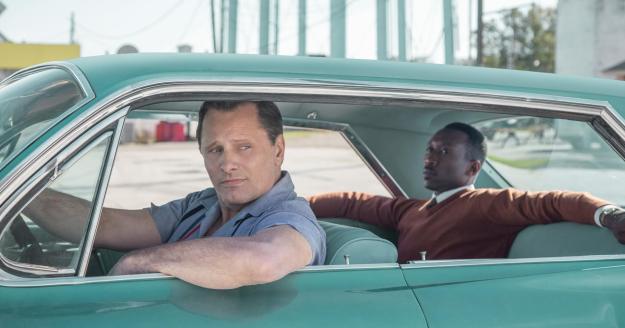
Viggo Mortensen (left) plays Mahershala Ali’s driver as their characters travel through the segregated Deep South in 1962. Photo courtesy of Universal Pictures

By Michelle Garza

Spring Valley, N.Y.

I went into “Green Book” expecting nothing substantial. While it may have won three Oscars, I was considerably skeptical.

I had closely read the derisive reviews and followed the controversy. The public was not pleased with a film having a white savior complex becoming a three-Oscar winner.

I went into the film with preconceived notions and biases. Nevertheless, I found myself captivated by the development of a complementary relationship between characters who expressed conflicting mentalities.

Set against the backdrop of the civil rights movement, “Green Book” tells the story of Dr. Donald Shirley, an African American pianist embarking on a Deep South tour. Integration had not yet spread to that region, and he needed a driver for protection.

He hires Tony Lip, an Italian- American cliche who previously worked as a bouncer. The storytelling shone through from the very beginning. At first, I saw the criticisms, with Lip’s racism obvious from the get-go. Great, another racist-that-getsbetter story, I told myself.

However, Shirley’s appearance forced me to give the movie a second look. His grandiose apartment above Carnegie Hall makes him reminiscent of a king. Actor Mahershala Ali projects a royal image. On the other hand, Lip evidently hails from a humble upbringing and his wardrobe is mostly tattered wife-beaters.

The appeal of “Green Book” is rooted in the film’s use of its greatest asset: the uber-talented leads, Viggo Mortensen and Ali. It was a heartwarming experience for me to witness the unexpected friendship develop between their characters. It is their differences that bring them together.

Lip helps Shirley become less wary of new experiences, such as eating a piece of KFC fried chicken. In turn, Shirley helps Lip properly express his feelings for his wife in love letters. Moreover, the storytelling challenged my preconceived notion of Tony being a “white savior.” He is not by any means a savior. Shirley does not need “saving.” Rather, he needs companionship that a genuine person like Lip can provide him with.

The movie is littered with references to Shirley’s loneliness and struggles with alcohol. Despite living in what Lip describes as a “castle,” he lives alone and realized this when Lip invites him to Christmas dinner with his family, solidifying their bond.

Character’s Evolution On Race Issues Lets ‘Green Book’ Shine

By Jakaylah Redmond

Isola, MISS.

“Green Book” follows the story of Dr. Donald Shirley and Tony Lip. The movie begins with Lip working at the Copacabana nightclub when it closes for renovation, putting Lip out of work. Lip finds creative ways to make money in order to sup- port his family until he gets an interview with Shirley, an African American pianist who is looking for a driver for his tour throughout the Midwest and Deep South. Lip, who is white, refuses to do certain jobs for Shirley and will only agree to be his driver. After Shirley receives approval from Lip’s wife, Dolores, the two begin an eight-week tour. Lip and Shirley don’t get along at first because of Lip’s ignorance and lack of manners. But Lip becomes Shirley’s bodyguard on the tour and helps him out of difficult situations that occur due to racism.

The major strength of “Green Book” lies in how the characters evolve over time. In the beginning of the movie you see how racist Lip is toward black people. His family makes derogatory comments about black people, and so does Lip. When two black men come over to work in his apartment, his wife gives the men a glass of water. Lip sees this and waits until the men and his wife leave to throw the glasses in the garbage. When I watched that scene, I thought he was a very ignorant man and I didn’t like him despite his charm. His racism toward African Americans really bothered me.

But over time, Lip changes. Going on the road with Shirley really alters his view of African Americans. At the end of the movie, you see Lip defending Shirley to his family for the first time by saying, “Don’t talk about him like that,” after someone calls Shirley a derogatory word. His wife smiles and rests her hands on his hand, indicating that she is proud of his growth as a person.

Pulitzer Prize-Winner Parks Delivers Quirky, Chilling Play

By DayOnna Carson

Chattanooga, Tenn.

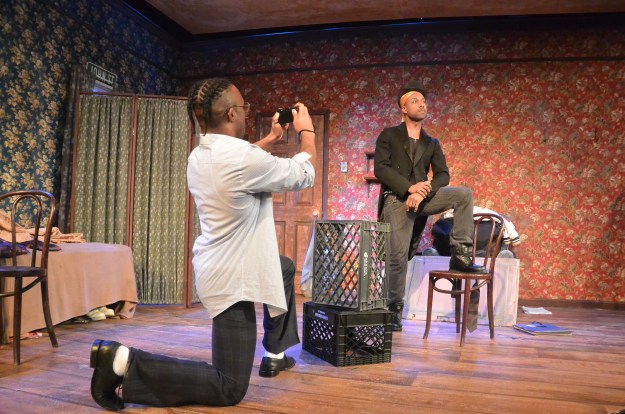
Lincoln sighs, hangs up his coat, and removes his face paint and beard. He trades out his dark slacks and top hat for gray sweatpants and a black satin durag. This all may sound strange to an outsider who couldn’t imagine a man named Lincoln wearing a durag—never mind being a black man. However, to the audience seated in Princeton’s Hamilton Murray Theater, this was the beginning of the quirky-yet-chilling “Topdog/Underdog.”

The story follows the plight of two African American brothers trying to make it through life as society and their past continues to work against them. Lincoln, the older brother played by Nathaniel J. Ryan, has a job re-enacting Abraham Lincoln’s assassination over and over again at an arcade that allows its patrons to brandish a gun and roleplay as John Wilkes Booth. His brother, Booth, portrayed by Travis Raeburn, has managed to scrape by with things that he has looted, or in his words, “boosted,” and is always open to any means of earning money.

The mind behind the emotional drama is playwright Suzan-Lori Parks. Parks won the Pulitzer Prize for the play in 2002, making history as the first black woman to receive the honor for a drama.

Throughout the production, a multitude of props and small details symbolize important themes. Parks uses the brothers’ hustle, a fast-paced card game, as an allegory for their destiny: Together, their competition hinders their success, and the only solution is for one of them to come out victorious. These elements, along with the play’s foreshadowing—like the characters’ names—effectively illuminate the systemic inequalities of the black experience.

“What I want people to get out of this story is that black men are in pain and need access to healing,” Ryan, who played Lincoln, said in an interview. “A lot of men don’t have access to mental health [care] or both parents, and on top of that, they are navigating a world in which they are suppressed. The main focus is to show black families that we need to love and rebuild the family.”

Ryan and Raeburn’s dedication to crafting realistic, relatable characters through expressive articulation and lively gestures further added to this astounding narrative. Their portrayal of these characters compels observers to reconsider their preconceived notions of the lives of black Americans. The genuine passion radiating from the cast and crew, coupled with the hardworking technical producers, created a sense of authenticity. Director Lori Elizabeth Parquet and set designer Rakesh Potluri did an excellent job bringing the script to life and immersing the audience in Parks’ universe. Through works of art like “Topdog/Underdog,” we can redefine the black narrative, and better understand the complicated strata behind the unique experience of minorities in America.

Brave “Topdog” Impresses

Theater handout 1.JPG

Nathaniel J. Ryan plays Lincoln in the
Summer Theater’s “Topdog/Underdog.” Photo Credit: Courtesy of Princeton Summer Theater

By Bryan Ventura 

New Brunswick, N.J.

Suzan-Lori Parks’ 2001 play, “Topdog/Underdog,” explores the story of two African American brothers in continuous competition with each other, and how tragedy can arise from a shared dark past. Most notably, the play won the Pulitzer Prize for Drama in 2002, making Parks the first African American woman to achieve this honor.

In this particular stage adaptation directed by Lori Elizabeth Parquet and presented at Princeton’s Hamilton Murray Theater, Travis Raeburn plays Booth, the younger brother who tries to con people through deceptive card games, though it doesn’t come naturally to him. He houses his older brother, Lincoln, played by Nathaniel J. Ryan, who scams unsuspecting people with an ease Booth could only dream of. But Lincoln has since turned away from his hustler ways, and is now content with his low-paying Abraham Lincoln cosplay gig at the local arcade.

Viewers quickly pick up that the brothers have their problems. Booth rents an apartment in New York City, but sometimes can’t afford to pay the cable, phone, or electricity bills because he isn’t that great of a con man. His ex-girlfriend leaves him because he has no steady source of income, and his loneliness hardens into resentment.

Lincoln wants nothing more to do with the card games that so consumes his brother. He hates reflecting on his time as a con man, and gets angry when Booth brings it up. He screams at Booth, driving up tension and further dividing the two brothers.

The production consists of only two characters, but actors Ryan and Raeburn did them justice. They were exciting and emotional in their delivery, which created a very reactive crowd that laughed at every joke and gasped at every surprise. There was something about the unintentional humor that made the production very fascinating.

It’s supposed to be a serious moment, laden with underlying sibling rivalry, when Lincoln and Booth argue over money and begin to tear down the apartment in their ferocity. Yet the crowd, including myself, was dying of laughter.

A lot is foreshadowed in this play, and mentioning it would ruin the experience for viewers. However, this production provides a story like no other: how ceaseless emotional abuse can quickly turn brotherly love into malice. How, without structural support, those struggling can fall through the cracks. While these brothers, Lincoln and Booth—the topdog and underdog—care deeply for each other, it might not be enough to save them from each other, or the cards they’ve been dealt in life.

Teach For America Must Work With Teachers

By Jasmyn Bednar

Eagle River, Alaska

To sa y that education is in my DNA is probably an understatement,” says Anna Almore. “It’s literally part of the fabric of my whole universe.” Almore, the managing director for Teach for America (TFA) in South Dakota, spoke recently to a group of reporters from the Princeton Summer Journalism Program.

Almore joined TFA in 2008, teaching fifth and sixth graders in New York; she later worked in Philadelphia, New Jersey, and along the border in El Paso. To Almore and the many TFA alums who continue to work in education, the organization is doing incredibly valuable work. But while it’s true that TFA has plenty of successes to its credit, the organization is also leaving a complicated legacy across the country.

Teach for America was founded in 1990 by Wendy Kopp, who, in a senior thesis at Princeton, stressed the need for increased education initiatives in low-income communities. She launched the program a year after her initial proposal, and its impacts were immediate. Since its founding, the program has served 410,000 students from 51 different regions where access to quality education is historically limited. Most of these regions are classified as “hard to teach” areas, where teacher turnover rates are high, and literacy and mathematical proficiency are low. Almore, like many alums, continues to carry on the work that TFA advocates for—in her case, training upcoming TFA members in rural South Dakota.

Yet as TFA has thrived, teachers’ unions have suffered. In recent decades, the educational reform movement has led to new non-unionized schools, including charter schools, and increased advocacy for education privatization. TFA has been accused multiple times of union busting.

According to the Associated Press and Education Week, the recent strikes in Oakland, Los Angeles, Chicago, and Denver are part of this pattern. Education Week reported that more than 300 TFA alums wrote an open letter to the Bay Area chapter of TFA, criticizing it for withholding payment to any member of TFA who joined the Oakland strike. (TFA has said that it doesn’t have a stance on how its members interact with unions.)

Teachers’ unions and Teach for America have gone head to head for years now. Much of the conflict stems from the recent push toward charter schools. TFA’s largest private funder, the Walton Foundation, is a major supporter of charter schools. A ProPublica report found that the foundation promised TFA $4,000 for every public school teacher and $6,000 for every charter school teacher. In 2018, nearly 40 percent of TFA teachers were sent to charter schools, despite the fact that those schools only educate seven percent of students in America.

As the interview with Almore makes clear, TFA is doing no shortage of admirable work. For instance, the organization is helping students on the Rosebud Indian Reservation in South Dakota to pursue college access, she said. But TFA must figure out how to have a better relationship with teachers’ unions, so that all teachers—both those in TFA and others—can retain protections and turn the focus back to providing the best education possible for students.