
Tag Archives: history

A Community Built on Stories 

By Alya M.

Sonder is the abstract feeling and realization that each person walks around with their own life just as complex and vivid as your own. Through Voices of Princeton, this abstract becomes real. Each story plays as a reminder of how deeply interconnected we really are even as we walk silently past each other. 

The oral history initiative was a result of collaborations between the Princeton Public Library, the Historical Society of Princeton, the Arts Council of Princeton, and the Witherspoon-Jackson Historical and Cultural Society. The goal of the initiative is to collect, save, and store the stories of Princetonians. Princeton is a small town with a population of roughly 30,000, but it is made up of a diverse community with over 50 languages spoken. With the help of Voices of Princeton, all these different people are able to combine their experiences to create culture within the town, strengthening the community.

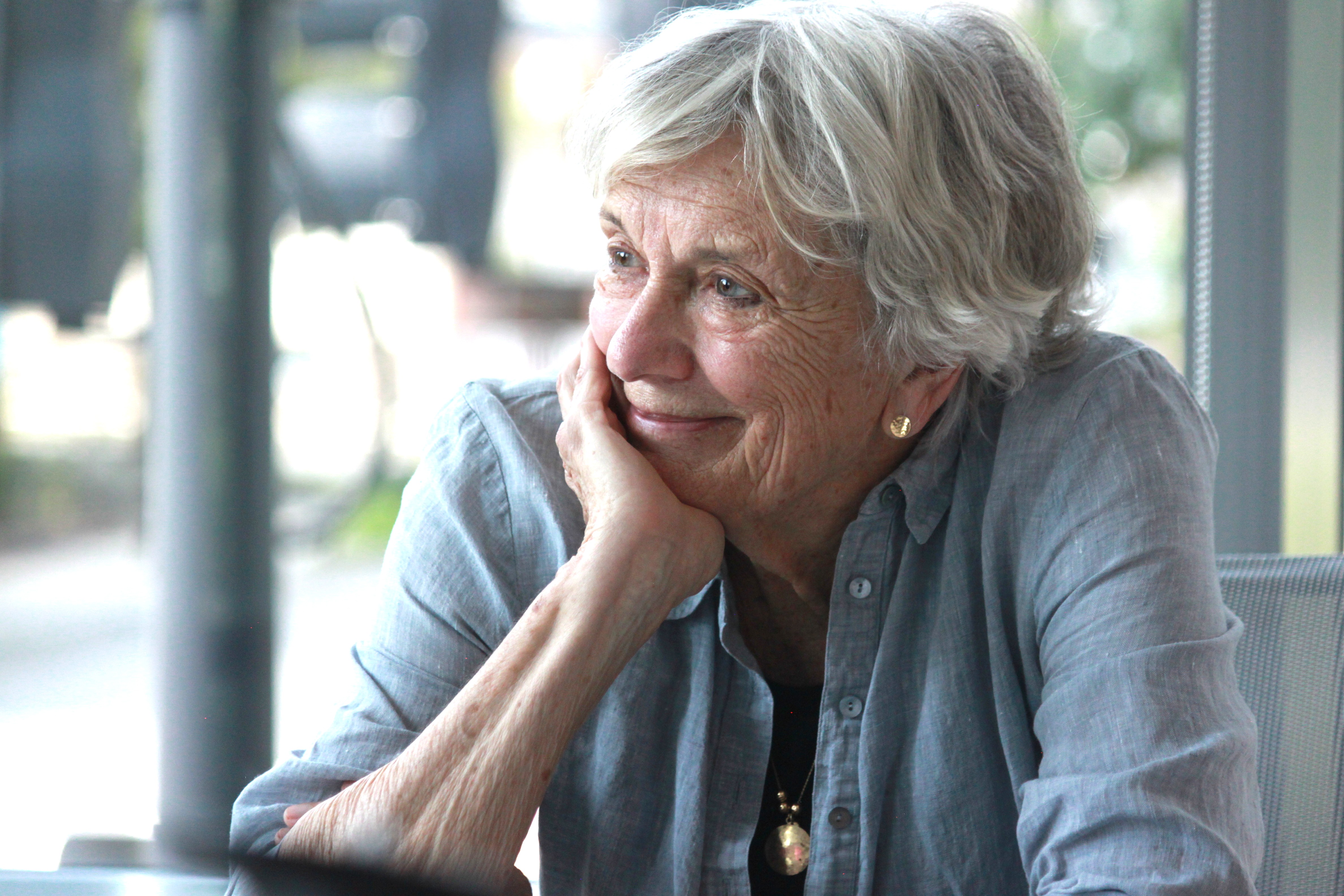
“When populations from really different backgrounds, different cultural histories, talk together, we become solidly supportive of each other,” said Pamela Wakefield, the inspiration behind Voices of Princeton. Wakefield went on to explain the importance of storytelling when it comes to building a more solid community by allowing people to see each other, not just for who they currently are, but also for who they’ve been and what they’ve experienced. Stories, she emphasized, help uncover the shared humanity beneath our differences, making space for empathy and deeper understanding. In a town like Princeton storytelling becomes not just a form of preservation, but a bridge that connects generations, cultures, and individuals who might otherwise remain strangers. Through Voices of Princeton, that bridge is being built one story at a time.

“I would say that if like in 20 years you have little kids and they say what would it have been like to live here, you can say, let’s listen,” Wakefield said. To her, storytelling is more than memory; it’s a gift we pass on.

Stephanie Schwartz, Curator of Collections and Research at the Historical Society of Princeton, also shared her thoughts on what oral history makes possible. “We’re collecting today for what will become the historic record tomorrow,” she said. Schwartz explained that these stories are valuable not just because of the content, but because of who is telling them and when: “It tells us as much about the person at the time they’re telling the story as it does about the stories they are telling.”

Not everyone feels their voice matters in the bigger picture. “Not everyone thinks their story belongs in history,” Schwartz added. “It’s our job to say: yes, it does.” Voices of Princeton makes that message clear. No one is too new, too quiet, or too ordinary to be remembered.

Cliff Robinson, Public Humanities Specialist at Princeton Public library, reflected that idea. “Just because you’ve been here for a short time doesn’t mean this isn’t your community or that you’re not responsible for it in some way,” he said. In a place like Princeton, where people move in and out often, that reminder matters. Everyone has a place. Everyone contributes to the larger story.

Robinson also spoke about how special it is that the stories are recorded in audio form. “I’ve always been enchanted by the fact that they’re just audio. It requires a different kind of attention—you can close your eyes and just listen.” That kind of listening, quiet and focused, builds a kind of connection. 

Kim Dorman, Community Engagement Coordinator at the Princeton Public Library, added that accessibility is an important part of the project’s mission. “As a public library, we’re making these stories publicly available in a way that’s much more accessible than most oral history projects,” she said. That means anyone in the community or even outside of it can listen to it, learn and reflect. 

Through Voices of Princeton, stories are no longer just something people keep to themselves untold, they become part of something stronger. The initiative is a reminder that history is not made only by the powerful and famous. It’s made by the same people we see everyday. Every person carries a story that matters.

In a town where diversity lives on every block, storytelling becomes not just a form of preservation but a bridge that connects generations, cultures and individuals who might otherwise remain strangers. Through Voices of Princeton, that bridge is built one story at a time.

Princeton Mayor Mark Freda Addresses ICE Raids, Public Discord, and the Fight for Trust

By Jayden W.

Princeton Mayor Mark Freda has officiated weddings, shaken hands at hundreds of community events, and spent decades fighting fires for his hometown, but these past few months have proven some of the most difficult of his career. Not a blaze in a building, but a firestorm of public outcry.

The mayor, who joined Princeton’s volunteer fire department at just 15 years old, grew up in a Catholic household rooted in community service. That foundation shaped him into a leader who takes pride in public service, but the present political climate has tested even his strongest foundational principles.

At last week’s town council meeting, nearly 70 attendees packed the room, demanding answers after a disturbing encounter between community members and the United States Immigration and Customs Enforcement (ICE).

According to Freda, ICE agents stopped a van carrying 15 people to work. The organization was reportedly looking for one individual, but detained everyone onboard, regardless of legal status or criminal history.

“It seems to me that ICE is concentrating on anybody that appears to be Latino,” Freda told the Princeton Summer Journal. He said he was “90-some-percent” sure that at least one person arrested had work authorization. “None of them are criminals,” he said. 

Freda noted that many who attended the council meeting were not Princetonians, but outsiders who were not focused on useful outcomes. “They were more concerned with how they were going to look on those film clips,” Freda said.

At the heart of the debate is the New Jersey Immigrant Trust Act, a proposed law to protect undocumented residents from deportation by restricting cooperation between local law enforcement and ICE. The Princeton town council is considering a resolution to support the act.

“People are concerned that if we pass the resolution, ICE and others will pay more attention to Princeton,” Freda said. “I don’t know if that’s actually true.”

The New Jersey State Legislature has the final call. Despite this tension, Freda remains steadfast in his love for the community that raised him.

“I’ve been here forever,” Freda said. He went on to share that what he wants is for his critics to say: “That guy was okay. I didn’t agree with him all the time, but you know what? He was okay.”

For Freda, the goal isn’t perfection, it’s presence. In a town that often demands both, “okay” might just be the most human standard of all.

Hearing Stories from the Voices of Princeton

By Ipichiesimhe I.

Pam Wakefield, a longtime community member of Princeton, describes what the moments following the devastating terrorist attack on September 11, 2001 felt like. “Everyone gravitated towards Princeton University,” says Wakefield. “Hearing the church bells, funeral after funeral after funeral of people who had died.” 

In that moment, people felt isolated; families were torn apart, businesses closed, and community morale was at an all-time low. Then, more than ever, people needed a means to share how they felt. This feeling of isolation and uncertainty loomed over the busy streets of Princeton, filled with citizens going in and out from work.

Many years later, an initiative was born to capture stories from the community like what unfolded after 9/11. Voices of Princeton stands as a medium for people to share the intimate details to the world that they were too afraid to share with their family.

The journey of creating Voices of Princeton was not a linear one. Wakefield previously proposed the idea to the staff of the Princeton Public Library in 2004, when the library was just being built; however, it did not work out. Still, Wakefield is considered the inspiration: “a part of the Voices of Princeton since before it was born,” says Cliff Robinson, the Princeton Public Library’s Public Humanities Specialist. Originally, Wakefield suggested the idea as a means of expression amongst the various individuals who lived and worked in Princeton. She was previously heavily involved in religious organizations, including as a member of her church community, along with contributing to churches surrounding hers.

It is apparent that Wakefield cares deeply about the program. She cares about her community, the people living in it, and the progress it has made over the years. But she also has a relationship with the city’s main attraction. When asked how the community has affected her life, Wakefield first lists the fact that she “[worked] for the university” and says that her former employer changed her life.

Voices of Princeton is one thing that Wakefield is proud about. She sees how much it’s impacted the lives of the many people around her. Even as the interview was coming to a close, Wakefield urged us to explore the library and the many resources available for us throughout it.

But Wakefield isn’t the only one who cares deeply. Library staff, including the program’s organizers, were interviewed: Cliff Robinson; Kim Dorman, the library’s community engagement coordinator; and Stephanie Schwartz, the Historical Society of Princeton’s curator of collections and research.

Over the years, each organizer contributed to the project in different ways. Their expertise ranged from areas of history to human connection. Schwartz talked about why she appreciated Voices of Princeton so much, stating that she was “really fascinated by the creation of history and what we choose to remember, and how the historical narrative is written.” She also says that “it tells us as much about the person at the time they’re telling the story as it does about the stories they are telling.”

Even though Voices of Princeton is a relatively new program, its effects are still being felt by those sharing their stories, those listening to stories, or those doing the work behind the scenes to ensure that the legacy of the people last.