Tag Archives: Sports

Liberty’s 6th woman rallies to bring a comeback 

By Bryan R.V.

The New York Liberty were down in the first quarter. Way down. With 1:32 left on the clock, they trailed the Los Angeles Sparks 24-15. L.A. was relentless. When Rae Burall walled off Natasha Cloud from getting into the paint, it seemed like another missed opportunity. But Cloud spun wide and with help from Isabelle Harrison, put up a shot to let it fly. 

Bucket. 

The crowd roared with excitement after witnessing the masterpiece of a play. The sixth woman had arrived. 

Just over 16,000 people were in attendance to watch the Liberty, one of the best teams in the league and the Sparks, one of the worst, at the Barclays Center. Liberty fans cheered for a comeback after L.A. got off to a hot start, looking to extend its four-game win streak. The Sparks dominated early, with Kelsey Plum launching fearless 3s while New York stood paralyzed. Things worsened when Breanna Stewart exited three minutes into the game with a leg injury. At halftime, the Liberty trailed 58-45. All the momentum belonged to the Sparks. 

The response came from the fans.

The Liberty faithful poured their hearts out like their lives were on the line. Ellie the Elephant, New York’s world-famous mascot, put on a performance that could rival Beyoncé. The team picked up speed in the third, scoring 24 points. Natasha Cloud and Sabrina Ionescu locked in and made repeated big plays, the fans going ballistic over each highlight. Cloud gave it her all, scoring 22 points and putting on a show after each bucket. Ionescu recorded her 16th 30-point game, a new franchise record. But what sent the fans into absolute madness was a simple free throw. 

With 2:18 left on the clock, Ionescu was rewarded with one shot and the opportunity to tie up the game. Just like Atlas, Ionescu carried the weight of the world to keep the Liberty’s win streak alive. 

Bucket. 95-95.

New York had completed the comeback, and the torch was blazing hot. The jumbotron words jumped on screen, the arena lights tried to give someone an epileptic seizure, the fans rallied to cheer on their favorite team. But with the score tied at 99-99 and the clock ticking toward zero, the Spark’s Rakia Jackson launched a desperate shot over the Liberty’s Stephanie Talbot. Bucket. 

Rickea Jackson Devastates New York City

By Dominic T.

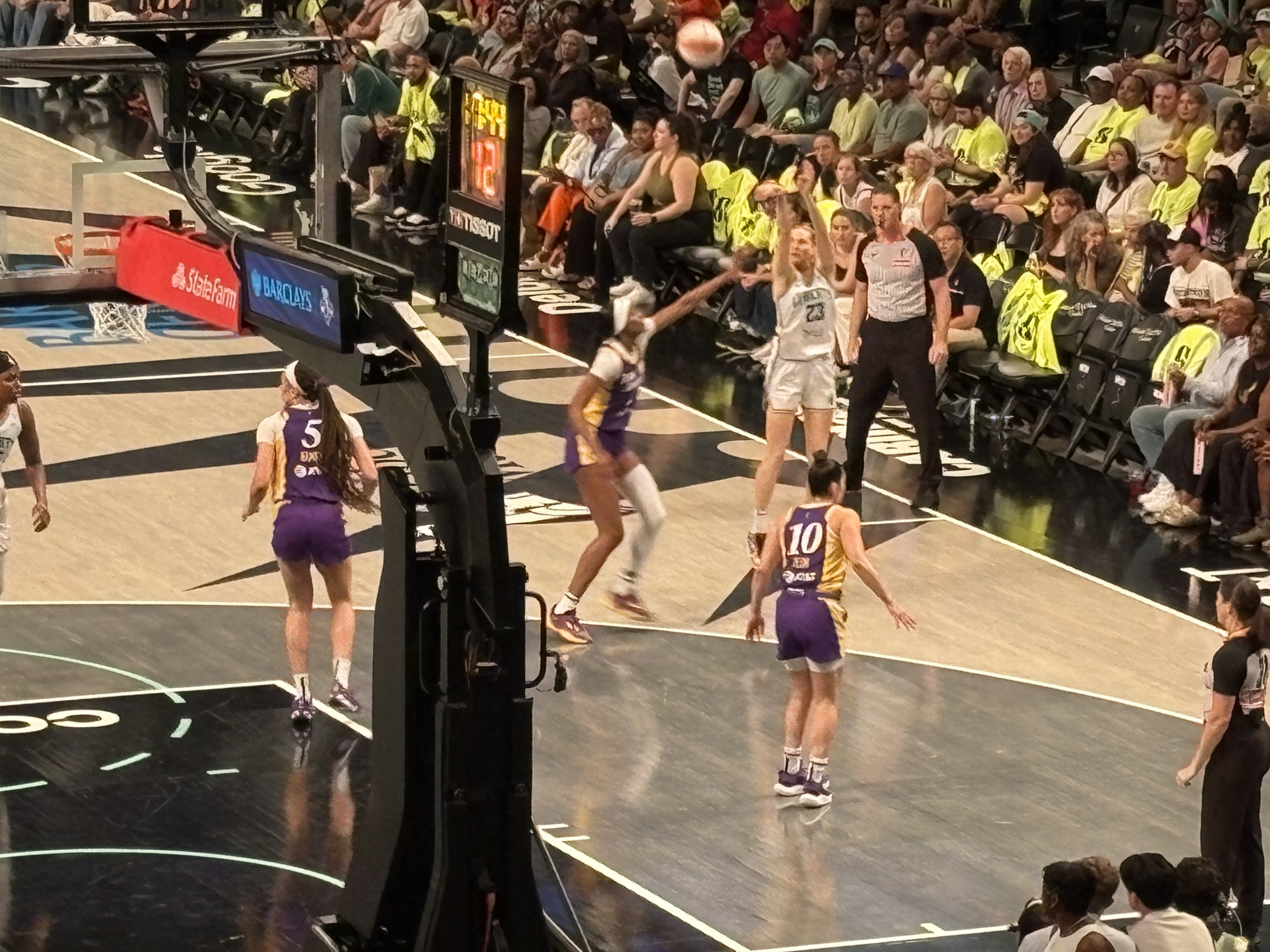
The July sun wasn’t the only thing heating up in Brooklyn on Saturday night. As Kelsey Plum of the Los Angeles Sparks stood looking frustrated at center court, the Liberty’s Natasha Cloud couldn’t do anything but grin while the crowd roared.

Fittingly, a hyper-intense contest ended in a frantic layup by Sparks forward Rickea Jackson to beat the buzzer and put an end to New York’s 15-point comeback with a 101-99 victory. Silence fell over the arena so quickly you’d think someone had died on the court, while Los Angeles celebrated over the gravestone. Jackson finished the game with 24 points on 9-15 shooting, 4-6 from three. 

The recent explosion in popularity of the WNBA directly contributed to the passion both on the court and in the stands that night. When players faced off emotionally and physically, the crowd erupted. When the players are invested, the fans are invested at the games, on TV and online. In turn, the league can invest more into its players. The 2025 season has been defined by its fierceness, and it’s projected to earn $1 billion in revenue. 

Performances like that of the Liberty’s Sabrina Ionescu get even more attention as a result of the growing audience size. In her 16th career 30-point game, setting a franchise record, the 5’11” guard contributed eight rebounds, six assists, and four steals. Her final basket came with 23 seconds on the clock, tying the game 99-99 and sending the crowd into a frenzy. 

Perhaps the only person with more hustle than Cloud, meanwhile, was the man mopping the court in between offensive sets. The guard’s 22-point, nine-assist outing was sprinkled with multiple enthusiastic confrontations with Plum. Her death stare into the stands lit a fire in the crowd after a quick-step and-1 in the fourth quarter.

Despite Cloud’s hustle, Plum managed to orchestrate the Sparks offense, scoring 20 points and dishing out eight assists. The Liberty simply didn’t have an answer in the paint after Breanna Stewart went down with a hamstring injury three minutes into the game. 

With the loss just past the halfway point in the season, the Liberty ended their home stand 6-2, clinging to the first seed in the east. The Sparks expanded their red-hot win streak to five in an attempt to save their season. No matter who comes out on top this season, every team in the WNBA has won the hearts of basketball fans across the country.

The WNBA Has New Players. We Call Them Officials

By Selah D.

When fans criticize WNBA officiating, it’s rarely about one bad call — rather, it’s the inconsistency that sparks anger. One night, physicality is ignored; the next, the same play draws a foul. This makes it extremely difficult for players to gauge how far they can push the boundaries. 

As a result of the lack of consistency, every foul can sway the game one way or another. Players, coaches, and fans are increasingly upset that officials are changing the outcome of games instead of the players. 

This season, several conflicts between teams have broken out mid-game due to inactive officiating. Take the Indiana Fever-Connecticut Sun game just before the All-Star break, in which a highly anticipated matchup was derailed by constant physical altercations. Instead of just playing basketball, multiple players were fined or ejected for what was fundamentally a lack of consistent, effective calls made by the officials.

In the press conference following the game, Fever head coach Stephanie White commented on the officiating: “When the officials don’t get control of the ballgame, when they allow that stuff to happen — and it’s been happening all season long — this is what happens. You’ve got competitive women who are the best in the world at what they do and when you allow them to play physical, they’re gonna compete. [The officials have] gotta get control of it, they gotta be better.” 

Not only do the officiating problems create opportunities for conflicts during games, but also may be one cause of injuries that have plagued the WNBA this season. Dangerous plays have become increasingly common. Excessive fouls and over-the-top physicality lead to situations where players are highly subject to injury. This year, Caitlin Clark, Kayla Thornton, Breanna Stewart, and many other prominent players have all missed time while hurt. With concerns related to the health of star players, officials may finally be held accountable. 

Whether it’s Paige Bueckers asking the refs if they need her glasses, Diana Taurasi saying she’ll see them in the lobby, or Sabrina Ionescu daring them to tech her, players are fed up with how the refs are impacting the game. Inconsistent officiating has been a league-wide problem for far too long, and now. With viewership at an all-time high, the issue needs to be addressed now more than ever. Fixing WNBA refereeing will create a better game experience not only for those playing and coaching, but for the fans watching too.

Buzzer Beater Downs NY Liberty 

By Arianna S.

Stepping into the Barclay’s Center 90 minutes before a game feels ritualistic. The lines are short, the corridors are all but empty, and the promise of what’s to come hums in the air as the first few fans prepare for tipoff.

Slowly, the seafoam green tide rises, flooding every level. New York Liberty jerseys, signs, face paint — suddenly, Barclays is alive. Chants begin in pockets, swelling into unified roars. When player introductions roll across the Jumbotron, each name — Jones, Ionescu, Cloud, Stewart, Fiebich — is met with uproar. The crowd isn’t just watching; it’s performing.

Then the game begins.

When the New York Liberty took on the L.A. Sparks at home on July 26, they came in on a five-game win streak, ready to take on a team they had defeated a few weeks earlier.

Jonquel Jones got the first points on the board for the Liberty early, making the New York faithful believe it’d be a game of triumphant moments. Instead, it was the beginning of a rather dull first quarter, involving bad passes, missed shots, and aggravating calls. The energy on the court was not matching the energy in the stands, especially after Breanna Stewart left the game with a leg injury three minutes before the end of the period.

Even as the Liberty pulled closer in the second half, it felt as though the tone on the court had been set against them, and it never quite lifted. In the end, a last-second desperation shot gave the Sparks the 101-99 victory, and a five-game win streak. 

Though New York came in with momentum, superior talent, and home-court advantage, none of it seemed to matter once the clock started. The chemistry that usually characterizes the reigning champions felt off, and while individual moments sparked the momentum fans expected, the Liberty never fully connected. That one slow quarter turned into a game in which a top-tier never seemed to be able to keep up their typical pace.

Thankfully for the Liberty, the Brooklyn crowd kept it hyped throughout, cheering as if they’d never see these players again. Sometimes, it’s the fans who make nights like these unforgettable.

School Sports Put Students At COVID Risk

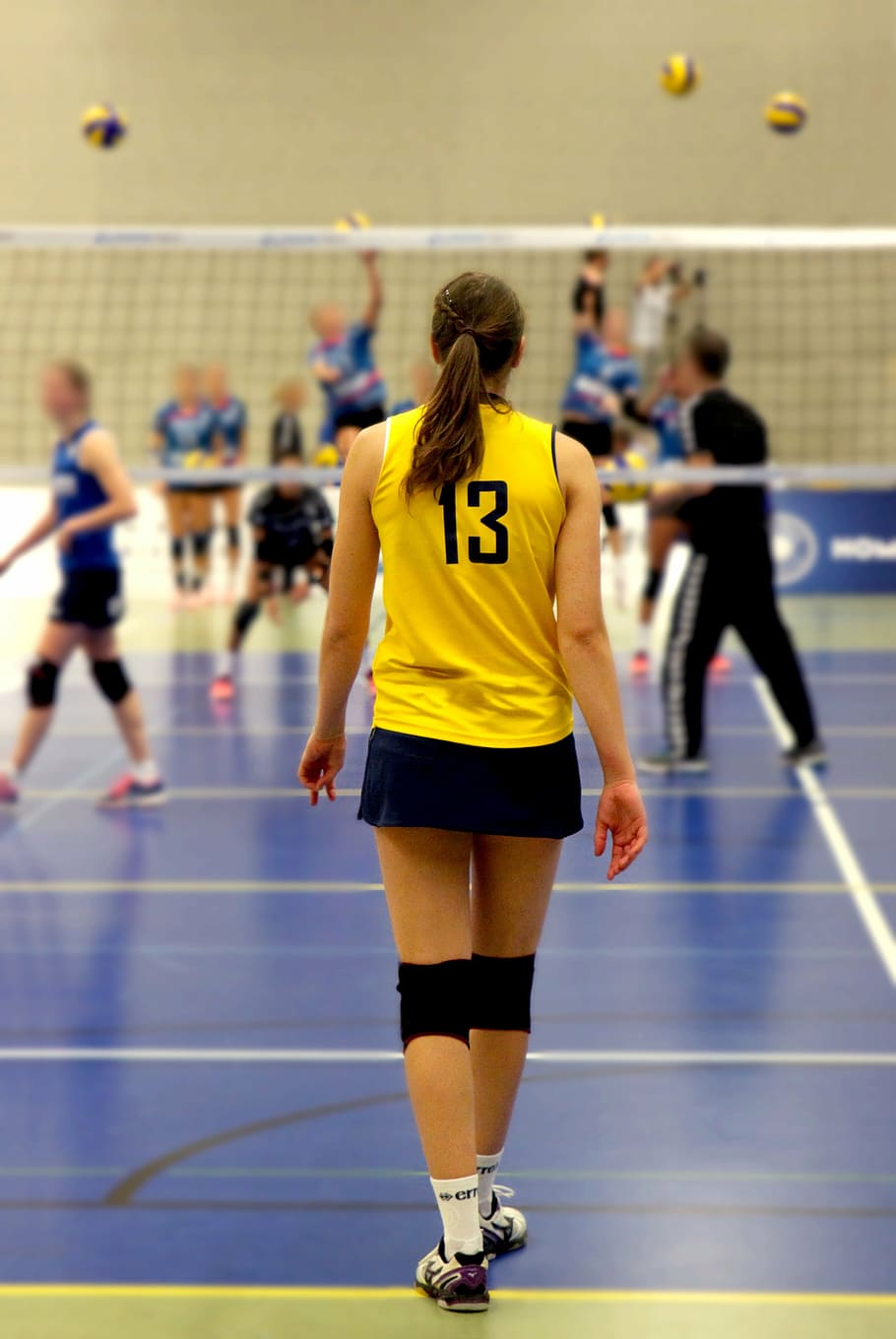
volleyballPxfuel

This story was reported by the staff of The Princeton Summer Journal and written by Kayla Bey, Jariel Christopher, Melanie Paredes, and Daniel Sanchez.

Summer F., 17, is a high school senior in West Baton Rouge, Louisiana, where she plays varsity volleyball. In March, Louisiana was stricken with one of the earliest and worst U.S. outbreaks of COVID-19, forcing the shutdown of classroom learning and youth sports. But months passed, cases subsided, and by early June the state had okayed the resumption of practices for fall sports. When Summer returned to volleyball practice, however, she felt her school, Port Allen High, might be courting disaster. “Most [athletes] decided to wear masks, but it didn’t last long,” she said. “It’s sometimes hot in the gym and with workouts it’s hard to breathe.”

Several regulations were in place, including prepractice temperature checks and a prohibition on locker room access. But the school, Summer suggested, was partly relying on students to police themselves, asking them to report any virus symptoms or contact with infected individuals. In July and August, cases again began to rise in Louisiana, which now has the highest per-capita infection rate in the country. Volleyball practice continued three times a week, as scheduled.

Port Allen High is following the re-opening guidelines set in June by the Louisiana High School Athletic Association (LHSAA). But the regulations may not be addressing major drivers of the virus. Cloth face masks are encouraged for coaches, but are not recommended for athletes engaging in “high-intensity aerobic activity.” Perhaps more troublingly, the LHSAA has has not prohibited teams from congregating in enclosed indoor facilities, from “meeting rooms” to gymnasiums. COVID-19 is thought to
spread primarily through airborne particles in poorly ventilated spaces.

According to Port Allen principal James Jackson, “two to three” student athletes have
recently tested positive for the novel coronavirus. But he defends the school’s protocols. “We never had an outbreak on any team,” he told The Princeton Summer Journal. This, he said, suggests the infections were “due to some type of gathering that they may have had outside of school.”

The situation at Port Allen High School is a microcosm of America’s unruly and improvised approach to safely resuming high school athletics.

In July, the Summer Journal conducted a survey of 33 school districts’ sports reopening plans, polling schools from California to Rhode Island. The results varied wildly.
Schools in Montgomery County, Maryland canceled summer practices and fall sports, as did the state of New Mexico. But in Chicago, Illinois, Orange City, Florida, and Tahlequah, Oklahoma, summer practices or conditioning drills continued. Some districts, such as Boston, Massachusetts, called off summer programming but pledged to resume competition in September. School districts were almost evenly split between those that held and cancelled summer practices—though districts in the Northeast,
where the virus hit early, tended to have more restrictions than elsewhere.

The survey may be most telling for what districts didn’t know. Many indicated that coaches would be wearing face coverings, but most were non-committal about how
athletes were meant to wear masks or socially-distance in team settings. The school district encompassing Orlando, Florida provided a detailed presentation about its summer practice protocol. Several weeks later, amid sharply rising coro-
navirus cases, the district postponed all practices until the end of August. Few districts stated with any clarity how fall competitions would be conducted safely, if at all. If anything, the survey reflected the Frankenstein monster that is America’s patchwork response to the pandemic.

While the COVID-19 fatality rate remains extremely low for minors, the resumption of classroom instruction and organized sports could spread the virus to coaches, teachers, and family members. Unlike professional sports teams, which have rigorous testing protocols, most high schools have virtually no way of detecting asymptomatic transmission between students.

For now, Summer is deciding to play volleyball, despite her anxieties. “I feel as if they do not care about our safety, even though there are some precautions put in place,” she said, citing her district’s decision to re-open.

“Most students who play sports are choosing to go to school in August because sports is all they have. For some, it’s their senior year. Who doesn’t want to play sports their senior year?”

On the night of July 16, the Gwinnett County Board of Education convened outside of Atlanta, Georgia. Though the county had the second-most COVID-19 infections in the state, the school district would resume in-person learning the following month. Just one board member, Everton Blair Jr., voiced his disapproval. After he spoke and as cameras continued to roll, Chairwoman Louise Radloff muttered, “I could strangle him.”

Radloff, who is white, later called her comment “out of order,” and apologized to Blair, who is Black. The subject of re-opening high school sports in Georgia, where football is close to a religion, has been no less charged.

Early in the summer, the Georgia High School Association released a strict re-opening protocol. Locker rooms were off-limits and group sizes were limited. But on July 22, with football season looming, the GHSA relaxed the rules. Locker rooms were opened and
athletes could huddle in unlimited number. Asked about the district’s latest protocols, Gwinnett County Assistant Superintendent Reuben Gresham told the Summer Journal, “It is not feasible for student athletes to social distance.”

As it turns out, it may not be feasible to relax standards either. On July 29, the Atlanta Journal-Constitution reported that 655 positive cases had been shared with the GHSA,
more than double the number on file two weeks earlier.

By August, Georgia had cancelled summer football scrimmages. It’s anyone’s guess if most districts will play football in September.

“The decisions necessitated by the current pandemic are literally changing almost daily,” said Steve Figueroa, Director of Media Relations for GHSA. “What we believed would be the case a month or even a week ago has often proven to be quite different in the present.”

As states scramble to re-start the school year, there appears to be an inverse correlation between high coronavirus rates and postponements.

Some of the states with the highest infection rates in the country, such as Georgia, Alabama, and Mississippi, say they are proceeding with fall sports.

Meanwhile, some of the states with the lowest rates, such as Oregon and Colorado, have postponed them until 2021. (Some of the hardest-hit states are also some of the most
enthusiastic about high school football.)

School districts committed to gridiron clashes under “Friday night lights” may consider heeding the Centers for Disease Control. Players are at especially high risk for transmission, the CDC warns, during “full competition between teams from different geographic areas.”

But for schools that play it safe, and postpone sports, will there be unintended consequences?

“Swimming has been my life,” said 17-year-old Michael F., a senior at West Boca Raton Community High School. Ranked 25th in the state of Florida and 422nd in the nation, he is one of the best at his craft. Last year, he started generating interest from recruiters from Georgia Tech, The College of Wooster, and a number of other schools.

But what will happen to that interest—and the scholarships that could come with it—if sports don’t resume?

The Florida High School Athletic Association has released three options for returning to
sports, but Palm Beach County has not specified which they will choose.

If sports don’t resume, “recruiting will be harder than ever,” said Monte Chapman, who coaches track and field at West Boca Raton. “There will be no way of approximating how much an athlete has or has not improved.”

In New York City, school officials have similar concerns. Ciana DeBellis is an assistant principal at the Fordham Leadership Academy in the Bronx. “We have students that were going to college on scholarships,” she told the Summer Journal. “I’m not really sure how that is going to work.”

On August 9, New York Governor Andrew Cuomo announced that New York City—like Chicago, Philadelphia, and other major cities—would be reopening its public schools for in-person instruction. But high school sports in the Big Apple, for better or for worse, would remain indefinitely postponed.

In kneeling, Kaepernick and other players show patriotism

By Jayda Jones 

Brownsville, PA

The last few words of the national anthem—the home of the brave—could refer to Colin Kaepernick, Eric Reid, or any of the dozens of other National Football League players who have protested police brutality by kneeling during the song. Two years after Kaepernick first declined to stand during the pregame rendition of the “Star-Spangled Banner,” NFL players are still exercising their first-amendment rights to demonstrate against racism. 

Some say the anthem is no time to protest. But far from being unpatriotic, the act of kneeling is a respectful form of civil disobedience that protests the fact that America does not treat its citizens equally. 

It’s important to remember why Kaepernick started his protest. A few weeks before Kaepernick first demonstrated during the anthem, Alton Sterling, an unarmed African-American man, was killed by police in Baton Rouge, Louisiana. “This is what lynchings look like in 2016,” Kaepernick said. Other players soon followed.

Peaceful protest, even during the national anthem, is protected under the First Amendment.  But while the players clearly have a right to speak, it’s important that we listen.

For too long, the voices of people of color in America have been overlooked, which is why kneeling is so important. It’s showing that we as African Americans cannot praise or pledge our full hearts to a country that is condoning the murder of our people. It’s showing that while we respect our country enough to refrain from speaking during the anthem, we still demand to be heard through our actions to protest this long history of injustice.

Kaepernick’s loudest critic has been President Trump, who has pushed the NFL to suspend players who protest during the national anthem. “Find another way to protest,” Trump tweeted last week. But the protest’s goals were never to disrespect. The true betrayal of America is the brutality and injustice many citizens continue to experience. 

The issue of police brutality has instilled fear in the black community, leading many of them to flee when a policeman is in sight lest they be targeted and terrorized. Of course, this only makes the situation worse and leads policemen to target black individuals more, but what are you supposed to do when the color of your skin is a danger to you, and apparently, a danger to someone else? 

We protest for 17-year-old high school student Antwon Rose, unarmed when he was killed by police in East Pittsburgh, Pa. We protest for Charles Kinsey, a behavioral therapist shot by police in North Miami, Fla., while helping a patient. We protest for Philando Castile, Tamir Rice, Stephon Clark and too many others. African Americans are still being brutally and wrongfully murdered, and justice is rare. That’s why we protest. Until I, as a black female, or my brother, as a black male, can comfortably exist in a room with a police officer, or walk into a store without being accused of stealing, we will protest. Until society starts treating African-Americans like first-class citizens, we will protest.

You may not understand it, you may stand, but don’t be surprised if I kneel. That’s patriotism. 

Darnold shines in first pro action

By Devontae Jackson

Dayton, OH

East Rutherford, N.J.–The New York Jets have a big decision to make. The competition between Josh McCown, Teddy Bridgewater, and Sam Darnold to win the team’s starting quarterback job began in earnest on Friday when the Jets took on the Falcons in a preseason game at MetLife Stadium.

While McCown started the game, both Bridgewater and Darnold made good cases to be the starter on Sept. 10 when the Jets open their season against the Lions. 

McCown, the Jets’ Week 1 starter last season, only lasted one series, completing one pass on one attempt for four yards. He was replaced by Teddy Bridgewater, playing in his first game for the Jets after signing for New York this offseason. On his first drive, the former Vikings quarterback gave the Jets a lead with a 16-yard touchdown pass to Isaiah Crowell.  

Bridgewater stuck around for the rest of the first quarter and into the early part of the second quarter. He finished the game with seven completions on eight attempts, 85 yards, and one touchdown. 

Jets head coach Todd Bowles praised Bridgewater after the game. “I think it’s great for him to get back out on the field, just enjoy himself and have some success early was great for him,” Bowles told reporters. “I know he had a big smile on his face, so I’m just happy for him.”

But the new rookie in town, Sam Darnold, stole the show. Selected No. 3 in the 2018 NFL draft out of USC, Darnold started off slow in the second quarter. He overthrew a pass to Charles Johnson, but he settled in and slowly but surely moved the ball up the field. Just before the end of the first half, Darnold found Johnson in the endzone for a 14-yard touchdown, with the extra point giving New York a 17-0 lead. 

“He looked comfortable,” Bowles said of the rookie quarterback after the game. “He was excited going out.” He also said Darnold “can get better at some things, we can get better at some things as a team.” 

Darnold remained under center for the entire second half and finished the game 13 of 18 for 96 yards and a touchdown. Action slowed down after the break, as neither team scored, sealing a 17-0 victory for New York. 

Bridgewater had the highest overall quarterback rating of 150.5 at the end of the game. Darnold followed Bridgewater with 103.0, while McCown’s lone completion gave him an 83.3 rating. 

Bowles praised all three quarterbacks, though he has yet to name his starter for Week 1. “I’ll make my decision when it happens,” Bowles said. “I’m not going to jump to conclusions after one game.”

Darnold impressive in Jets preseason game

By Kendall Williams

Phenix City, AL

East Rutherford, N.J.–Break! The Jets, leading the Falcons 10-0 in the second quarter, scrambled out of their huddle like hungry wolves. Though only the preseason, the moment felt anything but meaningless: Rookie quarterback Sam Darnold was in the first goal-line situation of his NFL career. 

Anxiety infused the thousands of Jets fans gathered in the stadium as New York took to the line, just over a minute remaining in the first half. Darnold had completed six consecutive passes in less than two minutes to move the Jets from their own 36-yard line to the doorstep of Atlanta’s endzone. On first and goal from Atlanta’s three-yard line, the Jets lined up with an empty backfield. The ball was snapped, and Darnold hooked a pass to Charles Johnson on the right, but failed to find his receiver. On second and goal, Darnold handed off to Trenton Cannon, but the Falcons gobbled him up in the backfield. 

On third and goal, Darnold found Charles Johnson in the endzone, but referees ruled Johnson had pushed off his defender, negating New York’s touchdown. Backed up to the 14-yard line, New York lined up in shotgun formation with Cannon in the backfield and Johnson still on the right wing. The ball was snapped and Darnold, shuffling his feet and glancing left then right, found Johnson again in the right corner of the endzone: the first-round pick’s first touchdown pass of the preseason.

This isn’t Darnold’s first rodeo dealing with the pressure and responsibilities of the quarterback position. During two years as a starter for USC, Darnold won 20 games and lost just four, throwing for 7,229 yards and 57 touchdowns against 22 interceptions. 

Darnold, who finished Friday’s game 13 of 18 for 96 yards and a touchdown, is competing with veterans Josh McCown and Teddy Bridgewater to win New York’s starting quarterback job. But if he continues playing like he did against the Falcons, he could start for the Jets in their Week 1 game against the Lions. 

Though the Jets won the game 17-0, Atlanta is expected to be a better team this season, mostly because of the team’s star quarterback, Matt Ryan, who only played one series on Friday. Ryan’s first NFL season was jaw-dropping, as he went on to win Offensive Rookie of the Year after throwing for 3,340 yards and 16 touchdowns. 

Will Sam Darnold be the 2018 version of 2008’s Matt Ryan? No one knows the answer to that question just yet, but Darnold is making a convincing case for himself as New York’s starting quarterback. 

Jets roar past Falcons, 17-0

By Anahi Soto

Maywood, IL

East Rutherford, N.J.–The crowd went wild as the cannons blasted off. The static in the air felt charged and Jets fans anxiously awaited the start of the game. An ocean of green swayed throughout MetLife Stadium, home to the New York Jets, as the visiting Atlanta Falcons kicked off to the home team. Any other year, a preseason NFL game in August wouldn’t generate much excitement. But this year was different. Friday, Jets rookie quarterback and potential franchise savior Sam Darnold made his first professional appearance.

The Jets were leading 10-0 in the second quarter when the 21-year-old Californian, wearing no. 14, jogged off the sidelines and into the huddle for the first time. The hometown crowd, which had lost steam since the start of the game, suddenly sprang to life. Darnold’s first drive was a disappointment. Despite two completed passes and a five-yard scramble, Darnold failed to advance out of Jets territory and the Jets punted the ball back to Atlanta. 

His second drive was more successful. Starting at his own 36-yard line, the rookie marched the offense down the field, generating a first down-and-goal with 52 seconds left in the half.

Darnold took the snap and surveyed the field, drifting to his right to escape pressure. As he burst from the pocket toward the sideline, he spotted new Jet acquisition Charles Johnson, and fired on the run. Johnson caught the pass near the sideline, and two-stepped into the dark green turf for the touchdown. The Darnold era was off to a promising start.

The Jets had been eyeing the 6’3” quarterback since he was a freshman at USC in 2015. In April, the team leapt at the opportunity to trade up in the draft—from the sixth to the third position—to land their man. Over last decade, the Jets have bounced from one mediocre quarterback to the next, including  infamous busts like Geno Smith, Bryce Petty, and Christian Hackenberg. Darnold, the highest-ever drafted Jets QB since franchise great Joe Namath in 1965, has given fans new hope.

Darnold finished the game 13 of 18 for 96 yards and one touchdown with no turnovers. Neither team scored after halftime, as Atlanta kicker David Marvin shanked a 42-yard field goal wide as time expired. The Falcons, who led the NFL in points two years ago, had been shut out.