
Category Archives: Features

Two Sides of the Same Coin: Princeton’s Independent Businesses Put Customer Service First

By Ashanty R.

The heartbeat of Princeton started in a U-Store parking lot.

For five years, Barry Weisfield bounced between flea markets and college towns, selling records and vinyl from orange crates in his Chevy van. After rolling into Princeton, his van became a community staple, drawing keen ears to the Princeton University Store.

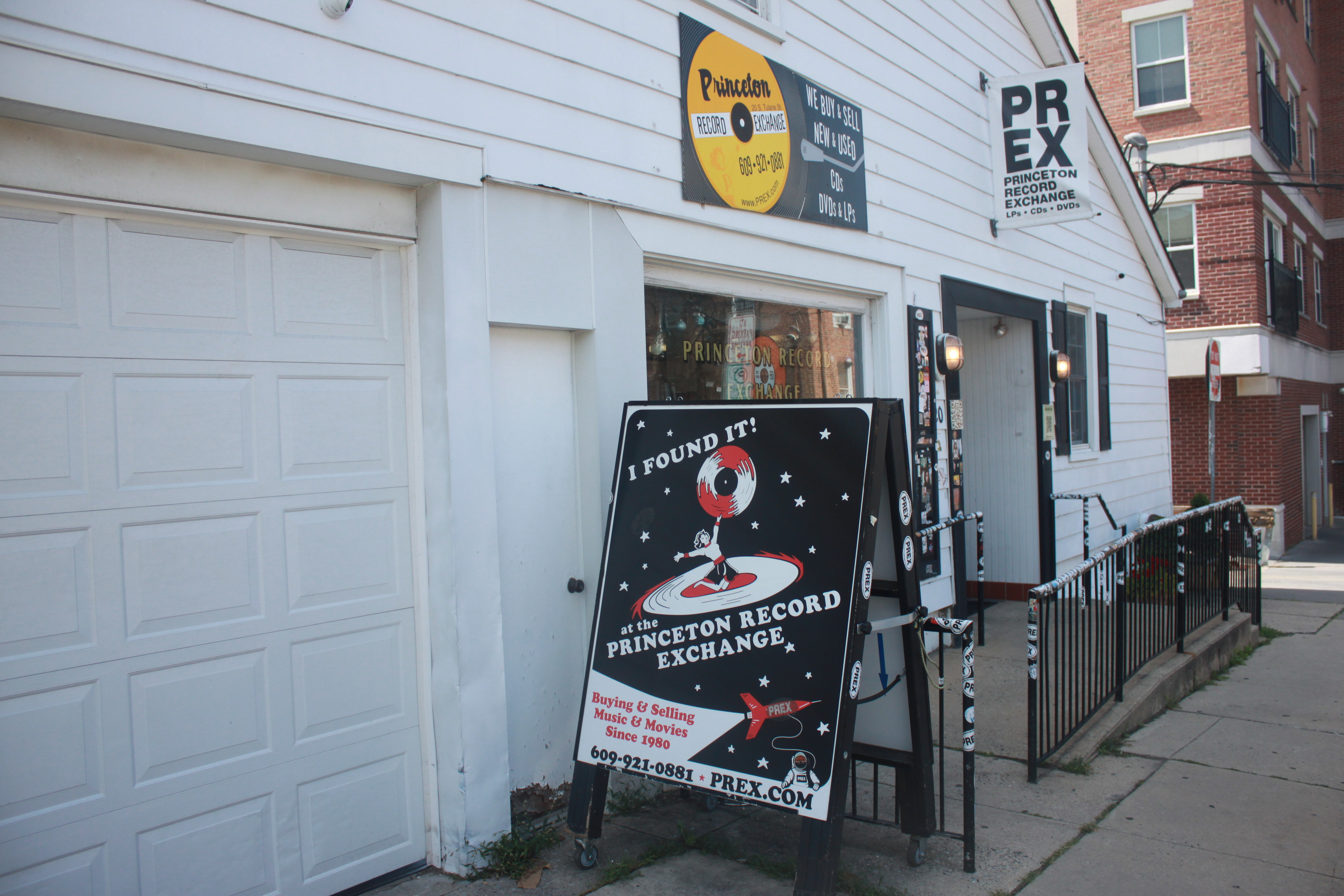
Always on the road, Weisfield laid his heart on Princeton’s streets and couldn’t leave it behind. In 1980, he parked his roots for good, opening the Princeton Record Exchange Store (PREX) on South Tulane Street, a charming cobblestone path off Nassau Street.

Princeton’s location—neatly between New York and Philadelphia—played a role in his decision, offering prime potential for customers. But it was Weisfield’s devotion to customer service that made PREX stand out. He believed the staff should cater to the community, rather than the other way around.

Unlike big-box retailers, PREX emphasizes connection. Staff aren’t just told to sell records—they’re there to make everyone feel welcome, whether first-timers or long-time collectors. Questions are met with enthusiasm, record requests are taken seriously, and the space is decorated for comfort rather than flash.

When Jon Lambert took over in 2015, after years as general manager and close friend to Weisfield, he kept that ethos while adding his own touches. Inside, handwritten canary-yellow tags label the genres, and DIY record dividers keep the vibe simple and accessible.

Overlapping LCD record covers, Vanity Fair spreads of Randy Newman, Ozzy Osbourne concert posters, and artful band collages give the convenience-store–styled building a lived-in charm.

Lambert’s goal is clear: make people want to stay. And they do.

“You know, if you have a business, they [Google] tell you the average length of stay, for people in that organization, and we’re about an hour,” Lambert says with reserved pride. “I think that really speaks to how much people enjoy being there as an event.”

His attention doesn’t stop at décor or inventory—it extends to his hiring.

“I’m pretty picky about picking,” Lambert jokes. He’s less concerned with stacked resumes in the arts and more focused on personality, lived experiences, and values that align with PREX’s mission: to be courteous, kind, and obliging.

He asks potential hires questions like: “What does integrity mean to you?” “How do you live your life?” and “Is it an internal code of ethics or external?”

Lambert sees his staff as an extension of PREX’s promise to Princeton’s community, even when he’s not there. “Those are the things I care about,” he concludes.

Just around the corner, another independent business echoes that sentiment. Labyrinth Books, co-founded by Virginia Harabin, Pete and Cliff Simms, and the late Dorothea von Moltke, serves as a haven for Princeton’s book lovers.

“It’s a place for travelers, it’s a place for locals,” Harabin says.

Labyrinth intentionally sought a large footprint to serve as both a bookstore and a gathering place—though Harabin admits that decision “might have cost [them] a little something in terms of warmth.” Still, thoughtful touches—a cluster of chairs here, a soft rug there, fairy lights strung from the basement ceiling—create cozy pockets for connection.

“I hope that before too long we’ll be able to do something like put a carpet on this floor,” Harabin reflects. “Maybe a different kind of seating area with some softer chairs. I’m emphasizing change and development.”

Warmth at Labyrinth doesn’t just come from décor, but also from decorum. Like at PREX, the staff help create a hub where curiosity meets enthusiasm. Customers openly approach staff, make requests, and linger for informal conversation.

“Somebody comes in and says, ‘Do you have this?’ I look it up; I don’t have it. But I want to have it. I should have it,” Harabin says. “I’m gonna get one for you, but I’m gonna get one for the store too.”

While one caters to sound and the other to story, Princeton Record Exchange and Labyrinth Books share a philosophy: go beyond inventory and revenue. They resist the transactional coldness of big-box commerce, instead valuing personality, conversation, and time spent.

In a town shaped by prestige and tourism, these independent businesses are grounded in cobblestone charm and built on meaningful exchanges. They are more than local commerce—they are the essence of local care, beating steadily under every path.
A Community Built on Stories 

By Alya M.

Sonder is the abstract feeling and realization that each person walks around with their own life just as complex and vivid as your own. Through Voices of Princeton, this abstract becomes real. Each story plays as a reminder of how deeply interconnected we really are even as we walk silently past each other. 

The oral history initiative was a result of collaborations between the Princeton Public Library, the Historical Society of Princeton, the Arts Council of Princeton, and the Witherspoon-Jackson Historical and Cultural Society. The goal of the initiative is to collect, save, and store the stories of Princetonians. Princeton is a small town with a population of roughly 30,000, but it is made up of a diverse community with over 50 languages spoken. With the help of Voices of Princeton, all these different people are able to combine their experiences to create culture within the town, strengthening the community.

“When populations from really different backgrounds, different cultural histories, talk together, we become solidly supportive of each other,” said Pamela Wakefield, the inspiration behind Voices of Princeton. Wakefield went on to explain the importance of storytelling when it comes to building a more solid community by allowing people to see each other, not just for who they currently are, but also for who they’ve been and what they’ve experienced. Stories, she emphasized, help uncover the shared humanity beneath our differences, making space for empathy and deeper understanding. In a town like Princeton storytelling becomes not just a form of preservation, but a bridge that connects generations, cultures, and individuals who might otherwise remain strangers. Through Voices of Princeton, that bridge is being built one story at a time.

“I would say that if like in 20 years you have little kids and they say what would it have been like to live here, you can say, let’s listen,” Wakefield said. To her, storytelling is more than memory; it’s a gift we pass on.

Stephanie Schwartz, Curator of Collections and Research at the Historical Society of Princeton, also shared her thoughts on what oral history makes possible. “We’re collecting today for what will become the historic record tomorrow,” she said. Schwartz explained that these stories are valuable not just because of the content, but because of who is telling them and when: “It tells us as much about the person at the time they’re telling the story as it does about the stories they are telling.”

Not everyone feels their voice matters in the bigger picture. “Not everyone thinks their story belongs in history,” Schwartz added. “It’s our job to say: yes, it does.” Voices of Princeton makes that message clear. No one is too new, too quiet, or too ordinary to be remembered.

Cliff Robinson, Public Humanities Specialist at Princeton Public library, reflected that idea. “Just because you’ve been here for a short time doesn’t mean this isn’t your community or that you’re not responsible for it in some way,” he said. In a place like Princeton, where people move in and out often, that reminder matters. Everyone has a place. Everyone contributes to the larger story.

Robinson also spoke about how special it is that the stories are recorded in audio form. “I’ve always been enchanted by the fact that they’re just audio. It requires a different kind of attention—you can close your eyes and just listen.” That kind of listening, quiet and focused, builds a kind of connection. 

Kim Dorman, Community Engagement Coordinator at the Princeton Public Library, added that accessibility is an important part of the project’s mission. “As a public library, we’re making these stories publicly available in a way that’s much more accessible than most oral history projects,” she said. That means anyone in the community or even outside of it can listen to it, learn and reflect. 

Through Voices of Princeton, stories are no longer just something people keep to themselves untold, they become part of something stronger. The initiative is a reminder that history is not made only by the powerful and famous. It’s made by the same people we see everyday. Every person carries a story that matters.

In a town where diversity lives on every block, storytelling becomes not just a form of preservation but a bridge that connects generations, cultures and individuals who might otherwise remain strangers. Through Voices of Princeton, that bridge is built one story at a time.

Hearing Stories from the Voices of Princeton

By Ipichiesimhe I.

Pam Wakefield, a longtime community member of Princeton, describes what the moments following the devastating terrorist attack on September 11, 2001 felt like. “Everyone gravitated towards Princeton University,” says Wakefield. “Hearing the church bells, funeral after funeral after funeral of people who had died.” 

In that moment, people felt isolated; families were torn apart, businesses closed, and community morale was at an all-time low. Then, more than ever, people needed a means to share how they felt. This feeling of isolation and uncertainty loomed over the busy streets of Princeton, filled with citizens going in and out from work.

Many years later, an initiative was born to capture stories from the community like what unfolded after 9/11. Voices of Princeton stands as a medium for people to share the intimate details to the world that they were too afraid to share with their family.

The journey of creating Voices of Princeton was not a linear one. Wakefield previously proposed the idea to the staff of the Princeton Public Library in 2004, when the library was just being built; however, it did not work out. Still, Wakefield is considered the inspiration: “a part of the Voices of Princeton since before it was born,” says Cliff Robinson, the Princeton Public Library’s Public Humanities Specialist. Originally, Wakefield suggested the idea as a means of expression amongst the various individuals who lived and worked in Princeton. She was previously heavily involved in religious organizations, including as a member of her church community, along with contributing to churches surrounding hers.

It is apparent that Wakefield cares deeply about the program. She cares about her community, the people living in it, and the progress it has made over the years. But she also has a relationship with the city’s main attraction. When asked how the community has affected her life, Wakefield first lists the fact that she “[worked] for the university” and says that her former employer changed her life.

Voices of Princeton is one thing that Wakefield is proud about. She sees how much it’s impacted the lives of the many people around her. Even as the interview was coming to a close, Wakefield urged us to explore the library and the many resources available for us throughout it.

But Wakefield isn’t the only one who cares deeply. Library staff, including the program’s organizers, were interviewed: Cliff Robinson; Kim Dorman, the library’s community engagement coordinator; and Stephanie Schwartz, the Historical Society of Princeton’s curator of collections and research.

Over the years, each organizer contributed to the project in different ways. Their expertise ranged from areas of history to human connection. Schwartz talked about why she appreciated Voices of Princeton so much, stating that she was “really fascinated by the creation of history and what we choose to remember, and how the historical narrative is written.” She also says that “it tells us as much about the person at the time they’re telling the story as it does about the stories they are telling.”

Even though Voices of Princeton is a relatively new program, its effects are still being felt by those sharing their stories, those listening to stories, or those doing the work behind the scenes to ensure that the legacy of the people last.

Nearly New Knows Their History, but They Aren’t Afraid of the Future

By Diego G.

When faced with that narrow alley off of Nassau Street, I knew I could only go forward.  Walking down the dingy path, bordered by a shady fence of pines and a rust-stained brick wall with protruding window AC units, I could only hope a brighter future would lie ahead. And it did. Mecca was the cyan sign and cartoony butterfly icon that read in white serifed letters: Nearly New Shop.

The chic restaurants, designer boutiques, and the cozy liberal arts institution down the road vanished as I climbed a set of rustic black stairs into the charm of Toni Maher’s fashion haven.  A fluorescent orange door opened with a ring, and Princeton itself took a sigh of relief.

“Thrifting” is somewhat of a recent development, according to Maher.  She states–in subtle Jersey twang, complete with a large brunette blow-out and beaming white smile–that fifteen years ago, many teens would just “turn their nose up at thrifting”.  Things were obviously different now as I stood shoulder-to-shoulder with the checkout line. 

Long before then, however, adversity was a cornerstone of Nearly New’s identity.  It was previously owned by the Princeton Day School to fund scholarships for low income students.   Maher, whose 4 children attended PDS, combatted the thought of it closing twelve years ago.  In 2012, she assumed ownership with the mission to serve her community and ensure that–while adding a few disco balls herself–Nearly New was still ultimately Princeton’s.  

With the wisdom of 80 years under her belt, Maher likely wasn’t used to explaining her business model in a curated world of color-coded tags and regulars–all of whom she knew by name–but did so gladly:  “We start from scratch twice a year.  Saturday, our $20 bag day, it empties the store.  I can show you pictures.”

I struggled to imagine the torso-height racks behind me–now teeming with an explosion of color-coded suits, jackets, and t-shirts–desolate.  But every February and August, Princeton showed up for Maher the same way she did for them year-round.  In a city where the average home price borders one million dollars, Maher’s devotion to low prices and local charities (who receive excess clothing) is nothing short of admirable.

She extends most of the credit to her support-system, which includes her husband, who had handcrafted wooden shelves and installed a custom floor, and her daughter, Alexis, who was responsible for their formidable social media presence. (I’d never seen a small business with a Snapchat profile before that day.) Her sons helped set up Square Space, upon noticing the rise of contactless payment.  Say what you want, they were with the times!

That day, customers flooded in and out, gawking at the $5 deal that applied to everything save furs and fine jewelry (the week before, everything was half off, Maher explained).  Even for locals, these sales fostered an infinite sense of excitement.  One regular beamed over a pink pair of peep-toe pumps.  Another perused the aisles with a burgeoning basketful of clothes, which Maher had specifically reserved for her.  

But the only person who benefited more than these women, their wallets, and the newly adopted pieces that day was Emily Battle.  Maher’s right hand woman worked in silence for the duration of our interview, except for the moments when her boss was particularly stumped.  “What’s the most unique thing we sell, hmm…Emily?”  The rugged woman jumped in, her quick, baritone speech bouncing off the walls while recalling memorable days at work and the function of what was apparently an antique lamb chop holder.  Her strong posture was framed by a layer of straight dirty-blonde hair; her tough demeanor concealed a certain kindness I struggled to pinpoint.  And while initially reserved, Battle revealed herself to be much more than just an eager, passionate salesperson.  She credits her job for having, quite literally, changed her life.  

She hopes to serve her community similarly.  Battle recalls a particularly vibrant day when a customer really needed something with a parrot on it.  Luckily, they had just that.  The parrot dress hiding somewhere in Nearly New’s infinite vault had fed them both: the customer with her niche request and Emily, who gained a story and a smile from the experience.

“It’s just a good scene.  I’m in the right place,” she stated decisively.

And that’s what keeps people coming back.  Emily Battle was not the kind of woman with a subscription to Vogue.  Toni Maher did not know that the back-aisle La Perla nightgown was probably worth more than the Chanel shopping bags and 2010 Michael Kors glasses in the display.  People like Maher and Battle aren’t in it for the Gucci watch in the big glass case.  They aren’t glued to their history, however many stories a near century of business may bring.  Their ultimate devotion is to the future of their community, whether that entails new friends or new shop improvements like fresh oak wood floors and Square Space; but they’ll never be without window ACs and your mother’s low-rise jeans.  It was a masterclass in modernization.  Beyond the physical realm, Nearly New is a place of community and kindness in its greatest form: from strangers.  However, beware that purchases may lead to membership in Maher and Battle’s thrifting family.

Before I left, I hesitantly checked out a fashion photography book.  Where I’m from, the unique cover–adorned with a giant, risque leg and blunt description reading LEG–would have never made its way to my local thrift store.  Then also, in my small central California town, buying such a suggestive book might be more embarrassing than buying a 30-pack of adult diapers.

“You got the ‘Leg’ book?” Emily beamed. “That’s so cool!”

As I re-entered the real world of downtown Princeton, my hand slowly let down to proudly display the provocative cover: boldly charismatic, old but new, and quirky.  Just like the Nearly New Shop.  I smiled.  Their work was done.

Honoring Lives through The Potential Project

By Kateryna S.

Historically, art has often served as a way to portray the personal experience of the artist or the struggle of a community, whether it’s poetry, music or painting. Art is a reflection of the artist’s mind, their values in society, and their sense of the things that require more attention from the public. For Bentrice Jusu, it is about telling the stories of people whose voices would not otherwise be heard — a serious responsibility she took on when starting the Potential Project, which focuses on remembering homicide victims in Trenton, New Jersey, through the eyes of their loved ones using visual art and photography.

In 2016, Jusu stood close to death as she watched 49 people get killed by a gunman in one of Orlando’s nightclubs. Three months after the incident, Jusu lost one of her students who never had a chance to finish his artwork, leaving a big mark on her heart. Those losses led to something bigger, something that connects hundreds of experiences. As part of the Potential Project, Jusu will place yellow squares in significant locations around the city and passersby will be able to see photos and information about the people who are being honored. 

Born and raised in Trenton, Jusu is not only an artist, but also a firefighter, a teacher, a rapper, and a poet. There are many aspects to her talent. I visited one of her main studios where most of the artwork is displayed, which felt like being inside her mind. Unfinished projects, paint, “creative mess,” pictures and music revealed Jusu to be a unique individual from the very first moments. Her love of drawing came from her father who laid the foundation, leading Jusu to where she is today. Jusu is also inspired by many artists and singers, including Carrie Mae Weems, who is a well-known photographer. Through her work, Jusu portrays the experiences of people and engages the local youth, encouraging their talents and potential. 

Using her skills and experience, Jusu raises awareness of important issues and tells the stories of people with very different perspectives. In a small city like Trenton, where everyone is connected, the problem of gun violence became a trauma in a community. In 2021 alone, 21 people were killed in Jusu’s hometown. This is not an uncommon occurrence; gun violence has become normalised across the United States because it became very usual to see homicide happen at schools, nightclubs and other public places. 

In her studio, Jusu cooperates with other artists to interview the families and friends of people who were murdered. As a founder of the Potential Project, Jusu faced the most daunting pushback — from herself. “I was scared,” she says. “’Cause who am I to take these pictures, take these images, and then, you know, illustrate it and then introduce it to people?” Because the project touches on such a sensitive topic and tells the stories of people who were unfortunate enough to lose their lives — people who had so many dreams, potential, and talent — Jusu finds it very difficult mentally. 

Being able to see behind the scenes of the project left me with a lot of emotions and feelings. Each story is unique and different; each individual had something to bring to this world. While the Potential Project’s purpose is to bring attention to the issue and honor the people who died from homicide, putting an end to gun violence is not the responsibility of the artists who engage in the project. One of the participating artists, Hana Sabree, who is also a singer and a close friend of Jusu’s, shared her thoughts about the project and Jusu’s work. “I don’t think it’s Bentrice’s responsibility to bring hope to the city, especially now,” she says. ”Because it could, it continued to happen.” 

In order for art to express the voices of people, their feelings and struggles, it’s extremely important to show the community from a more intimate perspective. Jusu is one of the artists who brings up an important conversation that is often silenced in society. Art connects people in a lot of ways, but each piece is outlining difficulties, hopes and changes. “Mass media does a great job creating films,” she says. “Art work creates a more intimate conversation.” In a small city like Trenton, everybody can see their friend, neighbor, classmate, coworker, or relative in the project. It is not about personal benefit; it is about feeling the need to share the experience and bring the community together.

The Challenges and Resolve of Undocumented Students

By Gabriela Q.

Gabriela once imagined what it was like to grow up American. Not, of course, in the sense of the picturesque Fourth of Julys, but through living out what she saw on TV: brightly colored lockers and roaring crowds at basketball games, reminiscent of High School Musical.

She quickly learned that this was only a dream. 

For Gabriela, a rising junior at a liberal arts college in Oregon who has chosen to withhold her last name for personal reasons, moving to the United States came with reminders of home. 

“I came to a Latino neighborhood that was very ghetto—there’s a lot of crime, and I thought it felt a little bit like home. I saw people from my country,” she says. 

Maryland, despite its inclusivity, did not feel like home. Back in Guatemala, being a kid felt simple.

“I used to play on the dirt without shoes on the rocks,” she says. When they played soccer, “we used to mark the goals with rocks and sticks,” she says. 

After being told that her family would move to a different country at 13 years old, she left everything she had ever known behind. Her experience isn’t an outlier — it speaks to the challenges undocumented students face in finding community and accessing necessary resources.

Gabriela didn’t enroll in school for over a year upon arriving in the U.S. When she did, she realized there was a blossoming Spanish-speaking community, but she still felt behind. Her English Language Learning (ELL) classes were meant to teach her English, but were taught at a slower pace than most of the other classes at her school. 

A.H., a rising junior at the City University of New York, faced a very different challenge after arriving in the U.S. at 16 years old. In Bangladesh, she was taught to speak English at a very high level in school. But after arriving in the U.S., she felt that because she was undocumented, she was expected to know little to no English. “People would say ‘Oh, your English is so good,’” A.H. says. “It’s a microaggression.”

On the other hand, speaking Bangla, her mother tongue, also led to judgment. “There was a lot of stigma in speaking your second language at high school. It seemed like you were fresh off the boat,” she says. 

A.H., who used a pseudonym for personal reasons, arrived in the U.S. at 16. Unlike Gabriela, she came without her parents. She was accompanied only by her siblings in 2020, two months before the pandemic.

She explains that her brother and sister struggled to make ends meet after they got laid off from their jobs. Due to their immigration status, they weren’t able to access the unemployment benefits that 1 out of every 4 workers in the U.S. took advantage of during the pandemic. 

A.H. and her family weren’t alone. Over 50 percent of the city’s immigrants were unemployed during the pandemic.

Exclusion from resources isn’t rare for undocumented students and families. As states start to revoke in-state tuition waivers meant for undocumented students to cut college costs, many are faced with hurdles to enroll in two- and four-year higher education institutions. 

When Gabriela and A.H. began to apply for college, they faced challenges. For Gabriela, studying for standardized exams made her feel behind in the process. 

“Many exams, like the SAT, were hard to read. I remember that we were asking for extra hours,” she says. “We needed more time.” 

Although A.H. was able to receive a full ride through her honors college, she was unable to apply for internships and work-study programs. Instead, she relied on outside opportunities and wished throughout the process that there were more grassroots support initiatives.

“There is a lack of understanding of how faculty can support students,” she says. “I’m tired of therapy circles; I need actual organizing efforts.”

But what does the American Dream mean if not the opportunity to create a new reality?

For A.H., this came as an opportunity to join local organizing initiatives in New York City, including Desis Rising Up and Moving, a social justice movement centered around providing an outlet for change for South Asian immigrant youth, starting in her junior year of high school. DRUM Beats, the organization’s sister program, was one of various grassroots initiatives leading Zohran Mamdani’s campaign for the city’s democratic mayoral nominee. 

Although Gabriela grew up wanting to be a surgeon, she settled on becoming a social worker after being inspired by her own experiences as an immigrant, feeling that stories like hers can be forgotten.

“When you don’t have any legal records or any case open, you could be gone and nobody would know you existed,” she says. “That’s my fear.” 

Gabriela’s future may not reflect the imagination of her teenage self, but it embraces the identity she has built along the way and the stories of younger generations of undocumented students.

“I know that I have the potential to help people, I have always helped people, and I want to work with them,” she says. “I know that I [can] be an inspiration to other students.”

How Undocumented Students Experience College

By Tahia F.

The Trump administration’s crackdown on illegal immigration affects millions of immigrants, including the 408,000 undocumented students at American colleges and universities. A.H., who requested to be anonymous, is a student at City University of New York, and Gabriela, who attends a university in Oregon, are just two of the many undocumented students who share this struggle. Their experiences paint a bigger picture about the association between immigration status and education in the United States.

Gabriela’s family uprooted themselves from Guatemala and moved to a majority-Hispanic neighborhood in Maryland when she was 13. She missed the leisure of playing soccer outside without fear of deportation. “I loved going next door and sitting there for hours until my mom picked me up, or playing with the kids in the neighborhood,” Gabriela says of her hometown in Guatemala. “I used to play on the dirt without shoes on. The football balls were made out of plastic, just plastic with air.” 

In Maryland, she was surrounded by Spanish speakers, but having no prior English education, she was placed in specialized classes for English language learners.

The language barrier was just one of many obstacles in her path. But with the odds against her, Gabriela knew her dream was to help people in any way possible. This dream led her to take an interest in becoming a surgeon, however she ultimately decided against it. “You cannot ask for loans, you cannot ask for aid,” Gabriela said. “Most of the scholarships require status.” Ultimately, she was forced to reshape her dream, which led to her newfound interest in social work. 

On the other side of the country resides A.H, a biochemistry major from Bangladesh. A.H. came to the U.S. unexpectedly five years ago with her two older siblings, leaving their parents behind. She planned to apply for asylum but that turned out not to be possible. “I was told I would be documented,” she says, “but that wasn’t the case.” 

Similar to Gabriela, A.H. didn’t experience much cultural shock after moving to the U.S. The bustling city of New York reminded her a lot of her home in Dhaka. Her fluency in English and the rigorous education she received in Bangladesh’s school system helped her thrive in U.S. schools.

While both A.H. and Gabriela are striving to achieve their goals, they remain uncertain about their futures. Things for each of these students — financial stability, physical safety, job security — can change in an instant.

“Every year when I have to do the FAFSA it is scary,” Gabriela says, referring to the inconsistency of financial aid. “Okay, if this is the amount I have to pay then I am not continuing my education.”

A.H. agreed. “It’s kind of hard for me to envision a job job because I’m undocumented,” she says.

A.H., who is able to attend college with the support of a generous scholarship, hasn’t been deterred from pursuing her initial career choice: becoming a professor. It is more than just a personal goal. “The reason that we don’t feel seen is the reason that we try,” she says. “Where is a Bengali career woman? I think a lack of representation is a motivator for me.”

A.H. shows this dedication by volunteering with various political movements, including Desis Rising Up and Moving, one of the first groups to support New York City Democratic mayoral nominee Zohran Mamdani. 

Gabriela, too, expressed a desire to help others. “I know that I have the potential to help people, I have always helped people and I want to work with them. I know that I could be an inspiration to the students,” she says. “I have that mentality that other people are looking up to me.”

Both students dedicate their time to support others in spite of the lack of support they receive themselves.  “There’s no guarantee,” A.H. says. “If ICE shows up on campus, there could be a collateral arrest.”

The constant threat of deportation and loss of financial resources has taken a toll on both Gabriela’s and A.H.’s mental health.

“I don’t get any mental health resources or [support from my class],” Gabriela says. “When the presidential election was going on, it was a time when I really needed support. There were no ways for me to stay on campus.”

A.H. expressed similar concerns. “There is a lack of understanding on how faculty can support students. I’m tired of therapy circles, I need actual organizing efforts,” she says.

Despite the hurdles, Gabriela and A.H exemplify the courage, perseverance, and resilience it takes for undocumented students to succeed. Undocumented people are more than just statistics. By continuing to pursue their dreams in a system that works against them, they challenge narratives that reduce them to numbers.

Gabriela and A.H. are just one part of a larger story, as undocumented students continue to rise above intolerant policies to keep learning and accomplishing their dreams.

People over Profit at the Princeton Record Exchange

By Sosena T.

Refreshing, gentle, welcoming. After leaving the uncomfortable heat of Princeton, New Jersey, and stepping into the conditioned air of the Princeton Record Exchange, you can’t help but feel all of these things. That also extends to how Jon Lambert approaches every aspect of his craft, running the famous record store — from the way he buys records to the weddings that take place in the store to the healthcare he covers for his employees. 

After sitting down with Lambert, he expressed a sense of responsibility to repair the previously broken AC unit, even though it would require $11,000. Money that could’ve been used, he wished, for buying new records — a way to increase profits. But he couldn’t let his customers or his community lose their haven from the scorching temperatures. Lambert serves the Princeton area through the passionate work he does at his store. He’ll pay any price if that means people of all backgrounds feel comfortable in the Princeton Record Exchange.

Throughout the sit-down interview, the local music enthusiast opened up gradually about his passions. When asked about his workers and work environment, he lit up with excitement, a glimpse into his motivation for continuing the work he does. 

In some ways, small businesses bear the same financial expectations as large corporations but operate on smaller capital. On top of rent, cash-flow management, and taxes, Lambert provides health insurance to all 17 of his workers, in addition to the fair wages he pays them. To him, these people aren’t just minds and hands that make his business succeed — they’re family. “Hey, you pay them fair, you treat them fair, and maybe you make a little less money, and you spread that around so that people can be human,” he says.  

Human. It’s something we all are, but sometimes the idea gets muddled in the business world. However, Lambert makes the value of human life central to his work. This isn’t a strategy to attract customers but a genuine reflection of his character. Lambert shared a personal memory from 2020, the hardest year for small businesses. The pandemic didn’t single out who it affected: Young or old, poor or rich, it impacted everyone. COVID-19 affected both large and small companies, but to different degrees. After informing us that the Princeton Record Exchange was forced to shut down, he took a deep breath before continuing. The lack of cash flow forced Lambert to lay off his entire staff. Without their workplace and amid a global crisis, especially for Lambert—whose core principles include “courtesy and respect and kindness” — this was profoundly difficult. Despite these hardships, he stayed true to his values by continuing to pay for his employees’ health care for as long as he could after they were laid off. For nearly everyone, one major concern during the pandemic was access to healthcare. While Lambert couldn’t keep the store open, he made sure no one who helped make his business special was left alone in a nightmare.

Several days after my interview with Lambert, a press conference was held with Mayor Mark Freda of Princeton City. Sitting in the makeshift briefing room, I kept in mind the noble character of the owner of 20 S Tulane St, Princeton, NJ, and decided to ask about policies that support local small businesses, such as the city’s “music fairy-godfather.” Mayor Freda responded with enthusiasm, proud to highlight major contributors to Princeton’s community and economy. He mentioned the special improvement districts (SIDs) and how they benefit the city, noting that businesses make up 20 percent of the tax base, which helps reduce the tax burden on homeowners, a critical issue in the state. This shows how diverse and supportive local businesses can be for their community.

Overall, it’s safe to say that owning an independent business has clear challenges, like the absence of corporate funding, but are those trade-offs worth it? For Lambert, the answer will always be yes.

Year After Floyd, Police Reform Advocates Seek Shared Ground

By Angie Tangarife
West New York, N.J.

Over the last year, protests and movements regarding police reforms have spiked. The outrage over the deaths of Black people at the hands of law enforcement was expressed through protests, writings, and petitions. Victims like George Floyd, Breonna Taylor, Elijah McClain, and Daunte Wright sparked a revolt against police bru-tality. 

Views of law enforcement vary greatly. Some believe police are necessary, others advocate for the complete abolition of law enforcement. However, there is common ground where some can agree: that law enforcement is not what it should be. On one hand, saying the police sys-tem is not what it should be can mean we need a system like this to exist, but the current organization is not ideal. On the other hand, this statement can also argue for police abolition.

These are the sides in which Kevin Lawrence, executive director of TMPA (Texas Municipal Police As-sociation), and Gina Feliz, rising senior at Princeton University and president of SPEAR (Students for Police Education Abolition and Reform), fall. Each brings their unique  opinions to the topic of police violence.  

Kevin Lawrence has served as a law enforcement officer for 22 years. Throughout his career he served as the Treasurer and President of  TMPA, and was also the Deputy  Executive Director from 2000 to  2010, now Executive Director of the  TMPA. He also worked with many  police departments. Lawrence has  been an involved officer, and uses his experiences to share his opinion.  Gina Feliz is Co-President of SPEAR which concentrates on anti-carceral  activism, police abolition, and law  enforcement reforms. SPEAR’s take  on police abolition is as Feliz states,  “what it sounds like: getting rid of  the police.” Adding that “as [they] exist now, there is no way to dis-entangle policing as an institution  from systemic historical racism.”  Feliz has been part of SPEAR for 3 years. She states that before college,  she never engaged in criminal justice, although she was heavily politically involved and aware. Currently  at Princeton, she is studying public  policy and has learned about the a harms of prison and policing, driving her to become the radical police abolitionist she is. 

Even with these two extreme beliefs, and how deeply involved each individual is with the cause they support, there is common ground. 

When asked about Black Lives Matter, Lawrence has an astonish-ing recall on his reaction to the murder of George Floyd. It was a normal evening sitting down in his bedroom. In the tranquility of his home, he was interrupted by his wife. Sounding dis-turbed, she told him to “watch this video,” Lawrence recalled. The video showed several officers kneeling on George Floyd. Lawrence’s wife, a former probation officer, stated that “it’s not like she has never seen this type of stuff before.” The video captures the mo-ment Floyd’s life is taken by Officer Chauvin, who kneeled on his neck for 9 minutes and 29 sec-onds. The start of the video seemed common to Lawrence; the kneel-ing technique is taught to officers to deal with individuals resisting arrest. But Lawrence became worried at the kneeling on Floyd’s body. As if there, he began talking to the phone. “OK, it’s time to get up. It’s time to move to the next phase,” Lawrence said, then words became yells of desperation as a fellow officer. He could not comprehend the lack of care the officers had for Floyd. Lawrence stated “look at what you’re doing to that man on the ground, but think what you are doing to nine hundred thousand other law en-forcement officers across this country… they’re all gonna be judged based off what you’re doing right now.”

The video was disturbing to thousands and went viral on social media. Similarly, Feliz was overwhelmed by the news. She made the de-cision to not watch the video nor share its con-tent. Lounging at her house, post-finals, in the middle of the pandemic, she found out about the incident through social media. The feeling of hopelessness drove her to contact a former SPEAR member and friend to organize events as well. 

Two individuals with opposite views on law enforcement, yet have similar reactions. The sudden news was like a blow to the stomach, as each realized law enforcement was not acting as it should. Over this, both advocates shared common ground.

DREAMers Band Together To Build Awareness, Find Allies

United We Dream

By Yarlin Morales
Brooklyn, N.Y.

Everyone wants the American Dream, whether they want to admit it or not. “DREAMers,” undocu-mented Americans who came to the United States before turning 17 and have legal protections under  the Deferred Action for Child-hood Arrivals (DACA) program, have found ways to support each other to achieve their own version of the American Dream through non-for-profit organizations like America’s Voice, United We Dream and Define American.

America’s Voice is an organization whose mission is to put America’s eleven million undocumented immigrants on a full path to citizenship by changing the political climate. Zachary Mueller, a digital communications manager at America’s Voice, says that it aims “to be a front door to the immigrants rights movement for folks that may or may not have any personal connections to immigrants.” To do this, he says America’s Voice tries “to drown a lot of the policy stuff and a lot of the confusing language that  can tend to get into the weeds.” Their main goal is to help stop xenophobic language before it starts, making it easier for immi-grants to tell their stories. With over 800,000 members, United We Dream is the largest immigrant  youth-led network in the country, according to José Muñoz, the organization’s national communications manager. The organization aims to ensure that the voices of their members, who are directly impacted by immigration policy, are heard across the media by pitching stories to reporters, training members, and  tracking the news. 

Some DREAMers have created chapters of orga-nizations in universities to help students covered by DACA. Marco Gonza-lez Blancas and Salvador Chavero Arellano, both recent Duke University graduates, served on the board of their campus’s Define America chapter. They were freshmen when then-President Trump dismantled DACA on September 5, 2017—a date Arellano says he will never forget. “That was when a lot of us—you know, freshman, sophomore, junior, seniors—got together, and we said something needs to be done. We need to fight.”

Define American’s “mission is to change the narra-tive of immigration in the United States, both legal and undocumented,” says Gonzalez. Through informing the Duke student body, they were able to create better allies. The group created an Undocumented Awareness Week with edu-cational and social events. They asked students to give up their student ID, “which literally gives them access to every building on cam-pus and allows them to buy food and all those things, [so] they could kind of ex-perience what it meant to be undocumented,” Gonzalez.  DREAMers have gone above and beyond to build awareness and allies. In doing so, they hope to find a pathway to their own American Dream: the dream of citizenship.