
Tag Archives: New Jersey

Teresa’s is a Well-Olive-Oiled Machine

By Andres Martinez

Pizza ovens rumble and servers haul orders back and forth while a cloud of whole-wheat flour engulfs the tables, staining employees’ and customers’ clothes with a chalky finish. Hidden in busy Palmer Square, Teresa’s sits in an alcove that draws in consumers with its quaint patio area and hospitable service, emanating a simplicity so often forgotten in today’s dining and food culture.

Teresa Azario and her husband Raul Momo’s desire for a romantic and practical cafe led to Teresa’s inception. Teresa’s serves as an intimate space for their customers and a bridge to share their culinary vision of fresh Mediterranean dishes. Teresa’s has been serving the Princeton community since 1987, opening first on Nassau Street before relocating to its current home in Palmer Square.

In the present day, Azario’s grandson, Luke Momo, has taken up the mantle of the Theresa’s brand. The restaurant operates as a subsidiary of the Terra Momo Restaurant Group, an organization founded by the family that owns several other restaurants, including Mediterra, Eno Terra and the Terra Momo Bread Company. 

Momo stresses that Teresa’s love for ambiance and giving guests a great meal helps them “build those meaningful life moments.” He emphasizes the efforts put into maintaining a cordial, welcoming ecosystem and a high standard of etiquette among all staff. The clean, modern pizzeria aesthetic is dressed up in a slightly chic style with 1960s Hollywood actresses lining the walls, their faces ranging from stoic to playful. Sparse, art new deco Italian graphic advertisements compete for the space as well, but cannot outshine the sheer radiance of Sophia Loren’s glistening cheekbones. Though the shoddy, plastic tomatoes that lined the table are a bit tacky, the overall ambiance (supported by the gentle sounds of salsa music like El Gran Combo de Puerto Rico and Marc Anthony) kept visitor expectations as optimistic as can be.

Being an Italian restaurant, Teresa’s is cursed with the affliction of the mandatory margherita pizza, a fixture on the menu of any successful Italian red-sauce joint. Yet servers delivered a dish that was earthy and fresh, as if each ingredient was grown in fertile volcanic soil, bringing its petrichor with it. Also fresh were the restaurant’s two celebrated pasta dishes: balsamico and lumache alla vodka. The former is a fusion of grilled chicken, balsamic vinegar and rigatoni, the product of a chef’s experiments, while the latter consists of the pancetta, lumache and melty grana that make up Teresa’s unique take on vodka sauce. 

The service and hospitality, though not tailored to any single customer’s specifications, had the warmth of a mom-and-pop restaurant with a staff dynamic pulled from sitcoms, featuring chatty, bright-eyed servers and a resolute executive chef barking orders. This dynamic is crucial to keeping Teresa’s running. 

“You actually want to serve everyone on your crew so they feel like you’re not telling them what to do,” Momo said. “You want to be in there with them and have a lot of empathy for their situation.” Though not revolutionary, it is an effective strategy, delivered with enough sincerity and commitment over the years to grow this once small family-owned pizzeria into a Princetonian staple, employing and keeping far more staff than Teresa could ever have imagined. 

In an increasingly trend-focused dining culture, Teresa’s is a local legend. Its simplicity comes with trade-offs: It doesn’t try to innovate in the ways of HeyTea or La La Land Café, but by veering away from the latest niche pick and refining its widely loved classics, the restaurant permits chefs to dabble in Mediterranean twists. 

Resisting the temptation to trendiness is a highlight of Teresa’s. It demonstrates cognizance of their brand and customer base. Their reach is primarily local, and they understand their position in the Princeton dining ecosystem. Teresa’s is a local centerpiece, stringent not about presentation, speediness or exquisite cuisine, but rather the beauty of their craft, inside and outside the kitchen.
DataOne Cools the Servers, but Heats the Debate

By Audrey Gao

As artificial intelligence (AI) spreads into daily life, so do the buildings that make it possible. 

One of those buildings is DataOne in Vineland, New Jersey. It is currently under construction, set for completion and on track for delivery in December 2026. However, the center is facing backlash over issues such as excessive utility usage. 

Data centers are the industrial backbone of AI. They are facilities packed with servers that store, process and transfer the data behind everything from chatbots to cloud storage. Building one at this large scale means large amounts of electricity, large amounts of water for cooling and, increasingly, large amounts of local pushback. Around 80 data centers across at least 27 municipalities are either operational or soon will be across the state. 

Matt Williams, chairman of a grassroots nonprofit group called Sustain SJ (South Jersey), has spent the past year trying to get straight answers from DataOne, the data center sitting on a 109-acre plot in Cumberland County. 

In the summer of 2025, Williams heard people “talking and murmuring.” “I was a little upset about hearing news of the data center then,” he said. “It was being built at that time already.” 

Since then, the group has grown from a handful of residents in a diner to, by Williams’ count, close to 13,000 followers on Instagram and Facebook combined. “What the group looks like now looks a lot different than what it was then,” said Williams. “We met in a diner, and it was a group of residents, and we were honestly just kind of discussing and learning everything that we’ve learned about the development.”

Williams’ concerns start with the ground underneath the site. The city of Vineland draws its drinking water from the Kirkwood-Cohansey Aquifer and the DataOne site sits inside a Wellhead Protected Area that shields it. “Any contamination that hits the ground is now our drinking water,” Williams said. 

His second concern is the facility’s power source. Reporting from WHYY shows that the plant is designed to generate 85 percent of its own energy on site, using natural gas piped in from an existing line, with the rest supplied by Vineland Municipal Utilities and Atlantic City Electric. Accounts of the facility’s total output varies: WHYY has described it as a 350-megawatt “hyperscale” facility while the New Jersey Globe reported construction of a 300-megawatt center. Either way, Williams said it dwarfs the city’s own municipal capacity.

DataOne, for its part, presents a different picture of the project. Its Linkedin page describes its technology as “designed to operate in harmony with local environmental and social ecosystems” with “net-zero consumption across water, energy, and air emissions.” DataOne’s CEO, Charles-Antoine Beyney, has made similar arguments to New Jersey reporters, comparing the facility’s emissions to “200 cows” or a “small logistic center from Amazon with 150 trucks” and calling the project “something that is not creating that much disturbance.” He has also said the center plans to pull moisture from the air using waste heat, drawing 20 million gallons a year without touching the aquifer. 

Williams said that kind of reassurance is exactly what Sustain SJ has struggled to get written in stone. “We asked them for two weeks straight, ‘How is the water treated, where is it discharged?’” he said. The response, he said, was never more specific than “we will follow all regulations.” “It’s not an answer in our opinion,” Williams said. “We need a more direct answer.”

He also pointed to a similar pattern in how the project’s power ambitions grew. Beyney told the New Jersey Globe, “The original plan for this AI factory was to build a 50-megawatt one and get the power from the grid. However, as the project got larger, so did our ambitions and we opted for a ‘behind the meter’ strategy, based on gas for a 300-plus megawatt infrastructure.” The sixfold jump from the original pitch is the abrupt pattern Williams said has defined the whole project. 

Sustain SJ has since built a coalition that includes the New Jersey Environmental Justice Alliance, Food & Water Watch and the Pinelands Alliance, along with organizers in Marana, Arizona, who are fighting data centers in a similar capacity. 

Vineland’s planning board is expected to revisit DataOne’s approval on Aug. 5, 2026, the next test of whether a year of organizing changes the outcome. Williams is direct about what he thinks the fight has already accomplished, even if it doesn’t stop the project’s construction. 

“It would have been operational in a more disastrous way,” he said. “Now it’s just less disastrous.”

Two Sides of the Same Coin: Princeton’s Independent Businesses Put Customer Service First

By Ashanty R.

The heartbeat of Princeton started in a U-Store parking lot.

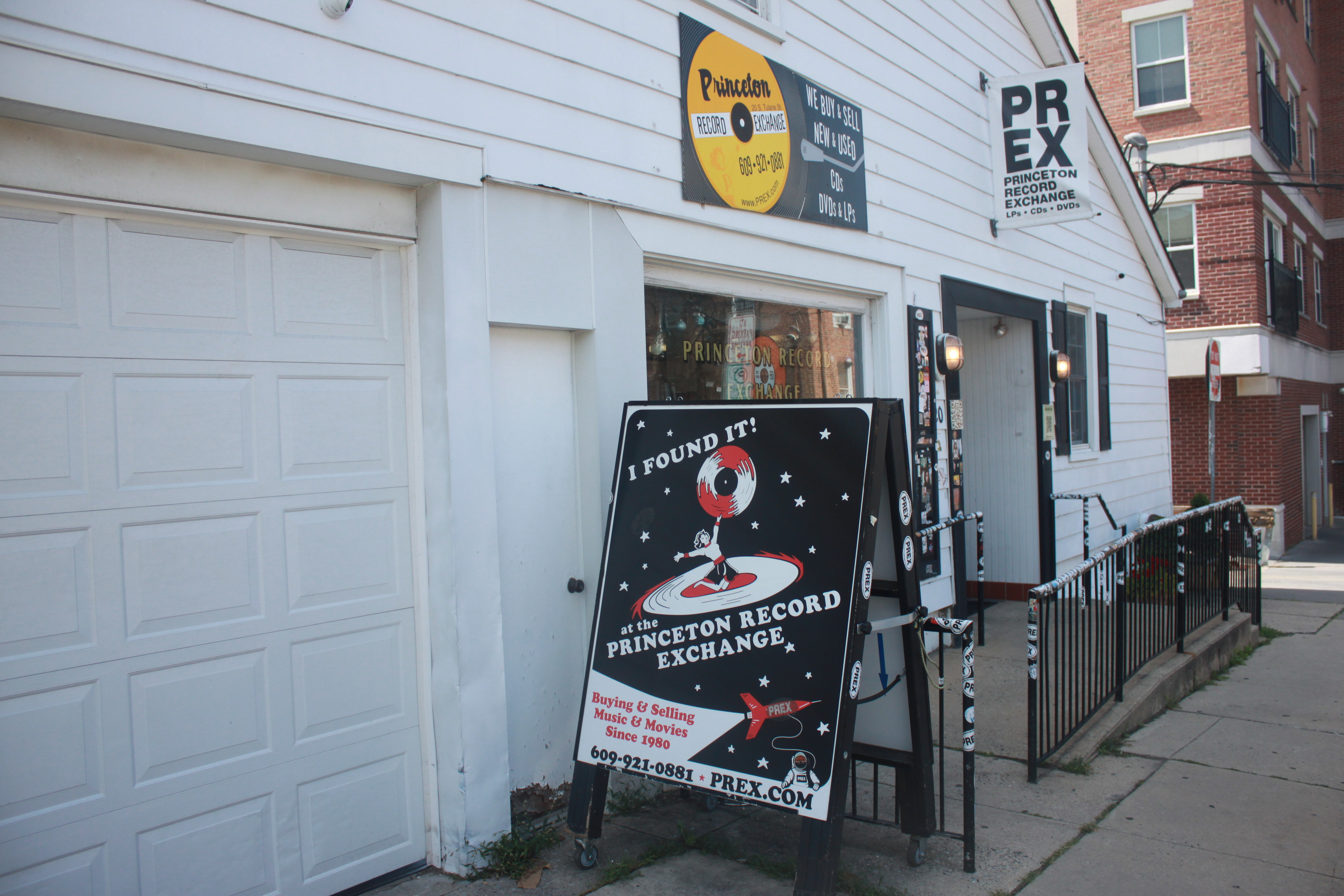
For five years, Barry Weisfield bounced between flea markets and college towns, selling records and vinyl from orange crates in his Chevy van. After rolling into Princeton, his van became a community staple, drawing keen ears to the Princeton University Store.

Always on the road, Weisfield laid his heart on Princeton’s streets and couldn’t leave it behind. In 1980, he parked his roots for good, opening the Princeton Record Exchange Store (PREX) on South Tulane Street, a charming cobblestone path off Nassau Street.

Princeton’s location—neatly between New York and Philadelphia—played a role in his decision, offering prime potential for customers. But it was Weisfield’s devotion to customer service that made PREX stand out. He believed the staff should cater to the community, rather than the other way around.

Unlike big-box retailers, PREX emphasizes connection. Staff aren’t just told to sell records—they’re there to make everyone feel welcome, whether first-timers or long-time collectors. Questions are met with enthusiasm, record requests are taken seriously, and the space is decorated for comfort rather than flash.

When Jon Lambert took over in 2015, after years as general manager and close friend to Weisfield, he kept that ethos while adding his own touches. Inside, handwritten canary-yellow tags label the genres, and DIY record dividers keep the vibe simple and accessible.

Overlapping LCD record covers, Vanity Fair spreads of Randy Newman, Ozzy Osbourne concert posters, and artful band collages give the convenience-store–styled building a lived-in charm.

Lambert’s goal is clear: make people want to stay. And they do.

“You know, if you have a business, they [Google] tell you the average length of stay, for people in that organization, and we’re about an hour,” Lambert says with reserved pride. “I think that really speaks to how much people enjoy being there as an event.”

His attention doesn’t stop at décor or inventory—it extends to his hiring.

“I’m pretty picky about picking,” Lambert jokes. He’s less concerned with stacked resumes in the arts and more focused on personality, lived experiences, and values that align with PREX’s mission: to be courteous, kind, and obliging.

He asks potential hires questions like: “What does integrity mean to you?” “How do you live your life?” and “Is it an internal code of ethics or external?”

Lambert sees his staff as an extension of PREX’s promise to Princeton’s community, even when he’s not there. “Those are the things I care about,” he concludes.

Just around the corner, another independent business echoes that sentiment. Labyrinth Books, co-founded by Virginia Harabin, Pete and Cliff Simms, and the late Dorothea von Moltke, serves as a haven for Princeton’s book lovers.

“It’s a place for travelers, it’s a place for locals,” Harabin says.

Labyrinth intentionally sought a large footprint to serve as both a bookstore and a gathering place—though Harabin admits that decision “might have cost [them] a little something in terms of warmth.” Still, thoughtful touches—a cluster of chairs here, a soft rug there, fairy lights strung from the basement ceiling—create cozy pockets for connection.

“I hope that before too long we’ll be able to do something like put a carpet on this floor,” Harabin reflects. “Maybe a different kind of seating area with some softer chairs. I’m emphasizing change and development.”

Warmth at Labyrinth doesn’t just come from décor, but also from decorum. Like at PREX, the staff help create a hub where curiosity meets enthusiasm. Customers openly approach staff, make requests, and linger for informal conversation.

“Somebody comes in and says, ‘Do you have this?’ I look it up; I don’t have it. But I want to have it. I should have it,” Harabin says. “I’m gonna get one for you, but I’m gonna get one for the store too.”

While one caters to sound and the other to story, Princeton Record Exchange and Labyrinth Books share a philosophy: go beyond inventory and revenue. They resist the transactional coldness of big-box commerce, instead valuing personality, conversation, and time spent.

In a town shaped by prestige and tourism, these independent businesses are grounded in cobblestone charm and built on meaningful exchanges. They are more than local commerce—they are the essence of local care, beating steadily under every path.

GOP candidate Kipnis strikes moderate tone

By Cristofer Urías

New Brunswick, NJ

Daryl Kipnis, a Republican candidate for Congress in New Jersey’s 12th district, promised earlier this month to welcome immigrant families to a better life in the United States while also securing the border.

Kipnis, who is challenging Democratic Rep. Bonnie Watson Coleman, said in a press conference that he supports a pathway to citizenship for young undocumented immigrants known as “Dreamers.” An attorney who has worked on immigration cases, he lamented the high fees required to become a citizen, and said he wanted to reduce those costs.

Unlike the president, he also opposes the mass deportation of undocumented immigrants. “There needs to be a more practical way,’’ Kipnis said. But he did not provide specifics about his plan for the “safety of our borders.”

Kipnis also criticized the clash between Democrats and Republicans in Congress, decrying the “adversarial” culture of American politics. The lack of cooperation between the two parties, he said, is an “animosity contest.’’ Kipnis said this dissonance affected any possible solution on immigration.

“Even the President wants a reform,’’ he said. But he ultimately blamed the impasse on Democrats’ refusal to cooperate, admitting that a resolution seemed very far from happening.

Kipnis, a self-proclaimed moderator of parties, said that his purpose on immigration proposals was to keep the “bad” immigrants out and allow the “good” to remain in the country.

He also said he does not favor overturning Roe v. Wade, unlike most Republicans currently in Congress. While he made clear that he personally opposes abortion, “as a champion of individual liberty it is not my place to tell people what to do,” he said.

Kipnis also said he would be “open to” raising the minimum wage, though, as with immigration, he did not provide a specific plan. He suggested some economic hardship could be relieved by a “rainy-day fund” that would not be taxed. “My focus is what’s going on in your life and how I can help you,” he said.

Coleman challenger says he is ‘open to anything’

By Tammie Clark

Detroit, MI

New Jersey Republican congressional candidate Daryl Kipnis is “open to anything” to help people who are in need. In his race in the 12th Congressional District, a Democratic stronghold, he’s emphasizing his moderate platform in an effort to appeal to both liberal and conservative voters.

Kipnis said in a news conference at Princeton University earlier this month that the district’s current representative, Democrat Bonnie Watson Coleman, blindly votes against any policies proposed by Republicans without considering what would be best for New Jersey residents. When asked about his qualifications that would set him apart from Coleman, he only continued to discredit Coleman’s credentials.

Kipnis also discussed the high cost of living in New Jersey and proposed creating a “rainy day” account that could help residents undergoing various financial hardships, like losing your job, or car trouble. “My focus is what’s going on in your life and how I can help you,” he said.

While he was not immediately open to raising the minimum wage, he did not seem entirely opposed to the idea.

“If the minimum wage is just too low,” he said, “then a conversation can be held to see where it could go.” He repeated that he was “open to anything” because he could see how an underprivileged family might suffer from applying to his “rainy day” account if their income and saved funds were too low.

Unlike a typical Republican, Kipnis tread lightly on the issue of immigration to appeal to Democrats. He said he was open to immigration, and doesn’t believe in mass deportation.

“The ceremony of becoming a citizen is amazing,” he said.

Kipnis said that the cost of obtaining documents for the legalization process should be reduced because it could cost more than $700 for the application fee and background check to cover the application for naturalization. However, Kipnis was not open to accepting all immigrants, going as far as categorizing some immigrants as “good” or “bad.” 

“It’s not my place to tell people what to do,” said Kipnis with regard to abortion. Kipnis added that he would not let his personal views or religion get in the way of deciding how to handle the issue.

Kipnis preaches moderation

By Ryan Morillo

Miami, FL

Daryl Kipnis, the Republican candidate for New Jersey’s 12th district congressional seat, has a surprising level of moderation for a Republican running in the age of Trump. At a recent press conference with student journalists from The Princeton Summer Journal, Kipnis called for reason and compromise on issues like immigration, abortion, and NFL players’ activism against racial injustice in America.

In a discussion about Deferred Action for Childhood Arrivals (DACA), a federal program started during the Obama administration to delay deportation of immigrants brought to the U.S. as children, Kipnis said it made no sense to remove immigrants who have been raised and educated in the United States. He said that DACA opponents are simply “pushing politics over people.” As an immigration lawyer, Kipnis stressed the importance of increasing the number of immigration judges to help facilitate due process for undocumented immigrants. If elected, Kipnis promised to make the process of citizenship more affordable and accessible. However, he also said it is important to distinguish immigrants associated with gangs and drugs from those who are seeking a better life.

With regard to abortion, Kipnis took a pro-choice stance. “As a champion of individual liberty it is not my place to tell people what to do,” he said, putting him at odds with the majority pro-life view among Republicans. While he would personally not endorse abortion, he said: “I don’t think Roe v. Wade is going to be overturned.”

Kipnis saw the recent protests against police brutality and institutional racism by NFL players like Colin Kaepernick as reflective of the misleading debate “about patriotism vs. non-patriotism.” The true debate, he said, should be about discrimination against the African-American community by police officers. To solve this issue, Kipnis proposed the creation of mediation sites between the two groups. While it might not be a complete solution to the ongoing issues, he said, it is a step in the right direction.