
Category Archives: Uncategorized

Bucchere Says Communication Is Greatest Asset in Building Trust

By Jimena Molina

Fayetteville, Ga.

Five years have passed since a white policeman in Ferguson, Missouri shot and killed a young African American man named Michael Brown. Brown’s death sparked a movement that exposed the brutality minorities suffer at the hands of the people charged with protecting them. But it also strained the relationship between police and the communities they serve.

“It’s becoming increasingly difficult to gain trust,” said Lt. Johnathan Bucchere of the Princeton Police Department, who’s been a cop in the area since 1999, in an interview with The Princeton Summer Journal. Communication is one of the department’s greatest assets in counteracting the problem. “We’re an open book,” he said.

The department achieves transparency by learning from past mistakes, he said. Every day when he comes to work, he reviews the previous day’s arrests. If he catches a mistake, he wants to figure out what he can learn from it.

“Our failure to learn from these incidents will lead to our failure” in the future, he said.

Princeton police work to win over the community. That’s done not through arrests, but through positive interactions. The department has regular community nights where residents and cops can talk to one another.

“It started off with coffee with a cop, but it’s expanded,” Bucchere said. “For example, recently officers made hamburgers and hot dogs for a local Little League, and the community loved it—the parents, the kids, the coaches.”

With a smile, Bucchere recalled a sign that hangs above his department door. He sees it every time he reports for duty: “Police like a champion today.” It’s a play on the Notre Dame football team motto.

Bucchere also often tells his officers: “Go out. Be guardians. Be good people.” He wants them to be the kind of officers that the people of the Princeton community can trust.
‘Green Book’ Overcomes Controversy

Green Book 1.jpg

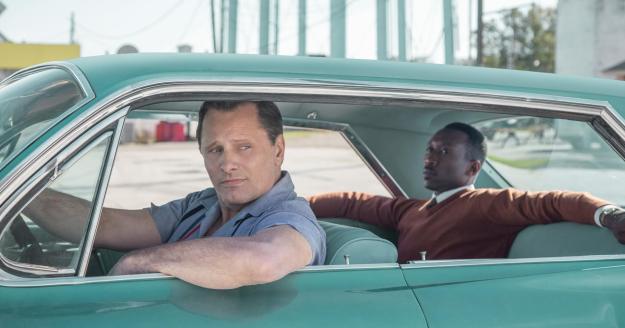
Viggo Mortensen (left) plays Mahershala Ali’s driver as their characters travel through the segregated Deep South in 1962. Photo courtesy of Universal Pictures

By Michelle Garza

Spring Valley, N.Y.

I went into “Green Book” expecting nothing substantial. While it may have won three Oscars, I was considerably skeptical.

I had closely read the derisive reviews and followed the controversy. The public was not pleased with a film having a white savior complex becoming a three-Oscar winner.

I went into the film with preconceived notions and biases. Nevertheless, I found myself captivated by the development of a complementary relationship between characters who expressed conflicting mentalities.

Set against the backdrop of the civil rights movement, “Green Book” tells the story of Dr. Donald Shirley, an African American pianist embarking on a Deep South tour. Integration had not yet spread to that region, and he needed a driver for protection.

He hires Tony Lip, an Italian- American cliche who previously worked as a bouncer. The storytelling shone through from the very beginning. At first, I saw the criticisms, with Lip’s racism obvious from the get-go. Great, another racist-that-getsbetter story, I told myself.

However, Shirley’s appearance forced me to give the movie a second look. His grandiose apartment above Carnegie Hall makes him reminiscent of a king. Actor Mahershala Ali projects a royal image. On the other hand, Lip evidently hails from a humble upbringing and his wardrobe is mostly tattered wife-beaters.

The appeal of “Green Book” is rooted in the film’s use of its greatest asset: the uber-talented leads, Viggo Mortensen and Ali. It was a heartwarming experience for me to witness the unexpected friendship develop between their characters. It is their differences that bring them together.

Lip helps Shirley become less wary of new experiences, such as eating a piece of KFC fried chicken. In turn, Shirley helps Lip properly express his feelings for his wife in love letters. Moreover, the storytelling challenged my preconceived notion of Tony being a “white savior.” He is not by any means a savior. Shirley does not need “saving.” Rather, he needs companionship that a genuine person like Lip can provide him with.

The movie is littered with references to Shirley’s loneliness and struggles with alcohol. Despite living in what Lip describes as a “castle,” he lives alone and realized this when Lip invites him to Christmas dinner with his family, solidifying their bond.

Character’s Evolution On Race Issues Lets ‘Green Book’ Shine

By Jakaylah Redmond

Isola, MISS.

“Green Book” follows the story of Dr. Donald Shirley and Tony Lip. The movie begins with Lip working at the Copacabana nightclub when it closes for renovation, putting Lip out of work. Lip finds creative ways to make money in order to sup- port his family until he gets an interview with Shirley, an African American pianist who is looking for a driver for his tour throughout the Midwest and Deep South. Lip, who is white, refuses to do certain jobs for Shirley and will only agree to be his driver. After Shirley receives approval from Lip’s wife, Dolores, the two begin an eight-week tour. Lip and Shirley don’t get along at first because of Lip’s ignorance and lack of manners. But Lip becomes Shirley’s bodyguard on the tour and helps him out of difficult situations that occur due to racism.

The major strength of “Green Book” lies in how the characters evolve over time. In the beginning of the movie you see how racist Lip is toward black people. His family makes derogatory comments about black people, and so does Lip. When two black men come over to work in his apartment, his wife gives the men a glass of water. Lip sees this and waits until the men and his wife leave to throw the glasses in the garbage. When I watched that scene, I thought he was a very ignorant man and I didn’t like him despite his charm. His racism toward African Americans really bothered me.

But over time, Lip changes. Going on the road with Shirley really alters his view of African Americans. At the end of the movie, you see Lip defending Shirley to his family for the first time by saying, “Don’t talk about him like that,” after someone calls Shirley a derogatory word. His wife smiles and rests her hands on his hand, indicating that she is proud of his growth as a person.

Pulitzer Prize-Winner Parks Delivers Quirky, Chilling Play

By DayOnna Carson

Chattanooga, Tenn.

Lincoln sighs, hangs up his coat, and removes his face paint and beard. He trades out his dark slacks and top hat for gray sweatpants and a black satin durag. This all may sound strange to an outsider who couldn’t imagine a man named Lincoln wearing a durag—never mind being a black man. However, to the audience seated in Princeton’s Hamilton Murray Theater, this was the beginning of the quirky-yet-chilling “Topdog/Underdog.”

The story follows the plight of two African American brothers trying to make it through life as society and their past continues to work against them. Lincoln, the older brother played by Nathaniel J. Ryan, has a job re-enacting Abraham Lincoln’s assassination over and over again at an arcade that allows its patrons to brandish a gun and roleplay as John Wilkes Booth. His brother, Booth, portrayed by Travis Raeburn, has managed to scrape by with things that he has looted, or in his words, “boosted,” and is always open to any means of earning money.

The mind behind the emotional drama is playwright Suzan-Lori Parks. Parks won the Pulitzer Prize for the play in 2002, making history as the first black woman to receive the honor for a drama.

Throughout the production, a multitude of props and small details symbolize important themes. Parks uses the brothers’ hustle, a fast-paced card game, as an allegory for their destiny: Together, their competition hinders their success, and the only solution is for one of them to come out victorious. These elements, along with the play’s foreshadowing—like the characters’ names—effectively illuminate the systemic inequalities of the black experience.

“What I want people to get out of this story is that black men are in pain and need access to healing,” Ryan, who played Lincoln, said in an interview. “A lot of men don’t have access to mental health [care] or both parents, and on top of that, they are navigating a world in which they are suppressed. The main focus is to show black families that we need to love and rebuild the family.”

Ryan and Raeburn’s dedication to crafting realistic, relatable characters through expressive articulation and lively gestures further added to this astounding narrative. Their portrayal of these characters compels observers to reconsider their preconceived notions of the lives of black Americans. The genuine passion radiating from the cast and crew, coupled with the hardworking technical producers, created a sense of authenticity. Director Lori Elizabeth Parquet and set designer Rakesh Potluri did an excellent job bringing the script to life and immersing the audience in Parks’ universe. Through works of art like “Topdog/Underdog,” we can redefine the black narrative, and better understand the complicated strata behind the unique experience of minorities in America.

Brave “Topdog” Impresses

Theater handout 1.JPG

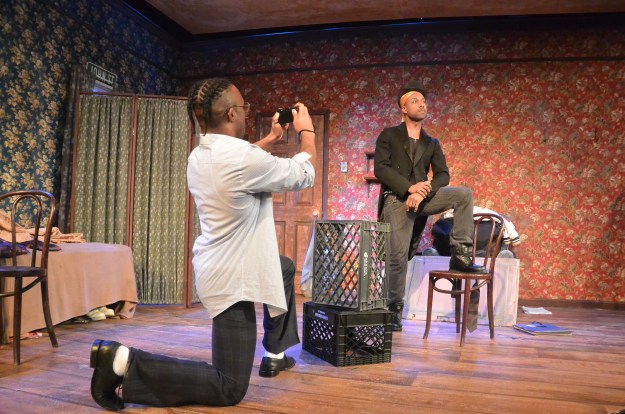
Nathaniel J. Ryan plays Lincoln in the
Summer Theater’s “Topdog/Underdog.” Photo Credit: Courtesy of Princeton Summer Theater

By Bryan Ventura 

New Brunswick, N.J.

Suzan-Lori Parks’ 2001 play, “Topdog/Underdog,” explores the story of two African American brothers in continuous competition with each other, and how tragedy can arise from a shared dark past. Most notably, the play won the Pulitzer Prize for Drama in 2002, making Parks the first African American woman to achieve this honor.

In this particular stage adaptation directed by Lori Elizabeth Parquet and presented at Princeton’s Hamilton Murray Theater, Travis Raeburn plays Booth, the younger brother who tries to con people through deceptive card games, though it doesn’t come naturally to him. He houses his older brother, Lincoln, played by Nathaniel J. Ryan, who scams unsuspecting people with an ease Booth could only dream of. But Lincoln has since turned away from his hustler ways, and is now content with his low-paying Abraham Lincoln cosplay gig at the local arcade.

Viewers quickly pick up that the brothers have their problems. Booth rents an apartment in New York City, but sometimes can’t afford to pay the cable, phone, or electricity bills because he isn’t that great of a con man. His ex-girlfriend leaves him because he has no steady source of income, and his loneliness hardens into resentment.

Lincoln wants nothing more to do with the card games that so consumes his brother. He hates reflecting on his time as a con man, and gets angry when Booth brings it up. He screams at Booth, driving up tension and further dividing the two brothers.

The production consists of only two characters, but actors Ryan and Raeburn did them justice. They were exciting and emotional in their delivery, which created a very reactive crowd that laughed at every joke and gasped at every surprise. There was something about the unintentional humor that made the production very fascinating.

It’s supposed to be a serious moment, laden with underlying sibling rivalry, when Lincoln and Booth argue over money and begin to tear down the apartment in their ferocity. Yet the crowd, including myself, was dying of laughter.

A lot is foreshadowed in this play, and mentioning it would ruin the experience for viewers. However, this production provides a story like no other: how ceaseless emotional abuse can quickly turn brotherly love into malice. How, without structural support, those struggling can fall through the cracks. While these brothers, Lincoln and Booth—the topdog and underdog—care deeply for each other, it might not be enough to save them from each other, or the cards they’ve been dealt in life.

Teach For America Must Work With Teachers

By Jasmyn Bednar

Eagle River, Alaska

To sa y that education is in my DNA is probably an understatement,” says Anna Almore. “It’s literally part of the fabric of my whole universe.” Almore, the managing director for Teach for America (TFA) in South Dakota, spoke recently to a group of reporters from the Princeton Summer Journalism Program.

Almore joined TFA in 2008, teaching fifth and sixth graders in New York; she later worked in Philadelphia, New Jersey, and along the border in El Paso. To Almore and the many TFA alums who continue to work in education, the organization is doing incredibly valuable work. But while it’s true that TFA has plenty of successes to its credit, the organization is also leaving a complicated legacy across the country.

Teach for America was founded in 1990 by Wendy Kopp, who, in a senior thesis at Princeton, stressed the need for increased education initiatives in low-income communities. She launched the program a year after her initial proposal, and its impacts were immediate. Since its founding, the program has served 410,000 students from 51 different regions where access to quality education is historically limited. Most of these regions are classified as “hard to teach” areas, where teacher turnover rates are high, and literacy and mathematical proficiency are low. Almore, like many alums, continues to carry on the work that TFA advocates for—in her case, training upcoming TFA members in rural South Dakota.

Yet as TFA has thrived, teachers’ unions have suffered. In recent decades, the educational reform movement has led to new non-unionized schools, including charter schools, and increased advocacy for education privatization. TFA has been accused multiple times of union busting.

According to the Associated Press and Education Week, the recent strikes in Oakland, Los Angeles, Chicago, and Denver are part of this pattern. Education Week reported that more than 300 TFA alums wrote an open letter to the Bay Area chapter of TFA, criticizing it for withholding payment to any member of TFA who joined the Oakland strike. (TFA has said that it doesn’t have a stance on how its members interact with unions.)

Teachers’ unions and Teach for America have gone head to head for years now. Much of the conflict stems from the recent push toward charter schools. TFA’s largest private funder, the Walton Foundation, is a major supporter of charter schools. A ProPublica report found that the foundation promised TFA $4,000 for every public school teacher and $6,000 for every charter school teacher. In 2018, nearly 40 percent of TFA teachers were sent to charter schools, despite the fact that those schools only educate seven percent of students in America.

As the interview with Almore makes clear, TFA is doing no shortage of admirable work. For instance, the organization is helping students on the Rosebud Indian Reservation in South Dakota to pursue college access, she said. But TFA must figure out how to have a better relationship with teachers’ unions, so that all teachers—both those in TFA and others—can retain protections and turn the focus back to providing the best education possible for students.

Staff Editorial: Leaving As Different People

Ten days ago, 36 students from all around the United States boarded planes, trains, and cars to come to the Princeton Summer Journalism Program. Leaving our homes behind, we felt a strange mix of excitement and anxiety at what the next 10 days would hold. Looking back at passionate debates, inside jokes, and learning more—and sleeping less—than any reasonable person can squeeze into a week and a half, we have built a home among each other.

PSJP is a unique experience. Students come from states ranging from Alaska to Florida, each bringing a unique story waiting to be heard. Our striking curiosity, love for challenges, and resilience— along with the passion and talent of the staff—transform the classroom into a learning paradise. Journalism is a field built on trust and honor, and that same feeling prevails within everyone in the program. On the first day, we were complete strangers, but we became more than acquaintances or friends—we became a family. A family that will provide each other with the emotional support they need in order to complete the odyssey of college applications. A family that will send each other memes, cat pictures, and gossip in the group chat. A family that will stay strong even if there are hundreds of miles in between them. This program is a treasure that everyone will keep forever.

PSJP is not about where we come from—it’s about giving students the opportunity to learn and thrive. Here, we are not just low-income students: We are writers learning investigative journalism, crime reporting, and topics such as sports and entertainment. We are people who are not afraid to take a stand. At PSJP, we learned to flourish and to not allow societal stereotypes to define or discourage us. From traveling to three states, to talking to strangers on the street, every experience was transformative, and helped us grow stronger. The road to college is stressful, but having a counselor to encourage and guide us makes students feel supported. No matter the obstacle, we will always have our army of counselors rooting for us.

However, not everything about PSJP is sweet. Time management is a huge issue. When the clock hits midnight, students are just walking back to their dorms, carrying with them an aura of exhaustion. There’s not enough time to explore the Princeton campus, meals are too close together, and there’s not enough time to cover every topic. But these are small tradeoffs for the experience of a lifetime.

By the end of the program, students leave as different people. We return to where we came from, but the effects of the relationships we built at Princeton will be everlasting.

Gen Z Struggles With Anxiety

By Zandrea Evans

San Antonio, Texas

Young people are under so much pressure to surpass their peers. They’re anxious. They’re depressed. You don’t need scientific studies to prove this. The evidence is walking around America’s high schools.

I attend a school with an intensive curriculum. Schools like mine do help prepare students for the challenges of college, such as approaching teachers for help and developing critical thinking skills. However, they cause many students to develop mental health issues at a young age. According to a study by the American Psychological Association in 2018, members of Generation Z (ages 15 to 21) are the generation least likely to describe their mental health as “excellent or very good.”

My peers and I suffer from excessive stress that comes from at least five hours of homework a night—not including studying for tests and quizzes. In 2009, high school seniors took an average of 3.6 more credits than they did in 1990, according to The National Center for Educational Statistics.

On top of that, the pressure for students to score well on standardized tests like the SAT, AP, and ACT exams heightens stress levels. Some students find themselves stuck taking a slew of exams with little time to study. For instance, as a junior, I needed to study for the ACT and three SAT subject tests on top of the homework that came with my five AP classes. Because of the pressure high school students are constantly under, anxious and depressive statements are common. There are even memes about the prevalence of suicide jokes made by young adults.

This is an issue that should concern schools across the country, many of which are without a designated mental health counselor. The Washington Post recently reported that, in public schools, there is one psychologist for every 1,381 students. The National Association of School Psychologists recommends one for every 500 to 700 students. By not giving students the proper tools to deal with their mental health issues, schools negate their efforts to push students to higher levels of achievement. Mental health problems can hurt students’ grades, relationships, and quality of life.

The mental health of students is of vital importance, not just for their well-being, but for society’s. Today’s overtaxed teenagers will be tomorrow’s leaders.

Why America Isn’t Great

z-IMG-2008.jpg

Illustration by Francin Vasquez

By Justin Fajar 

Brooklyn, N.Y.

Every day, thousands of people—some forced through social coercion or otherwise—put their hands on their hearts and pledge their allegiance to the United States flag. While some would see this as a beautiful showing of people who love their country, in reality this is an undeserved show of nationalism. The reality is that, while America has some strengths, it isn’t nearly as admirable a country as many of its citizens think it is.

The United States has one of the bloodiest histories in the world, having invaded or fought in dozens of countries around the globe. This would be fine if the U.S. made efforts to acknowledge and try to remedy the damage it has caused. But instead high school history textbooks often skew our country’s history. A prime example of this can be seen in the South, where many textbooks make sure that the Confederacy looks more sympathetic.

Discrimination against minorities is also common, particularly in the education system, including higher education. Dan-el Padilla Peralta, a classics professor at Princeton, recently shared his experience as a “token minority” in higher education and how he has had to deal with “a general aura and practice of exclusion.” He also discussed how bad he felt knowing how few minorities had the same opportunities he did. “It took me a long time to reconcile my place in being here [Princeton] with the fact that with the unluckiest of dice rolls I could have been dead at 24,” he said.

Meanwhile, our democracy is deeply flawed. In the United States it is constantly put into our heads that our votes matter. But if we look closely at the 2016 election we can see that is far from the truth. Although Hillary Clinton won the popular vote by a few million, Donald Trump was selected as the president through the Electoral College. The ability to vote is also a huge issue. Voter suppression is a real and ongoing issue, particularly for minority voters. A country cannot call itself a democracy until all voices are heard.

And what about how we spend our money? According to NationalPri- orities.org, a recent budget deal calls for military spending to be 54 percent of federal discretionary expenditures in 2020. Historically, military spending dwarfs the amounts spent on energy, the environment, housing and community. How federal money is spent is a great indicator of what the United States prioritizes—apparently, it values invading countries over helping its citizens.

To be sure, there are a lot worse places to live, and there are positive aspects to this country. People around the world aspire to immigrate here and to live the American Dream. The United States has a Constitution that guarantees many rights. It also has thriving economic sectors, from technology to film to finance. Many people are making efforts to address the problems listed above: Many universities are trying to increase diversity, and reparations for the descendants of slaves are being seriously talked about as a way to rectify what has happened in history.

But Americans often put forward a facade in which we are a perfect country—and that is tragically far from the truth. We as a society have to demand better from our government, so that one day when we stand for our flag, hand on heart, we can truly mean it.

Building My Confidence, Question By Question

By Savannah Joyner

Barnwell, S.C.

I was burning with embarrassment as I walked the humid streets of New Jersey. It was only my first day at the Princeton University Summer Journalism Program, but I still felt disappointed with myself.

My rapid footsteps on the paved sidewalk matched the pace of my heart. My person-on-the-street story about the 2020 election was not going so well. I breathed out.

A good journalist doesn’t give up on the first failure, so I couldn’t give up. I saw another person coming. I tried to speak but the words got caught in my throat. Time and again, I would find the courage to speak, and then I would choke.

My group and I walked to a small park, where I saw a woman with a dog. With a little push from my counselor, I approached.

“Hi, my name is Savannah and I’m a student journalist. Can I ask you a few questions about the 2020 Democratic debates?”

“Yeah, sure.”

My heart leaped with joy. Her dog shared the same emotion, as he jumped on me excitedly.

The woman’s name was Louise and she was 24, a native of Princeton.

“Who are your favorite candidates so far?” I asked.

“I would have to say Bernie Sanders and Elizabeth Warren. They agree about work, unions, civil liberties, and they know that the current administration is toxic.”

“Who do you think would win the 2020 election?”

“Umm, I’d have to say Bernie.”

My heart was racing but this time in a good way. Success.

As I left the park, I felt my anxiety begin to leave, and in its place, I felt confidence begin to bloom. I began to believe that I could do it. My heart rate slowed. I walked further, ignoring potential interviewees, because I didn’t want to lose this victory.

Eventually I stopped in front of a cute brick restaurant, which was where I met George, a 69-year-old Princeton resident. He said that his favorite candidates were Elizabeth Warren and Kamala Harris.

Most people associate Elizabeth Warren with Bernie Sanders. I asked him to explain his picks.

“I like how professional Elizabeth Warren is. She has a plan and goes point by point. And I like Kamala because of her experience in government.”

Walking away, I felt the self-doubt creeping back. What if I wrote a terrible article? What if I didn’t do well enough?

When I got back to my dorm, I went to sleep conflicted. I felt success for doing two interviews, but I also felt failure for not doing more.

Three days later, I found myself having to do person-on-the-street reporting again. But this time, the game was different—and the pressure even greater. I would have to walk the streets of New York City and ask its denizens how they felt about their mayor running for president. I felt the same feeling of despair and panic that I had felt on my first day. But I had to get out of my feelings.

In New York, I interviewed five people. Yes, I got rejected a lot but I managed to not let it get to me. I felt different. I felt proud of myself.

The thought of having to do this a third time completely terrifies me, but I have a feeling that I will interview even more people next time.