Category Archives: Uncategorized

An immigrant’s story

Credit Maggie SalinasMaggie Salinas

By Maggie Salinas

Sunland Park, N.M.

My father, Carmelo Salinas, immigrated to the U.S. in the 1970s after he couldn’t find work in Mexico. He was only 17, and he supported himself by picking pears in Southern California. We recently discussed how hard those early years in America were after he kept his experiences silent from everyone for years. Why did you find it necessary to immigrate for work?

“Mexico was corrupt and they didn’t want gente like me working. Everyone needed the money and was out to get you en Mexico. My dad used to be a bracero when he was young too, and he introduced my mom to American money.” What exactly did you work as?

“A lot of us usually worked in barracas de comunidad, and we would go up the mountains en Tehachapi [a city in California] to trim pear trees. Las barracas looked like prison cells. There [was] a two-in-one small bed, and we shared one toilet and a kitchen. Looking back, it was dangerous, but back then it was better than nothing.” Do you remember how much you earned?

“The owner would visit every quincena to pay us, 15 days. He would come up to you and go:

¿Cuantos arboles podaste, Carmelo?’

No pos’ que cien’

‘Bueno, son $150 por cien arboles’

He gave us about $150 per 100 trimmed trees every 15 days or a month algo así.” Did you face conflict with other workers?

“Sí, there were some old folk with us who didn’t want to go out and work with us because they had reumas, like arthritis, and they didn’t want to go out in the cold. Pero there were others who were just lazy. And they wanted us to split our earnings with them, or they would threaten to beat us. Some of us got into a fight with some of them. We didn’t want to pay them, and they tried stabbing me. I was able to take the knife away from him but your tío started punching him out of anger for threatening me. I remember telling him to stop so we wouldn’t get in trouble.” Was trimming pear trees the only way you earned money?

“No, after la temporada de piscar [harvesting] we would go to Bakersfield and lay down an irrigation system. We had to move pipes, and I remember when I had to supervise them at night, I would sleep under the water when they broke because the water was warmer. We needed to rent a place down in Bakersfield, and they paid me $3.25 per night. It was good money. We rented this house, and we had six Mexican guys, including your tío and me, and four girls. Some were American, and others were pochas, Mexican-American.” Did you have any encounters with deportation?

“Oh yeah. I used to have a girlfriend, her name was Suzy, but she was part of the pandillas, like gangs, in East LA, and I was really scared of the cholos. Fights would break down often when we went out to eat in her area, and I tried to get away, but one time la migra, immigration, came down and got us. They took us down to Tijuana. Sometimes they took [us] down to Calexico, Chula Vista, and Downtown LA for detainment. They would deport [us] in about 48 hours.” What did you do when you were deported?
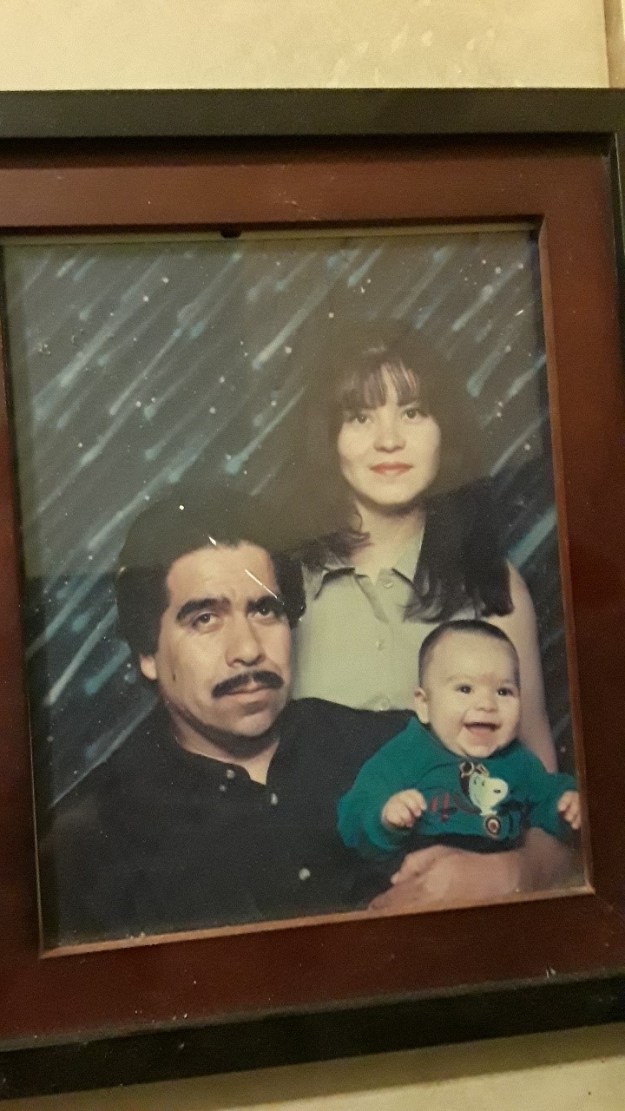
Credit Maggie Salinas 1

Maggie Salinas


“I came back, por la familia.” Did you meet any interesting people?

“Cesar Chavez. I met him when he began his protests in Bakersfield, around 1973. Maybe it was just me, but I didn’t participate. To me, I felt there was no real gain in protesting other than attention, but I had more to lose. If I were older and had been educated past age 12, maybe I would have spoken to him more. A lot of us stayed away from the huelgas. We needed the money, our parents needed the money, and it was better than unemployment in Mexico. Uno tenia miedo de perderlo todo.”

“I was young, I only knew to survive. If I were educated, I think I would have appreciated the movement more. But I didn’t want to lose my progress in life. And he was famous, but I didn’t care to pay attention, but that was just me.” Today, Carmelo Salinas is a father of five children, all first-generation American citizens. He worked his way from being an immigrant in California to residing in Sunland Park, New Mexico. Born in 1955, he immigrated to California in the ’70s and learned English through pop culture. Though he didn’t receive his GED until 2014, along with his wife who was also an immigrant, he earned certification as a machinist and welder. He earned his American citizenship in the ’90s and helped his wife gain residency in 2007. To this day, he works endlessly to support his family, and contrary to harsh claims that date back to the ’70s, he never took advantage of welfare or the government’s re- sources without working. Although monetary wealth is not present in the family, love and moral values always are.

Griffin Says Pandemic Response Overblown

By Aigner Settles and Brianne LaBare

Pennsauken, N.J. and Orlando, FL.

As new COVID-19 cases in Florida topped 10,000 per day, 13th District congressional candidate Sheila Griffin argued in a press conference with The Princeton Summer
Journal that her state’s response to the pandemic has been overblown.

Despite the increase in coronavirus cases in her state, Griffin—one of five candidates competing for a spot on the ballot against incumbent Democrat Charlie Crist—told reporters she believes that schools should be reopened immediately.

“When you start saying that somehow or another there’s no transmission or
likelihood [of catching the virus] for those who are under the age of 12, then I
don’t understand why we even closed the schools,” Griffin said.

Griffin argued that school closures will affect underprivileged youth who don’t have access to the technology needed for remote learning. “The big impediment will not
be for those children who already have what they need,” she said. “The impediment will be for all the children who will be left behind because they do not [have the resources necessary to succeed].”

Current plans in Griffin’s district provide varying options for families. “Most of our communities here have three choices. Their children can work totally online. Their children can come to school for two days and still work online. Or they can come full-time. Those are parental decisions that are being [put] up by the school board,” she said.

Griffin also emphasized the importance of parents having the final say regarding their child’s education, despite the increasing number of cases and guidance from public health experts to keep schools closed. “I never transfer responsibility that belongs to parents to anyone in government unless the parents are abusive,” she said.

Palzewicz Rejects ‘Defunding’ Police

By Paola Ruiz and Kwanza Prince

East Boston, Mass. and New York, N.Y.

At a recent press conference, Wisconsin Democratic congressional candidate Tom Palzewicz said he does not believe in “defunding the police,” but instead supports what he called “investment and reinvestment” to other social services.

“I think a lot of the dollars need to be moved from our policing system and reinvested into our mental health and a whole bunch of other areas,” he said.

Palzewicz, who is running to replace the retiring Republican Rep. Jim Sensenbrenner of Wisconsin’s 5th District, said police are too often called to treat issues they are not trained to address. “The way I describe this is: Our police force shouldn’t have to be
the one that gets called for everything that happens in our society,” he said.

One in four deaths that result from police encounters are individuals with mental health conditions, according to a report from the Treatment Advocacy Center. If funds were in-
vested in programs well-versed in these issues, he said, that would provide callers with an alternative to the police, and the fatality rate would decrease.

Palzewicz, a Navy veteran, ran against and lost to longtime Rep. Sensenbrenner in 2018 with only 38 percent of the vote. With Sensenbrenner retiring, Palzewicz has a clearer path to office, though the district is reliably red.

In an effort not to alienate more conservative members of his district, Palzewicz objects to the terminology “defunding the police,” saying, “it doesn’t necessarily solve the problem.” Yet his strategy of “reinvestment” sounds similar to most calls for defunding, in that he would move money spent on police activities to other government services while stripping police departments of their military-grade weapons.

“I think mental health is a huge issue in this country that has absolutely no dollars dedicated to it,” Palzewicz said.

“In Wisconsin, we spend more money on prisons than on education, and that tells you about where our priorities are, and our priorities need to change on that,” he added.

My mother’s escape from civil war

By Saw Kay 

San Diego, Calif.

The Karen Conflict started in 1949 in Burma (Myanmar), when the Burmese government began ethnic cleansing by killing non-Burmese or expelling them from the country. This continues today, including the religious cleansing of non-Buddhists, and is the longest ongoing civil war in the world.

At least 50,000 people have been killed. Around 93,000 people live in the nine refugee camps along the border between Burma and Thailand. Most of them are of Karen ethnicity. There are at least 1.5 million Karen who left Burma due to this conflict. They now reside in various countries around the world: the United States, Australia, Canada, Korea, India and Sweden.

Among them is my mother. My mother’s name is Ma Aye Myint and she is 60. She had to flee through the jungles in Burma for many years just to settle in Mae La refugee camp, Thailand. She was around 10 years old when she escaped from the Burmese soldiers who attacked her village.

1920px-Flag_of_the_Karen_National_Union.svg

The Karen Flag

The village my mother came from is Chitturae, located in Burma. She lived in the village with her parents and siblings. In my mother’s village, every day was a repeat of working in the field picking plants, selling food to the community, hunting, and holding com- munity events. Everyone in the community viewed one another as family members. They all held a warm and welcoming space. It was a home that could never be replaced, as my mother told me in a recent interview.

The villagers were prepared to face the conflict given the fact that it started a few decades earlier. However, they would not know when they would be the next victims.

The village was attacked around 1970. They were given no mercy and had to quickly flee for survival. What once was a beautiful village was now torn apart due to the destruction of the conflict.

When the Thailand refugee camps opened in October 1979, my people feared entering the camps since they might have been a trap. This influenced my mother’s family and caused them to constantly flee in the jungles between Burma and Thailand. In order to make it out alive, people would have to be mobile and not settle in one spot for too long. She would tell me that she had to flee barefoot because there were no such things as shoes where she came from.

As the years continued, my mother’s parents passed away and there were no safe villages to re- turn to. She could not depend on anyone for help and eventually sought refuge in the Thai camps at her own risk. She was between 20 and 30 years old at the time of arriving at one of the camps.

Life in the camp was very different from the village she came from. It was bordered off and you were prohibited from entering the city. Despite the protection she received, she remembers having to flee again from Burmese soldiers. To make things worse, she was pregnant with my older brother. We were born in the Mae La refugee camp. He was born in 1999 and I was born in 2002.

I am the youngest in my family and I was born with a disorder that influenced my parents to enter the U.S. I had to use a colostomy bag because my digestive system did not function normally. This was a disability I struggled with. The whole camp knew about me and believed that I would not make it. However, this would not stop my mother from reaching out to doctors to help me. Most professional doctors and nurses gave up on giving me treatment and doubted my chance of living. My mother’s love was too strong to give up on me and so she continued. She did not want me to be another child neglected by an undeveloped medical system in a third-world country. Only one doctor said I would make it and gave my mom hope. After a few years, once our papers to enter the United States were approved, we were sent to the Bronx, New York.

Biden’s Advantage: He’s Not Trump

bidenFormer Vice President Joe Biden has failed to draw sustained excitement among younger voters. (Photo credit: Adam Fagen)

By Perla Duran and Crystyna Barnes

Newark, N.J. and Elm City, N.C.

Joe Biden may have a young person problem.

In recent interviews, four teenagers from the Princeton Summer Journalism Program said they don’t approve of the presumptive Democratic nominee’s policies, especially his resistance to universal health care. They were disturbed by allegations that he inappropriately touched women or made them feel uncomfortable. They felt that he wasn’t reliable or modern enough, but said they would vote for him despite these
reservations.

Anne Tchuindje lives in Washington, D.C., and Alyssa Ultreras in Oakland, California. Both are 17. In deciding whom to support, they said, a candidate’s authenticity is the most important factor. Alexa Figueroa, 17, of Brentwood, Maryland, and Stephanie Garcia, 16, of New York City, agreed, adding that they’re not confident that Biden will uphold the policies he claims to support.

For example, Biden said he wants to pay educators more and modernize schools. About this, Ultreras wondered: “Is everything you’re emphasizing really going to happen?”

They also feared Biden was cynically trying to reach a specific demographic: people of color. Tchuindje mentioned a recent interview on the popular radio show “The Breakfast
Club,” in which Biden said, “if you have a problem figuring out whether you’re for me or
Trump, then you ain’t Black.”

To Ultreras, this attitude is exactly what Biden needs to work on. In a society where people of color face a lot of backlash, she said, “he knows that voters are in a tough position, especially Democrats, where [he’s] your only option. Therefore, like, you’re going to have to pick [him] because you don’t want Trump.”

Biden is making Black people feel either obligated to vote for him, Ultreras explained, or guilty if they don’t.

When asked what other candidates they liked, three students named Sen. Bernie Sanders, the democratic socialist U.S. senator from Vermont, who dropped out of the race in April. They said he was a candidate they could rely on to uphold the promises he had
made, as illustrated by his past activism: marching for civil rights in the 1960s and getting arrested for protesting discrimination against Black people in the Chicago school system. The teens also mentioned Sanders’ unwavering support for a government-run “Medicare for all” system.

“I’m disappointed that it got to the point where we have to pick between the lesser of two evils,” Tchuindje said. But she and Ultreras said Biden’s election would halt the current administration’s harmful health care and environmental policies. In that sense, they said, not voting for Biden would be negligent—even dangerous.

Eviction Crisis Looms For Millions Unable To Afford Rent

By Yeabsira Moges

Silver Spring, MD.

V never anticipated that she would be unable to find work after her temp job ended. She had been living in a small, cramped apartment in the middle of Trenton, New Jersey,  with her husband and 4-year-old daughter. A recent college graduate and new mother, V had been searching for full-time employment while working temp jobs to be able to pay rent and other bills. When her temp assignment ended, however, she was unable to find another job that would allow her to cover her rent.

“I wasn’t even making the minimum to be able to pull my part of the bills,” she said.  With bills quickly piling up, V, who asked that her full name not be used, was worried about whether she would be able to keep a roof over her head and take care of her daughter. She and her family were eventually evicted from their apartment, resulting in “non-payment and then an eviction.” They had nowhere to go and had to quickly work to
find new housing.

According to census data, roughly 36.6 percent of people in the United States rent their current housing arrangements. A Harvard study from February found that 47.5 percent of renters are cost-burdened, meaning they pay more than 30 percent of their income
toward rent. With the massive job loss as a result of the pandemic, many renters will become unable to pay rent, leading landlords to turn to eviction.

With the ongoing pandemic, it is imperative that as many people as possible stay at home and protect themselves and their families. Yet eviction puts millions of families at risk of being thrown out of their homes. Lawmakers, recognizing the devastating impact of an eviction crisis, included special rent protections and an eviction moratorium on most federally subsidized housing in the coronavirus relief bill that was signed into law in late March. This move, however, only impacts around 28.1 percent to 45.6 percent of renters who meet these criteria and, with the expiration of the relief bill’s provisions in late July, even those covered under the law lost federal protection.

To exacerbate the problem, large corporate landlords, such as The Blackstone Group, pursue evictions so aggressively that the United Nations last year accused the company of “contributing to the global housing crisis.” In gentrifying neighborhoods, evictions are the primary tool used by landlords to push lower-income tenants out in favor of richer ones.

Landlords sometimes intentionally create an uncomfortable living situation for the tenants that they wish to push out. They may start construction projects in the renter’s building, enter the living space without notice, take away services like parking and laundry, or even change the locks while the renter is away.

Eviction carries stigma that can have long-standing negative effects, which is something that landlords exploit. V has lived in buildings where the landlords would tack eviction paperwork on people’s front doors. “I’ll see the paperwork there,” she said. “Sometimes I’ll just take it off and tuck it in their mailboxes because I feel like it’s embarrassing.”

Since her last eviction experience, V is doing much better. She is working at a welfare agency, helping struggling families and renters make ends meet. She recently had her second child and is looking to move out of her current apartment and into a better neighborhood.

But because she has an eviction on her record—even though she is currently much more financially stable—she is struggling to find housing in a better area. An eviction can remain on one’s credit report for up to seven years, barring renters access to their preferred neighborhoods. To expedite the removal process of a recorded eviction, one would need to petition the court in the county where the eviction occurred to have it
expunged.

Bodegas Confront New Challenges

imageThe Yemeni American Merchants Association

By Itzel Luna

Sylmar, CA.

When Juan Valerio’s customers pick up their morning coffees and sandwiches at his New York bodega, there are no more intimate conversations and warm welcomes. Only smiles hidden behind facemasks and muted transactions through plexiglass. But all that matters to his regulars is that Deli Grocery is open.

“Bodegas are something essential for the area you live in. When you have a business, you view those people like family,” Valerio said in Spanish. “The clients are yours for years. There are people who [used to] come at 6 in the morning to make their coffee, and if that business is closed, those people don’t know where to go.”

Deli Grocery is located in the Bronx in New York City, one of the initial vectors of America’s coronavirus outbreak. Valerio has owned the bodega for 14 years, and the pandemic forced him to temporarily close it for the first time. The Yemeni American Merchants Association, which represents 4,000 Yemeni-owned bodegas, said about 15 percent of their members have shut down because of the economic impact of the pandemic.

“By closing my business, I felt like I abandoned my clients. When it [closed], the clients called us asking why we weren’t opening,” Valerio said. “They needed us.”

What his customers didn’t realize was that Valerio’s father had died of COVID-19. When Valerio reopened his store after a month, he had to adjust to coming home every day and not seeing his father. It’s been difficult. “We weren’t father and son. We were two people that always shared the world,” Valerio said.

He soothes himself with Latino home remedies, like smearing himself with VapoRub and drinking jugo de limon, all while repeating, “Hay que seguir adelante,” or “we must move forward.” This sense of hope and community is what has kept New York bodegas afloat during these difficult times.

Given that most bodegas are family-owned, their success often depends on the entire family. In May, 20-year-old Brooklyn college student Nasim Almuntaser’s father was hospitalized for two weeks due to health issues unrelated to the coronavirus. As schools began to go online-only, Almuntaser, an educational advocate for the Yemeni merchants group, found himself adjusting to virtual classes, working long hours in his parents’ bodega, and worrying about his father’s health.

“There was something that got me to the finish line,” Almuntaser said. “I want to make him happy, and make myself happy, and reach my goal.” Getting his degree.

As customer demand increased, Almuntaser’s family chose to keep their bodega open 24 hours a day. But more hours meant more possible exposure to the coronavirus. At the beginning of the pandemic, Almuntaser had to use the same disposable mask for two weeks. To help protect essential workers, the Yemeni merchants group started the NYC Mask Mission campaign, which distributes free safety kits to bodega owners. They include three to five masks, hand sanitizer, gloves, and disinfectant wipes.

Youssef Mubarez and his family own three bodegas in New York; one has operated in Times Square for two decades. Despite the economic hit these businesses have suffered, Mubarez credited the survival of bodegas to their resilient communities.

“It’s this kind of community that drives the bodega owners and workers to stay operational during times of need,” said Mubarez, a spokesperson for the Yemeni merchants group. “At the end of the day, the owners in the stores are there to protect the people who live in their neighborhoods.”

::::::::::::::::::::::::::::::::::::::::::::::::::::::::::::::::::::::::::::::::::::::::::::::::::::::::::::::::::::::::::::::::::::::

nasim photoNasim Almuntaser, a college student, has been working long hours at his parents’
bodega while trying to adjust to online classes.

By Alexa Figueroa

Brentwood, MD.

The American dream is a concept that has attracted many immigrants throughout their lives. While the idea has been adapted to fit everyone’s personal preference, owning a business is often a common element. Bodegas, small grocery stores typically based in urban communities, have helped make the American dream achievable for their owners,
as well as their employees. But the emergence of the coronavirus has jeopardized the livelihood of these small businesses and the fate of their American dream.

Juan Valerio, a bodega owner in the Bronx, always wanted to be an athlete, but learned to adapt his American dream to survive. When he came to the United States, he lost his mother, prompting him to become a bodega owner. He believes that being humble is one of the greatest qualities you can have. “Humility is something that you will always value and it will always show you the path. Never forget where you come from,” he said in
Spanish. “If you forget where you come from, the path will be filled with failure.”

Bodegas have become essential during the pandemic by supplying items that may be unavailable at a supermarket during the crisis. “The bodega has already, before the pandemic, served as places to buy groceries, diapers, milk. Some stores serve as daycare centers,” said Youssef Mubarez, a spokesperson for the Yemeni American Merchants
Association (YAMA). “It’s this kind of community that drives the bodega owners and the bodega workers to stay operational during times of need.”

The outbreak has created major challenges for bodegas, and YAMA has mobilized to help Yemeni-owned bodegas and the families of their employees stay afloat. YAMA represents 4,000 bodegas in New York. Fifteen percent of these stores have shut down due to COVID. “We help back home in Yemen for any family members who are being impacted by the pandemic,” Mubarez said. In New York, the group distributes bodega safety kits, including three to five masks, hand sanitizer, gloves, and disinfecting wipes.

Many bodega owners, like Valerio, have taken measures to reduce the burden the pandemic has put on employees by being not just an understanding employer but a friend. “I’ve given them fewer work hours, and if they need anything, they can take it from the store,” Valerio said. He’s also taken them home so they have less contact with people in public transportation.

Nasim Almuntaser, an educational advocate for YAMA, believes that being optimistic will help customers and bodega employees stay sane and move forward. “You know, it’s just being hopeful,” he said. “And motivating yourself and doing other things in this pandemic to remain healthy is crucial at this point.”

Once Called ‘Unskilled,’ Workers Now ‘Essential’

Jobs with JusticeJobs With Justice

By Finley Williams

Chicago, IL.

Labor organizer Ada Fuentes was raised in a working class family in the mostly immigrant community of Chelsea, Massachusetts, a densely populated city that sits
across from Boston on the low banks of the Mystic River.

Her mother spent long hours baking bread for nearby grocery stores, and, finding that insufficient, took on extra work as a domestic worker in the community, often
babysitting the children of women who had factory jobs. Her father, a union man with Sky Chefs, provided services as a handyman and plumber to supplement that income. Despite two working parents, Fuentes’ family could often only afford homes with
absentee landlords that lacked heat in the winter and air conditioning in the summer.

Fuentes recalled her neighbors also working multiple jobs in order to subsist. They lived
frugally and garnished their meals by the salt of their sweat—labor was not merely a forty-hour-a-week excursion, but rather a deep necessity and a source of tremendous pride.

“I kind of grew up with the sense of, ‘This is how the world is, and we’re just scrappy and
we piece things together and try to make it on our own,’” she said.

But the unprecedented economic and social turmoil of the coronavirus pandemic has put the livelihoods and safety of millions of American workers like Ada’s family and neighbors at risk.

As many white collar workers took shelter from the coronavirus in the safety of their homes, some 50 million Americans, toiling in grocery stores, hospitals, and innumerable other industries, reported to work. These were the so-called “essential workers,” a group of laborers who were previously viewed as “unskilled” and “entry-level.” And now they were the only thing keeping the economy alive.

“When I started hearing people say ‘essential worker,’ I was like, ‘This is exactly what we’ve been saying the entire time. This is what workers who work in that industry have been trying to tell you, that their jobs, their literal jobs, are essential to the economy,’” said Fuentes, a senior membership organizer for the nonprofit Jobs with Justice.

The group has used this new spotlight on essential workers to help them organize for better protections and rights from companies that have offered them few benefits.

“There is a path forward with workers organizing themselves. We’ve been seeing a lot of really awesome worker organizing happening,” Fuentes said.

Willy Solis and Jeanine Meisner and the work they do to organize workers for Shipt, a Target-owned grocery delivery service, are an example of this momentum. Both are members of the Gig Workers Collective.

Much like Fuentes, Solis became involved with labor organizing when he witnessed firsthand the plight of Shipt workers during the pandemic, especially after the com-
pany sliced workers’ pay.

“I literally spoke to hundreds of shoppers back in February and got really, really upset hearing those stories about the pay cut and how people were getting impacted and hurt,” Solis said. It’s why he became the lead organizer representing Shipt shoppers for the Gig Workers Collective.

Solis said he took the unpaid position because of the leverage it afforded him in organizing with other gig workers.

An immuno-compromised Shipt shopper who’s extremely vulnerable to pneumonia, Solis himself has experienced the desperation Fuentes witnessed in Massachusetts. He carries out a strict sanitation regimen, which includes wiping down every surface he
touches, changing gloves every time he enters a store, and showering as soon as he returns home. It is his need for money that dictates his hours: “Sometimes I go out as
late as 10 or 11 depending on the day or depending on how much money I need.”

Citing an instance where Shipt was unresponsive to the concerns he brought forth regarding PPE and lowered pay, Solis said that Shipt shoppers and other gig workers are disrespected by the companies that employ them, especially under the current circumstances.

“The fact that the companies are not responsive to our concerns and our vocalization of
the issues does give you nothing but the feeling of being slapped in the face repeatedly,” he said. “The CEOs of these companies are definitely not the ones out there doing this job on a daily basis and exposing themselves and their families to this, yet they want to continue to give us pay cuts repeatedly over the course of a pandemic. To put it bluntly, it’s despicable.”

However, a Shipt spokesperson told The Princeton Summer Journal, “Our updated pay model takes into account the many factors that go into a shop, such as estimated drive time, the number of items in the order, peak shopping windows and location, that can affect the effort needed to shop and deliver an order. With this new model, the majority of approximately 50 metropolitan areas across the country have seen shopper
base pay remain steady, while some metros have even seen an increase.”

Shipt also said it provides safety kits for its most active shoppers and those in high-risk areas, adding that Shipt shoppers can obtain masks and gloves at Target stores.

Public awareness and responsiveness to the risk workers are taking has also diminished as more cities and states push to reopen. Solis remembered the beginning of the coronavirus shutdowns—the outpouring of support was almost “surreal.”

“[But now] that we’re moving away more from the first parts of the pandemic, that sense of heroic effort on our part has seemed to be kind of dwindling away slowly and people are going back to viewing the position as one of a basic service,” he said.

Low-Income Students Face Extra Hurdles In School Disruption

By Kayla Bey

Lilburn, GA.

Mauricio Vazquez, a 19-year-old rising sophomore at Chapman University and Princeton Summer Journalism Program alum, was alarmed when he logged onto his computer days before finals week and saw he had an F in his class. After switching his evaluation from letter grades to pass/fail, Vazquez ended up barely passing. But he considers the effort he put into that class a success. After all, he managed to pass despite the challenges of learning during the coronavirus pandemic.

This spring, colleges across the country announced a sweeping transition to online learning. At Harvard, those who left campus for spring break would not return. “They said that by Sunday everybody had to leave,” said Ryan Morillo, a Harvard
freshman and PSJP alum. “Everybody was scrambling. Nobody knew how they were going to pay for flights home, or storage.”

The sudden disruption of higher education has been especially challenging for low-income students. Kay-Ann Henry, a 21-year-old PSJP alum entering her senior year at University of Miami, says her campus urged her to stay home. However, the reality of “home” for many low-income students can be hostile—and on-campus living, a survival mechanism. “I was going through a family situation, so it wasn’t [in] my best interest to go back home,” said Henry, who was able to secure housing in the University of Miami’s
student apartments.

Morillo didn’t have the same opportunity, having already booked a plane ticket home. “Once I started classes at home, it was horrible,” he said. Around the clock, his parents would ask for help around the house. In between those moments, “I’m studying in the same room that I sleep in, and everything is like a sense of procrastination,” he said.

“I don’t go outside,” said Henry, noting the recent spike in Florida coronavirus cases. Despite living in University of Miami housing, “I wasn’t really seeing people in the other apartments. One of my suitemates stayed [on campus] because she worked security, but I would hardly see her. She would be working so much.”

Henry once thought she would appreciate remote learning. She does not. “I definitely miss that social aspect. There’s just some classes that work better in person.”

Morillo agrees. Though he appreciates Harvard’s mandatory pass/fail policy to mitigate the consequences of a “rough transition,” Morillo is now worried about how his transcript will affect his graduate school applications. “Not all schools did that,” he said.
“It’s going to weigh in in the future.” Graduating college on time is an integral component of that future, especially when low-income students are more likely to leave college regardless of a global pandemic.

M, a 19-year-old rising sophomore at Arizona State University, is an undocumented immigrant. Despite living so close to campus that she commutes there, her undocumented status would force her to pay out-of-state tuition if she was without a full-ride scholarship.

M can’t imagine taking a gap year, never mind the thought of leaving school entirely. “My scholarships are also strictly for four years. I know I talked about it with my friends,” she said. “For them [taking a semester off] was an option, but, for me, because
of my scholarship, it wasn’t really an option.”

But while the coronavirus has upended higher education, especially for low-income students, there are some upsides to studying during a pandemic.

“Doing school right now is difficult, but it’s keeping me busy,” said Vazquez. “It’s given me something else to think about other than everything else going on in the world, and I very much need a distraction.”


Eviction Lab Aims To Help Renters

By Isaac Monks

Tahlequah, OK

One day in March 2016, V arrived home to see an eviction notice on the doorstep of her
apartment in New Jersey. She frantically threw her personal belongings in bags to take with her. While collecting her belongings, she heard a faint police siren on its way to lock her out of the home she’d centered her life around.

This was not the first time V had been evicted. In 2011, V lived with her now-husband and friends in New York during her sophomore year in college. She came home from long school days and worked to make ends meet. V felt successful. But her suitemates struggled to pay rent and fell behind. Months later, V’s suitemates told her they had to move out that night. Feeling distraught, V and her boyfriend quickly packed up their items.

V saw this as a minor setback, but her second encounter with eviction in 2016 would make it much harder for her to find shelter. She was living in an apartment with her
husband and child. “I was working in a temp job, and I wound up losing the job,” she said.

This time, unlike in 2011, her name was on the lease, and she was liable for late payments. V quickly threw her family’s belongings on the street, losing all her furniture, most of her family’s clothes, and countless irreplaceable photos.

With V’s new tarnished housing record, her family house-jumped between friends and family for months, because they were unable to find stable housing as a result of her bad record. V was blacklisted by landlords in the Trenton suburbs, making her family move to inner-city Trenton. “The apartments kept getting worse and worse,” V recalls, describing how the spaces her family lived in got smaller as they were pushed into less safe neighborhoods.

After almost a year, V was able to secure an office job with the county welfare agency. Having a regular paycheck allowed her to rent an apartment in inner-city Trenton. Still, she says the two evictions shaped her in permanent ways. “It made me more motivated to find gainful employment,” she says. “Before, we could stay on a friend’s pullout couch … I have children now, and where would we go, if I don’t have a home?”

Not every eviction has to be a punishing cycle like V’s. Princeton’s Eviction Lab team has been collecting data on eviction and its causes to better understand what policies can prevent evictions and help people escape the trap of homelessness and poverty. They have found that an increase in filing fees for landlords would decrease the number of evictions they set in motion.

The researchers also suggest that tenants should have a right to counsel. “In zip codes where this policy was enacted, we saw a dramatic decline in evictions,” said Joe Fish, a research specialist for the Eviction Lab. “A right to counsel levels the playing field and gives tenants a fighting chance.” Rent control and housing vouchers can also help, Fish added.

The Eviction Lab reports that the majority of poor renting families in America spend over half of their income on housing, and more Americans are being evicted than ever before, trapping people like V in an endless cycle. But while V may have been a victim of eviction, she remains hopeful for her family’s future in their new Trenton apartment.