
By Jiondae D.
The laws of Shabbat argue that if one is not bedridden, even minor medications should be prohibited. While this violates Shabbat rules, nothing is worse than betraying the Ten Commandments—arguably in the worst way: murder.
These conflicting ideas collide in Daniel Robbins’ film Bad Shabbos.
After joining his girlfriend’s family for Shabbat dinner, Benjamin’s fate is sealed the moment he reveals his colitis diagnosis—and makes a few offhand comments to his girlfriend’s brother, Adam. Soon after, Adam drugs him with laxatives.
Despite losing Benjamin early on, his death fails to create suspense. Instead, it becomes an excuse to launch into a series of underwhelming scenes that make the moment feel almost comedic.
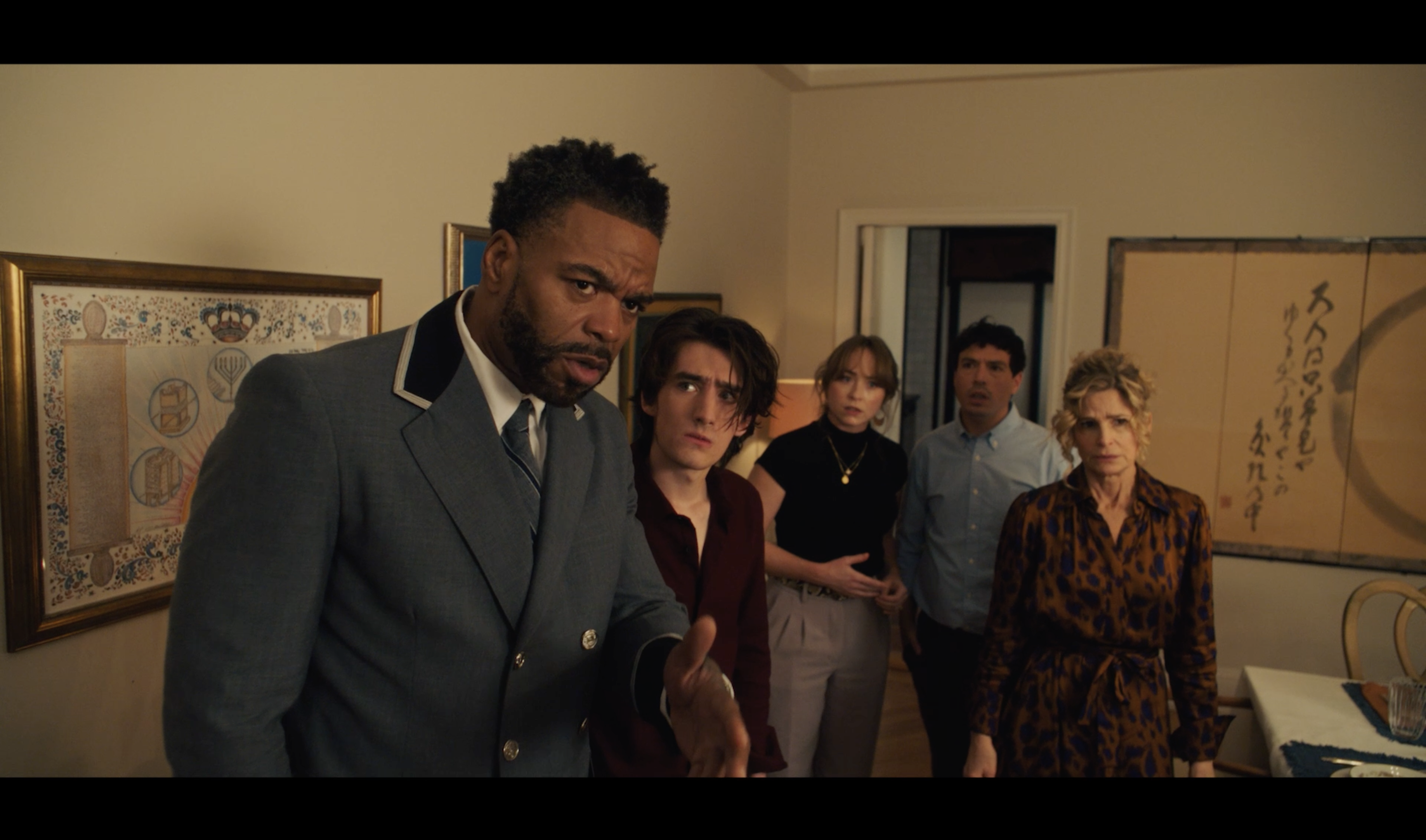
The film takes place in an Upper West Side apartment in New York City, home to Mr. and Mrs. Gelfland and their youngest son, Adam. They invite their two older children and their partners to celebrate Shabbat dinner. Roughly 20 minutes in, Benjamin drinks laxatives. After a comical struggle with his pants and a race to the toilet, he slips, hits his head, and passes away—off-screen, in the bathroom.
Typically, a film’s climax occurs about 90% of the way through. But in Bad Shabbos, Benjamin’s death happens so quickly and chaotically that the rest of the film struggles to find purpose. Audiences don’t pay over twenty dollars to watch a twenty-minute movie, and unfortunately, the remaining runtime becomes a collection of scenes that are more mediocre than meaningful. The cat’s unhinged behavior and wasted food do little to elevate the tone.
Even more jarring is the hypocrisy on display. The Jewish parents mock their daughter for using a car during Shabbat while their son—who killed a guest—is shielded from consequences. This contradiction darkens the already uneven tone of the film.
And just when it seems the chaos is over, the future in-laws arrive. What should be an opportunity for dramatic tension turns into another shallow gag. Glaring looks from the mother and spilled soup are played for laughs, but it’s not as funny as the filmmakers may have hoped. Instead, it feels like filler—lacking imagination and failing to build on earlier scenes that had at least a little more personality.
Benjamin’s death becomes less important with every scene. What could’ve grounded the film in something dark and compelling instead becomes tasteless. This isn’t just an ordinary Shabbat.
It’s the epitome of carelessness.
 The Princeton Summer Journal