Tag Archives: SJP2014

Foie gras a foe to this foodie

By Saintra Thai
San Bernardino, Calif.

I am a foodie. But I have ethics. And my ethics prevent me from eating foie gras. Being an ethical foodie isn’t always easy, however.

After all, foie gras is considered a delicacy throughout the world. It is widely used in French culinary recipes because of its compatibility with other ingredients. It’s popular practically everywhere, from European bistros to three-star Michelin restaurants in New York. Continue reading

College is well worth the costs

Illustration by Justin Park

Illustration by Justin Park

By Razia Sultana
Brooklyn, N.Y.

Parents talk in their seats, teachers fix their robes and students can’t hide their smiles. The venue is strewn with white carnations. A congratulatory arc of balloons acts as the backdrop. The students rise and hold their breath. “By the power vested in me, the Class of 2014 is officially graduated,” says the speaker.

Graduating from college is perhaps the greatest moment in an individuals’ lifetime. So, why are there so many cynics who say that college isn’t worth it? Who ask, “Why spend four years in an institution that doesn’t land you a ‘proper’ job? And why should you spend thousands of dollars if you don’t know what you want to do in college in the first place?” Continue reading

Teens aren’t fairly portrayed in media

By Nathan Phan and Sania Syed
Rosemead, Calif. & Los Angeles, Calif.

Drugs, sex, alcohol: the perfect recipe for the party-crazed teenager so prevalent in pop culture. Society has grown so accustomed to this negative image that aspects of what many teenagers actually do — take multiple AP courses, stay inside to study for the SATs and care for their younger siblings — are entirely ignored. In short, the portrait that society has painted of the average teenager is flawed, displaying unrealistic stereotypes that have become too universally accepted. Continue reading

Education should be unlocked for all

Illustration by Angela Kim

Illustration by Angela Kim

By Najay Greenidge
Philadelphia, Penn. 

Education is the key that allows people to open doors in life. Yet we as a society deny certain groups access to this key because of their socioeconomic status. In doing so, we stunt the growth of our society by creating people who are destined to fail.

To return the key to success to the lower classes, we as a society should raise the tax rate for the wealthy, and use that money to equalize educational opportunities for people of all backgrounds.

America has long suffered from the ills of segregation, whether it be racial, ethnic, religious or economic. Yet while overt segregation has been become less socially acceptable, the ever-distant pool of elites has been able to perpetuate inequality because the wealthy have vastly better educational opportunities. Continue reading

Property rights should trump preservation at battlefield

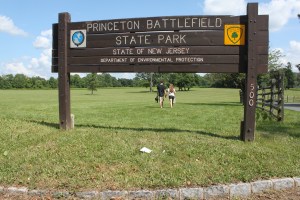
A couple strolls through the Princeton Battlefield State Park. The Institute for Advanced Study is proposing to  build a new site beyond these trees.

A couple strolls through the Princeton Battlefield State Park. The Institute for Advanced Study is proposing to
build a new site beyond these trees.

By Kaygon Finakin
Bronx, N.Y. 

More than two centuries ago, when the roads of Princeton were still unpaved, the town was the scene of a small but important battle in the American Revolutionary War. But for the past 11 years, a different type of conflict has been playing out — one that should finally come to an end.

Like many long-running disputes, the details are complicated. In essence, the Institute for Advanced Study wants to build housing on a 22-acre plot of land that it owns near the Princeton Battlefield State Park. But the Princeton Battlefield Society (PBS) — an organization created in 1971 for the purpose of preserving the battlefield — opposes those plans, arguing that the land is sacred ground that should not be tainted by construction or development.

This disagreement has gone on long enough. The land belongs to the Institute, and the Institute should be able to develop that land as it sees fit. Continue reading

Cheerleaders underpaid and underappreciated

By Jodi Sterling
New York, N.Y. 

When I went to my first football game last week at the Meadowlands, it wasn’t the quarterback rivalries or the roaring crowds that captured my attention. It was the New York Jets Flight Crew cheerleaders.

Their outfits reminded me of the waitress uniforms at Hooters. Well, just with less clothing.

The women wore a white sports bra that contained a long v-neck revealing a golden bra — and cleavage, of course. Continue reading

GMO foods should be labeled

JieYingMeiBy Jie Ying Mei
Queens, N.Y.

The tomato is a simple fruit that is eaten by millions of Americans every year. So what’s the problem?

The problem is that you may have no way of knowing what has gone into that tomato you’re eating. Some tomatoes have been genetically modified to improve taste, delay ripening, tolerate pests and extreme climates.

GMO foods have become increasingly common in agriculture, with the rise of companies like Monsanto. According to the Center for Food Safety (CFS), 64 countries require labeling of genetically engineered foods through consumer “right-to-know” laws.

Continue reading

Cap on A’s hurts Princeton students

Illustration by Justin Park

Illustration by Justin Park

By Eric Macias
Chicago, Ill. 

Students at Princeton University in New Jersey have expressed discontent towards the University’s grade deflation policy that has been in place for a decade.

Established in 2004, Princeton’s system has played a role in the downfall of students’ grade point averages. It caps the number of As given out to students by a specific percentage per individual department.

The attainment of A’s at educational institutions implies that students have demonstrated excellent work, not average work. The implementation of a limit on the number of A’s awarded to students assumes that not every student is capable of excellent work. Therefore, the grade deflation policy embraced by Princeton should not be allowed in academic settings. Continue reading

Children at border should be given a chance

By Diego Pineda
Raleigh, N.C.

Tens of thousands of children from Central America are currently in detention centers around the border area. After traveling thousands of miles — trekking on top of a train known as “La Bestia” (“The Beast”) and crossing the desert —  these innocent children were caught by the United States Border Patrol as they had one foot inside and the other foot outside of making their dreams come true.

Escaping violence, poverty, deficiency of resources and persecution, the children are only seeking a light to the end of their tunnel. This tunnel might be dark and lonely as they walk through a desert that undergoes extremes of hot and cold temperatures. As they make their way through the Central American borders and Mexico, they tend to lack food and shelter. Everywhere they go there are dangerous people who try to sexually abuse them or get them to join gangs. Continue reading

Princetonians express mixed feelings on border crisis

By Vanessa Zamora
Vista, Calif.

As the border crisis in Texas worsens daily, with an average of 155 undocumented children crossing every day, the opinions of Americans have grown more complicated. Recent interviews of Princeton residents confirm the complex and conflicted nature of the crisis.

“It’s not a humanitarian crisis — it’s a safety crisis,” said Steve Beamer, 61, of Princeton. When asked if he thought the children’s reason for crossing the border was valid, he replied, “It’s a good excuse.”

Beamer said that he had no problem with immigration, and that he knows that the United States was built upon immigrants. However, he believes that it should be done through legal means. Continue reading