
By Yullianne L.
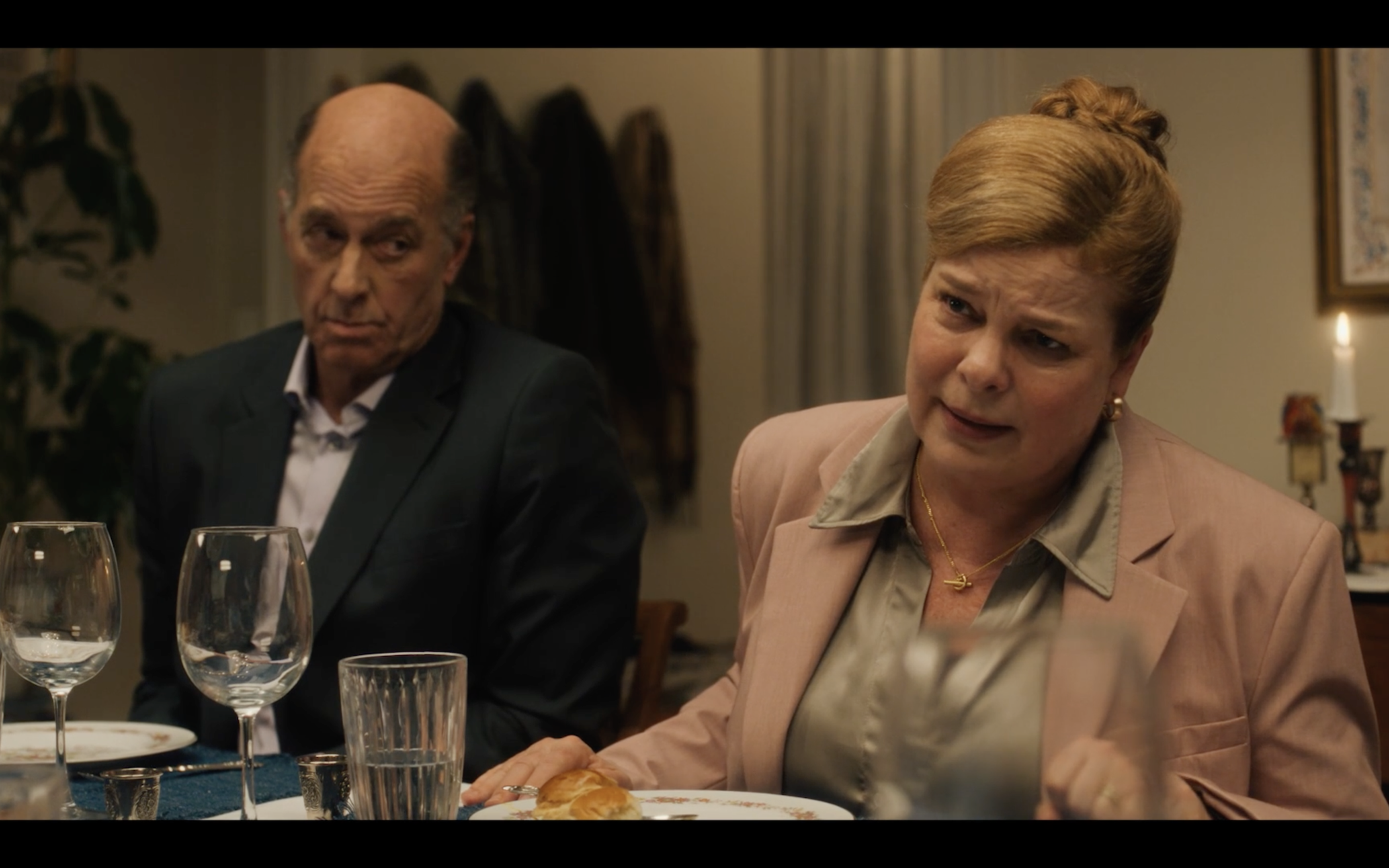
What would it take for you to hide a dead body for your family member? In Bad Shabbos, directed by Daniel Robbins, that question is not a hypothetical. In the indie film, David (Jon Bass) and Meg (Meghan Leathers)’s interfaith Sabbath dinner takes a dark comedic turn, when their attempt to bring together the in-laws plunges into chaos after discovering one of their guest’s dead body on the bathroom floor. As religion, tradition, and family dynamics blend together, the film turns a sacred evening into a panicked scramble to cover up a body and to keep the peace between families.
Set in the heart of the Jewish community of New York’s Upper West Side, Bad Shabbos manages to balance being both a cultural comedy and a portrait of chaotic family dynamics. Robbins and Co-writer Zack Weiner capture the discomfort and deeply-rooted love that defines family gatherings and the culture shock that the interfaith families experience. While some jokes in the dialogues lean into Jewish stereotypes, all of the jokes are incredibly chuckle-worthy and better to watch with a crowd. They also take on several dysfunctional family dramas in their dialogues, highlighting universal family tensions: sibling rivalries, parental judgement, and desperate desire to make a good impression. Throughout the film, the cold, lifeless body in the bathroom ironically becomes a vessel that helps reconnect the family with their love for one another.
At the film’s core is David’s spiraling anxiety, which is both hilarious and heartbreakingly familiar. As he tries to keep his opinionated Jewish parents away from Meg’s Catholic parents, he struggles to satisfy everyone. Robbins doesn’t shy away from exploring pressures placed in interfaith relationships, the film shows particularly of Meg’s expectations to convert, as she was pressured to convert to Judaism to be “good enough” specifically for David’s mother. These moments of tension keeps the film relatable and real, as it balances the fast-paced comedy with lasting emotional impressions to the audience.
Family relationships are the film’s strongest element. The dinner table becomes a war zone of conflicting personalities and egos: Abby (Milana Vayntrub), David’s argumentative sister, constantly provokes their teenage brother Adam (Theo Taplitz), whose slightly sociopathic edge adds to the unpredictable element during dinner. Benjamin (Ashley Zukerman), Abby’s cocky boyfriend, adds fuel to the fire with his personal conflict with Adam. David clings to Jordan (Method Man), the building’s doorman, who becomes an emotional anchor for him as things continue to spiral out of control.
Visually, Robbins enhances the film’s anxiety and absurdity with sharp editing and cinematography. The quick jump cuts, particularly during David’s mirror pep talks, reflects his inner chaos, while the warm and symmetrical color grading brings out a similarity in Wes Anderson’s film-making style. The camera’s smooth panning when David’s parents are discussing the dinner allows more perspective to be shown to the audience, like they’re actually in the room when they’re speaking.
Bad Shabbos is ultimately more than just a dark comedy– it’s a heartfelt and hilarious look at what we’re willing to do for our families, even if it means hiding a body.

