
By Ashanty R.
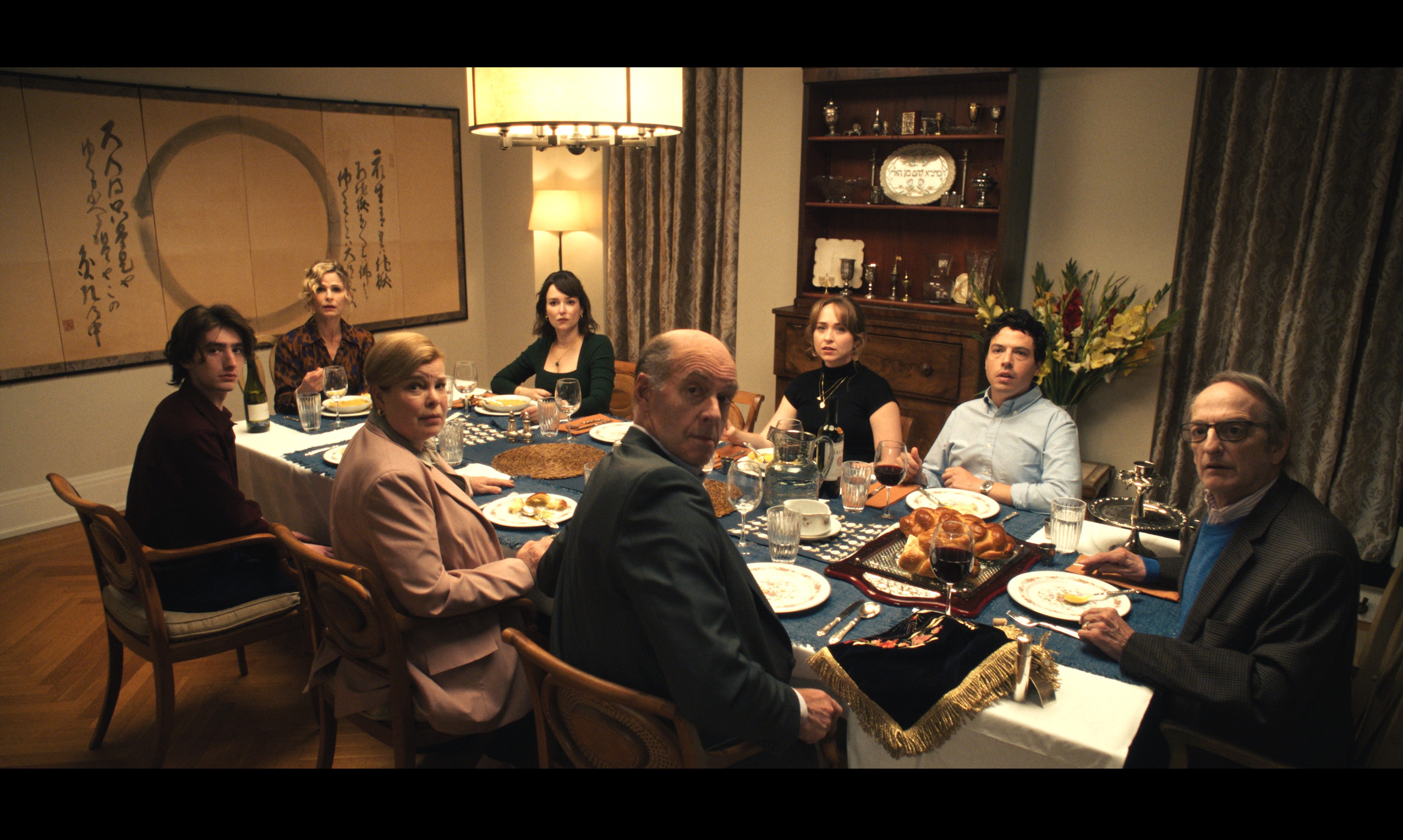
In apartment 10B on the Upper West Side, wingback chairs and towering bookshelves decorate the living room. Untouched plates set the stage for an orderly Friday Sabbath banquet. The audience is immediately pulled into the world of an upper-middle-class family putting on their brightest smiles.
Caught up by the highbrow decorum, it wouldn’t cross a viewer’s mind to check the bathroom for a body.
Director Daniel Robbins delivers a dark comedy that upends the “dysfunctional family” trope by leaning all the way in. Bad Shabbos follows an interfaith couple, Meg and David, attending a Shabbat dinner with David’s family; hyper-observant matriarch Ellen; mild-mannered patriarch Richard; wisecracking sister Abby, her philandering boyfriend, Benjamin, who has unfortunate digestive problems; and Adam, the socially awkward younger brother known for impulsive pranks.
Then Adam kills Benjamin.
To be fair, it was an accident. A subtle wrist flicking crushed laxative pills into a cocktail sends Benjamin rushing down the hall with a gurgling gut. Futile attempts to pull down his pants cause him to crack his head on the bathroom sink, and from there, he’s a goner.
While there was some finger-pointing in the beginning – because who wouldn’t blame a murderer for murder? – they make a choice: protect their own.
Was it morally wrong? Absolutely.
But Bad Shabbos couldn’t care less about moralizing, and they never said they did. It’s alluring because of the messy, contradicting truths about family that lie under each dynamic, each decision, and each quip.
The biggest one?
They fight like feral dogs, nipping at each other’s wounds and beaming when the other bites back. But they would pull their teeth before turning one of their own in.
“We’re not good people,” Abby mutters as she begrudgingly drags Benjamin’s body toward the fire escape, “but we’re our people.”
Robbins refreshingly rejects the posterboard Hollywood route to family. Trading in the estrangements and disownments, he brings a murkier take to the table. These characters do more than skip hand-in-hand into the horizon. They snap, snark, and plot just like we do – but when a crisis hits, they become one..
It’s especially clear in a scene when Adam, once the black sheep of the family, is herded by his siblings through the decently-competent clean up posed by their lobbyist, Jordan, who his siblings managed to pull into the coverup. Adam’s parents are fully complicit, too. Ellen’s well-timed “kitchen mishap” delays all talks of dinner and deflects suspicion from the incriminating hallway, while Richard hosts “Shabbat hymns” at the table with closed eyes – buying David enough time to turn his bloody cuff inside-out.
Admittedly, Bad Shabbos plays some scenes for laughs. But emotional residue sticks to the audience even as they leave the screening.
The film holds up a mirror, calling to mind every subtle elbowing and quick-whipped insult that burns tongues at home. But it also brings to mind also every caring hand wiping away tears and every smothering bear hug. It’s every eye roll and painstakingly grunted, “I love you,” followed-up with a quick jab — because we can never get too comfortable with family, right?
While your misfit family may not lug around a body, scrub bathroom tiles, or trash damning lobby footage, Bad Shabbos makes it clear that even a disjointed herd still moves as one.

