
Category Archives: PSJP2025

Two Sides of the Same Coin: Princeton’s Independent Businesses Put Customer Service First

By Ashanty R.

The heartbeat of Princeton started in a U-Store parking lot.

For five years, Barry Weisfield bounced between flea markets and college towns, selling records and vinyl from orange crates in his Chevy van. After rolling into Princeton, his van became a community staple, drawing keen ears to the Princeton University Store.

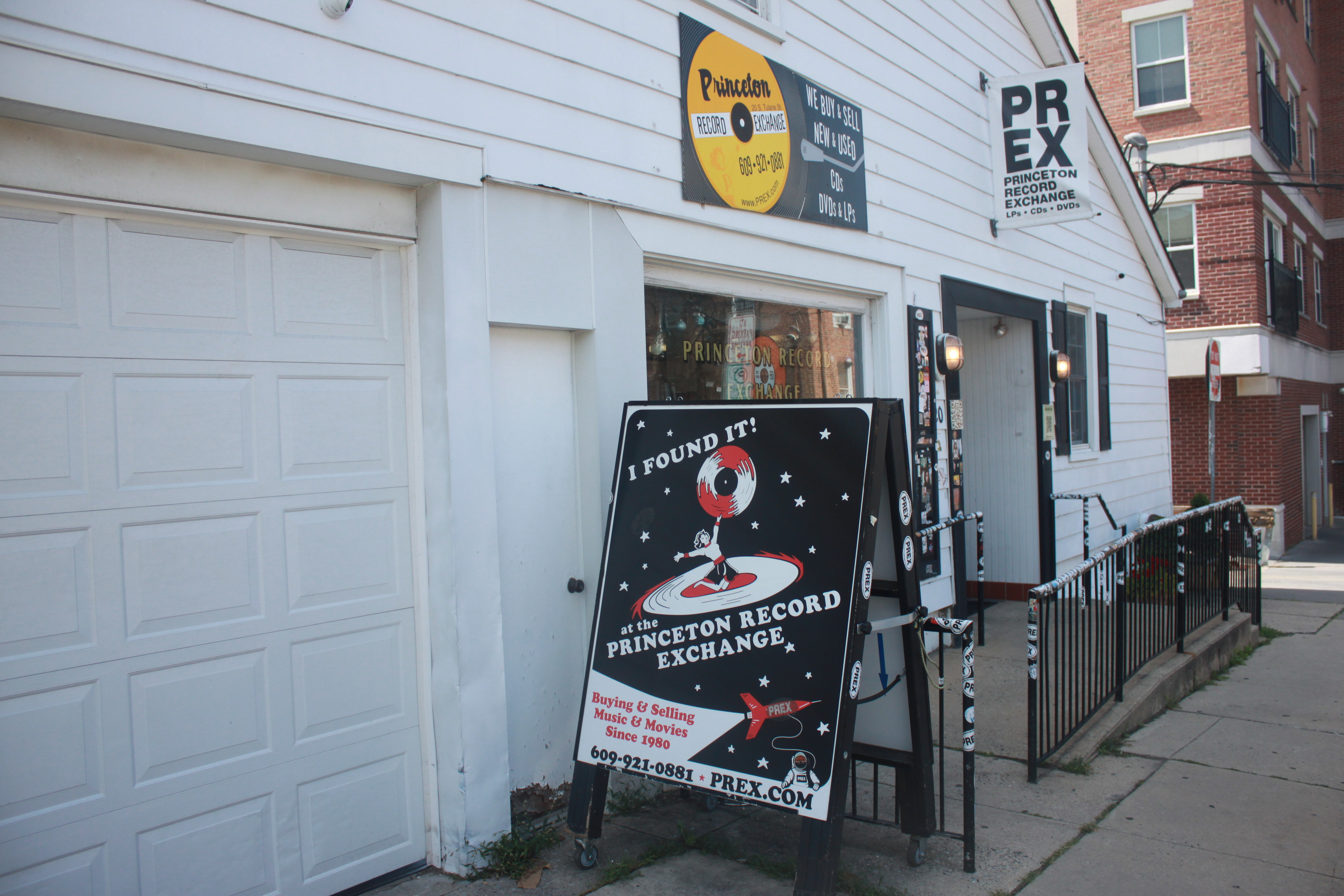
Always on the road, Weisfield laid his heart on Princeton’s streets and couldn’t leave it behind. In 1980, he parked his roots for good, opening the Princeton Record Exchange Store (PREX) on South Tulane Street, a charming cobblestone path off Nassau Street.

Princeton’s location—neatly between New York and Philadelphia—played a role in his decision, offering prime potential for customers. But it was Weisfield’s devotion to customer service that made PREX stand out. He believed the staff should cater to the community, rather than the other way around.

Unlike big-box retailers, PREX emphasizes connection. Staff aren’t just told to sell records—they’re there to make everyone feel welcome, whether first-timers or long-time collectors. Questions are met with enthusiasm, record requests are taken seriously, and the space is decorated for comfort rather than flash.

When Jon Lambert took over in 2015, after years as general manager and close friend to Weisfield, he kept that ethos while adding his own touches. Inside, handwritten canary-yellow tags label the genres, and DIY record dividers keep the vibe simple and accessible.

Overlapping LCD record covers, Vanity Fair spreads of Randy Newman, Ozzy Osbourne concert posters, and artful band collages give the convenience-store–styled building a lived-in charm.

Lambert’s goal is clear: make people want to stay. And they do.

“You know, if you have a business, they [Google] tell you the average length of stay, for people in that organization, and we’re about an hour,” Lambert says with reserved pride. “I think that really speaks to how much people enjoy being there as an event.”

His attention doesn’t stop at décor or inventory—it extends to his hiring.

“I’m pretty picky about picking,” Lambert jokes. He’s less concerned with stacked resumes in the arts and more focused on personality, lived experiences, and values that align with PREX’s mission: to be courteous, kind, and obliging.

He asks potential hires questions like: “What does integrity mean to you?” “How do you live your life?” and “Is it an internal code of ethics or external?”

Lambert sees his staff as an extension of PREX’s promise to Princeton’s community, even when he’s not there. “Those are the things I care about,” he concludes.

Just around the corner, another independent business echoes that sentiment. Labyrinth Books, co-founded by Virginia Harabin, Pete and Cliff Simms, and the late Dorothea von Moltke, serves as a haven for Princeton’s book lovers.

“It’s a place for travelers, it’s a place for locals,” Harabin says.

Labyrinth intentionally sought a large footprint to serve as both a bookstore and a gathering place—though Harabin admits that decision “might have cost [them] a little something in terms of warmth.” Still, thoughtful touches—a cluster of chairs here, a soft rug there, fairy lights strung from the basement ceiling—create cozy pockets for connection.

“I hope that before too long we’ll be able to do something like put a carpet on this floor,” Harabin reflects. “Maybe a different kind of seating area with some softer chairs. I’m emphasizing change and development.”

Warmth at Labyrinth doesn’t just come from décor, but also from decorum. Like at PREX, the staff help create a hub where curiosity meets enthusiasm. Customers openly approach staff, make requests, and linger for informal conversation.

“Somebody comes in and says, ‘Do you have this?’ I look it up; I don’t have it. But I want to have it. I should have it,” Harabin says. “I’m gonna get one for you, but I’m gonna get one for the store too.”

While one caters to sound and the other to story, Princeton Record Exchange and Labyrinth Books share a philosophy: go beyond inventory and revenue. They resist the transactional coldness of big-box commerce, instead valuing personality, conversation, and time spent.

In a town shaped by prestige and tourism, these independent businesses are grounded in cobblestone charm and built on meaningful exchanges. They are more than local commerce—they are the essence of local care, beating steadily under every path.

Championship Slump: NY Liberty Come Up Short 

By Richard F.

Before tip-off, the story was simple: experience over youth. Social media buzzed with predictions of a dominant New York win. The fans brought swagger, confident that the star-studded Liberty roster would roll over the unproven Los Angeles Sparks — a team full of rookies and overlooked talent. But that confidence unraveled almost immediately.

From the opening minutes of the first quarter, it was clear the Sparks weren’t there just for the sake of it; they came to win. L.A. took a commanding 15-point lead using an unorthodox strategy powered by their explosive speed and athleticism. The rookies repeatedly attacked the basket, overwhelming New York’s defense. The veterans lost star Breanna Stewart to injury early, allowing the Sparks to maintain their lead into the second quarter. The crowd sounded their frustrations with their ear-splitting boos. 

The advantage of the Sparks’ youthful energy was undeniable, but the crowd didn’t give up on the Liberty. New York kicked it into high gear, catching up in the third quarter. The atmosphere became ecstatic as Ionescu broke a franchise record with her 16th 30-point game.

Although the vets had their honed plays and established chemistry, they were brought down by pure youthful tenacity. With the game tied at 99-99 and one second left on the clock, player Rickea Jackson accepted a pass in the paint from teammate Dearica Hamby, then heaved up an off-balance shot.

Swish. 

Silence reverberated through Barclays Center as the underdog Sparks celebrated their buzzer-beater at center court. It was a statement win on the road for L.A., showing that being untraditional and fresh-faced doesn’t always mean being sloppy and reckless. 

Liberty’s 6th woman rallies to bring a comeback 

By Bryan R.V.

The New York Liberty were down in the first quarter. Way down. With 1:32 left on the clock, they trailed the Los Angeles Sparks 24-15. L.A. was relentless. When Rae Burall walled off Natasha Cloud from getting into the paint, it seemed like another missed opportunity. But Cloud spun wide and with help from Isabelle Harrison, put up a shot to let it fly. 

Bucket. 

The crowd roared with excitement after witnessing the masterpiece of a play. The sixth woman had arrived. 

Just over 16,000 people were in attendance to watch the Liberty, one of the best teams in the league and the Sparks, one of the worst, at the Barclays Center. Liberty fans cheered for a comeback after L.A. got off to a hot start, looking to extend its four-game win streak. The Sparks dominated early, with Kelsey Plum launching fearless 3s while New York stood paralyzed. Things worsened when Breanna Stewart exited three minutes into the game with a leg injury. At halftime, the Liberty trailed 58-45. All the momentum belonged to the Sparks. 

The response came from the fans.

The Liberty faithful poured their hearts out like their lives were on the line. Ellie the Elephant, New York’s world-famous mascot, put on a performance that could rival Beyoncé. The team picked up speed in the third, scoring 24 points. Natasha Cloud and Sabrina Ionescu locked in and made repeated big plays, the fans going ballistic over each highlight. Cloud gave it her all, scoring 22 points and putting on a show after each bucket. Ionescu recorded her 16th 30-point game, a new franchise record. But what sent the fans into absolute madness was a simple free throw. 

With 2:18 left on the clock, Ionescu was rewarded with one shot and the opportunity to tie up the game. Just like Atlas, Ionescu carried the weight of the world to keep the Liberty’s win streak alive. 

Bucket. 95-95.

New York had completed the comeback, and the torch was blazing hot. The jumbotron words jumped on screen, the arena lights tried to give someone an epileptic seizure, the fans rallied to cheer on their favorite team. But with the score tied at 99-99 and the clock ticking toward zero, the Spark’s Rakia Jackson launched a desperate shot over the Liberty’s Stephanie Talbot. Bucket. 

Diversity Isn’t Just a Buzzword—It Changed How I See the World

By Dominic T.

As I scanned my high school cafeteria, I, like every other freshman in America, anxiously wondered where I would fit in.

The difference was, when I looked at all my potential lunch companions, I didn’t just see students from countless religions, races, backgrounds, and economic statuses. I saw scholars, athletes, artists, musicians—completely unique individuals.

That experience, and many others like it, helped me realize something important: diversity isn’t just a feel-good checkbox. It’s essential to communities across the country.

The benefits of diversity aren’t just subjective—they’re measurable.

In a 2014 Princeton University study, researchers asked groups in Texas and Singapore to price stocks. They found that diverse groups were 58% more accurate than non-diverse groups. In other words, diversity improves how we solve problems, how we collaborate, and how we perform.

This applies to the workplace, too. Every culture has something valuable to bring to the table—economically, socially, and intellectually.

Diversity also saves lives. A study conducted at the Johns Hopkins Bloomberg School of Public Health found that patients from non-white backgrounds often receive worse care from predominantly white medical centers. But when diversity among medical professionals increases, patient outcomes improve.

That’s because when people feel seen, heard, and understood—especially in essential settings like hospitals—they thrive.

I know this from experience. Out of 362 suburbs in Illinois, my hometown of Romeoville ranks number 31 in diversity. Growing up, I never saw my classmates from other cultures as “different”—it just felt normal.

As an agnostic person, I learned about religions like Buddhism, Christianity, and Islam directly from my peers. Their openness helped shape how I think, and helped me better understand the values people hold.

Diversity isn’t something you check off on a college application.
It’s a force that opens your mind, expands your empathy, and builds stronger communities.

The cultural richness of my hometown made me who I am. I believe everyone deserves the chance to grow up in an environment like that—because it doesn’t just change how you see the world.


It changes how you move through it.

Even MAGA Wants the Truth: Trump’s Broken Promise on the Epstein Files

By Selah D.

Trump promised to release the Epstein files if elected—but now, he’s refusing to follow through.

Liberals and MAGA supporters seem to disagree on almost everything, but when it comes to the Epstein files, they’ve found rare common ground. While many Americans see wrongdoing and injustice in the Trump administration, it’s uncommon for Trump’s own right-wing base to feel the same.

That’s what makes this different. The Epstein files are one of the few issues causing noticeable disillusionment among his most loyal supporters.

But the Epstein files are just one of many examples where Trump and his administration have contradicted themselves or been caught in lies.

What’s revolutionary about this moment is that even his own party is upset. The backlash from the right may mark a turning point in how much trust President Trump still has—even within his base.

In an interview with Fox News, Trump was asked directly whether he would declassify the Epstein files. He responded:

“Yeah, yeah, I would.”

This wasn’t the only time he made the promise. He also brought it up on a podcast with Lex Fridman and during a radio show with Will Cain. On the latter, he said:

“It’d be interesting to find out what happened there.”

But two weeks ago, when asked by reporters about the Epstein case, Trump backtracked completely:

“I don’t understand why the Jeffrey Epstein case would be of interest to anybody.”

Why did he suddenly change his mind? Did he ever mean it in the first place—or was it just another campaign ploy to gain support?

These are the questions that explain why even his supporters are starting to lose trust.

Trump is a liar—and always has been.

The Hidden War Within: How Tribalism Splits Nigeria

By Richard F.

Divide is part of human nature. We divide ourselves based on hair texture, gender, skin color, religion—but one that surprised me the most as I was growing up was dividing by tribe.

I am Nigerian, born and raised to embrace our rich and diverse culture. I thought different tribes, languages, and traditions were what made us strong. But the older I became, the more I realized how deeply tribalism had shattered the very pillars of our nation.

Nigeria has over 250 ethnic groups, yet the most densely populated—Yoruba, Hausa, and Igbo—dominate national politics and overshadow our shared identity. The roots of this division lie in colonization, when external forces arbitrarily drew borders across Africa, grouping together vastly different peoples into one country. Nigeria was not born as a nation; it was created as a colony. And the scars of that project remain.

Still, while I acknowledge the role colonization played, I also believe the current generation must take responsibility. Tribalism exists today because we keep perpetuating it—not because colonizers are still here.

I’ve seen it within Nigerian churches here in America, where adults tell children to “only marry Yoruba,” or discourage friendships along tribal lines. These are not harmless preferences; they are seeds of division, disguised as tradition.

Some Yoruba people even pride themselves on having “never been slaves,” using this as proof they are superior to other tribes. But no history is entirely pure. Such myths only breed resentment.

We’re taught to treat each other as “other,” even though we share the same national anthem, the same flag, the same future.

My Nigerian-ness cannot—and should not—be defined only by my tribe.

It is time to break the cycle. We, the youth, must consciously reject the stereotypes passed down to us. We can honor our traditions without using them as weapons.

We may have inherited tribalism, but it does not have to be our legacy.

AI Can Do the Dishes—But Leave the Writing to Us

By Emmy M.

Sam Altman, CEO of OpenAI, once wrote on Reddit that we must not lose compassion behind computer screens. Yet his company has stolen art and writing from millions of people to power its software. This brings up the question: Is the use of AI ethical?

It’s not. But in an age of technological advancement, we’re forced to adapt to this new tool.

AI has become appealing because many use it as a shortcut—to get ahead. But Artificial Intelligence has its place, and it’s not in the arts or humanities.

“I want AI to do my laundry and dishes so that I can do art and writing—not for AI to do my art and writing so that I can do my laundry and dishes,”
wrote Joanna Maciejewska in an Instagram post, later quoted in an article on Medium.

AI can be amazing for organizational and computational tasks. It’s efficient and powerful. It’s a great tool. But the truth is—it’s not going away anytime soon, and we must approach it carefully.

To feed its database for ChatGPT, OpenAI claimed that if content was online, it was fair game—including pirated, paywalled, and private material.

This logic has justified the theft of work from millions of artists and writers, all without permission. AI platforms now allow access to their creations, often at the cost of their livelihoods.

In September 2023, the Author’s Guild filed a class action lawsuit against OpenAI for copyright infringement.

In its complaint, the Guild wrote:

“Defendants [at OpenAI] knew that their ‘training’ data included texts protected by copyright, but willfully proceeded without obtaining authorization.”

During the case, ChatGPT was prompted to generate an outline of Mary Bly’s novel This Duchess of Mine—a copyrighted work—which it did without permission.

Thankfully, the Author’s Guild won the case. But others haven’t been so fortunate.

Meta was also sued for copyright infringement by authors such as Richard Kadrey—and Meta won the case. That, along with another pivotal lawsuit involving AI company Anthropic, marked key legal wins for Big Tech in the AI space.

The consequences of using AI for the arts and humanities are clear: it threatens to destroy them. If it continues, these fields will no longer be profitable—and no longer human.

This new form of rampant digital theft could permanently reshape media and culture, wiping out opportunities for creators altogether.

As users of these tools, we have a moral obligation to protect artists, writers, and the humanities in our communities.

TikTok, Fetishization, and the Weaponized ‘Oxford Study’

By Yullianne L.

Picture this: you’re a young Asian woman on TikTok, vlogging GRWMs and lip-syncing to songs. Everyone is supportive of your platform—until you show your white boyfriend.

Suddenly, your comment section is flooded with one phrase: “Oxford study.”

The phrase refers to an academic study out of Oxford University that examined how TV advertisements shaped perceptions of romantic relationships between white men and Asian women. The study concluded that Asian women are disproportionately sexualized and objectified—but it’s been misquoted online to claim that Asian women “prefer” white men.

That so-called “finding” has taken on a life of its own on social media.

This trend—an oversimplification at best and a dangerous distortion at worst—shows how the degradation and racialization of Asian women is normalized on TikTok.

The Oxford study didn’t prove desire or preference. It revealed patterns shaped by algorithmic suggestion and historical power dynamics. It showed how Asian women are often reduced to tropes of being submissive or exotic. These narratives didn’t emerge overnight—they’re rooted in media portrayals and colonial histories.

Nowhere is this more misleading than on TikTok, where the narrative has morphed into a toxic trend. Videos featuring Asian women and white men often go viral—not in celebration of love, but because they reinforce the tired “white savior/exotic Asian girlfriend” trope.

The comments that follow push these toxic narratives even further, turning actual people into caricatures for clout.

This dynamic is baked into the platform itself: TikTok’s algorithm rewards content that conforms to stereotypes while burying or punishing content that challenges racial or gendered norms. Meanwhile, Asian women who speak out against this fetishization are often labeled ungrateful, angry, or divisive.

The “Oxford study” has been weaponized to justify the very thing it tried to condemn: the ongoing objectification of Asian women, valued only through a white lens.

We need to call this out for what it is—not “preference,” but another face of misogyny, wrapped in pseudoscience and likes.

From Candidate to Target: How MAGA’s Attacks on Zohran Mamdani Reveal Their True Ideology

By Rania S.

How did Zohran Mamdani go from little-known state lawmaker to MAGA’s public enemy #1?

Since the beginning of the young mayoral candidate’s campaign, he’s faced a wave of attacks not only from challengers in the New York City race but also from national political figures. Even Donald Trump weighed in, calling Mamdani a “communist lunatic.”

Since launching his campaign in late 2024, Mamdani has taken the country by storm, sparking mass online support—and just as much outrage. At first, backlash focused on his self-identification as a democratic socialist. Socialism is an ideology unfamiliar to many Americans, which leaves room for fear. And because Mamdani is vying to run the largest city in the country, that label hasn’t been taken lightly.

But the hate directed at Mamdani is no longer just about his leftist politics—it’s now about his faith.

Conservative online personality Charlie Kirk has been one of Mamdani’s loudest critics. More recently, however, the focus of Kirk’s attacks has shifted. On June 24, Kirk tweeted:

“24 years ago a group of Muslims killed 2,753 people on 9/11. Now a Muslim socialist is on pace to run New York City.”

The xenophobia only escalates from there. Tennessee Congressman Andy Ogles even suggested deporting Mamdani—despite the fact that he is a U.S. citizen.

Compare this to Bernie Sanders, also a democratic socialist, who launched his first presidential campaign in 2015. Though Sanders faced widespread backlash, it was never as hateful or personal as the pure venom Mamdani is receiving in a local race.

This shocking animosity reveals something deeper: Islamophobia is back on the rise—and stronger than ever.

When corruption is rampant and conflict ever-present, the Republican Party has once again chosen to weaponize fear of the unknown. Just as they did during Trump’s presidency, they’re using Islamophobia to divide Americans—only now, the target is even more localized.

More Than a Tan Suit: How Racism Shapes Presidential Respectability

By Diego G.

Evil comes in many forms: the removal of healthcare from vulnerable Americans, the erasure of marginalized and oppressed peoples, or—worst of all—a tan suit.

No matter the issue, few things stick out more to the American public than the face behind it.

August 28, 2014, was pivotal for this reason. During the then-age of flower crowns and UGG boots, a tan suit worn by President Obama was deemed a national offense. Ironically, that fashion “crisis” somehow overshadowed Obama’s actual press conference about military plans in Syria. Whether it was deemed “unpresidential” or just “inappropriate,” America collectively decided: we’ll talk about ISIS later.

The ecru suit—typically worn in warmer, semiformal settings—seemed to symbolize another unspoken taboo in American politics: non-whiteness, something that many may have subconsciously linked to being “unprofessional.” If it were truly about the suit, why didn’t Donald Trump’s navy blue attire at Pope Francis’s funeral draw similar outrage?

But it didn’t—just like the current administration’s bizarre AI-generated TikToks portraying Trump as a golden idol or Obama being arrested didn’t either.

Since then, Donald Trump has refused to lower the flag after Senator John McCain’s death, and built a reputation around erratic tweets and a shocking digital footprint. He’s become less a symbol of professionalism and more of a reality TV character. Yet, somehow, Obama’s tan suit lasted longer in the public imagination than many of Trump’s actual political scandals.

That begs the question: What makes a Black man presidential—if someone like Trump can act like an estranged Kardashian and still merit the title?

This isn’t to say Obama’s presidency was without controversy. But unlike international arms deals or scandals, the most iconic media frenzy of his term was…the color of his suit.

Systemic racism doesn’t always announce itself loudly. It hides in plain sight—beneath standards, between expectations, and along the blurred lines of who is deemed “professional” and who is not.

Yes, Black Americans are often told they must work twice as hard to be treated equally. But two times zero is still zero. Without respect, privilege stays intact. And suits are still expected to be black.