Category Archives: Uncategorized

‘Beloved’ Author Morrison Dies


Morrison---Mike-Strasser----USMA

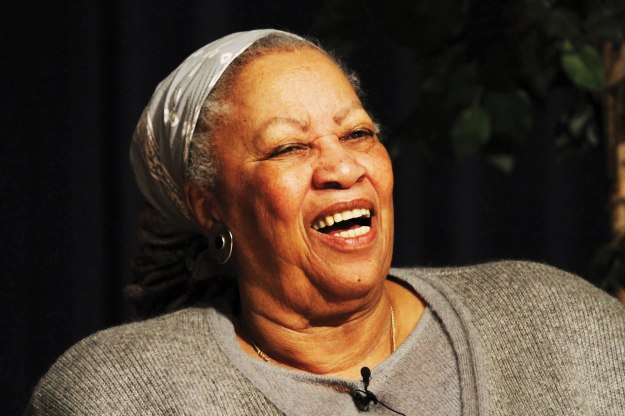
Nobel laureate and Princeton University professor emeritus Toni Morrison passed away on Aug. 5, aged 88. Photo credit: Mike Strasser

By Laila Nasher

Detroit, Mich.

Acclaimed author Toni Morrison passed away in a hospital in New York on Aug. 5. Over her career, she took readers on countless journeys—from the exploration of the devastating effects of racism and sexism in “The Bluest Eye” to the narration of the extreme psychological effects of slavery in “Beloved.” She won numerous honors and awards—the Nobel Prize in Literature, the Pulitzer Prize for Fiction, and Barack Obama’s Presidential Medal of Freedom—as well as the hearts and tears of millions across the world.

From 1989 to 2006, Morrison was a professor at Princeton University, and her classes were some of Princeton’s most sought-after courses. Students from all majors would compete to be selected.

One of these students was journalist Elena Sheppard, who graduated in 2009. Sheppard was ecstatic when she found out that Morrison, who had retired in 2006, decided to teach a class her senior year. “I was so bummed that I’d graduate without having been taught by her … I always loved her work. Even when I was 15 or 16,” Sheppard said, “she brought me into this enthralled mental space that I couldn’t get anywhere else, and she just made me want to be a writer.” The realities of that class, called “The Foreigner’s Home,” far exceeded her expectations. One of the biggest lessons Sheppard took away from the class was the importance of writing untold stories of your community, and that lesson has inspired her to begin writing her own book.

Sheppard also wrote her senior thesis on Morrison’s most famous book, “Beloved.” For her thesis, she had the opportunity to interview the authorherself. After building up the courage to ask her for an interview, Sheppard was surprised when Morrison agreed. “She didn’t have to teach the course or do the interview. Yet she still came to Princeton three times a week to pass on her knowledge. It was humbling to see someone of her status want to pass on that knowledge,” Sheppard said. Morrison gave Sheppard a solid half hour for questions. “Just sitting in the same room as her, hearing her knowledge and that she was willing to help me was amazing. It’s my favorite memory from Princeton. When I found out she died, it was just a gut-punching feeling.”

Dan-el Padilla Peralta, an associate professor of classics at Princeton who graduated in 2006, had the opportunity to be lectured by the iconic author during his freshman year. Peralta’s professor Cornel West invited Morrison to speak to his class in the spring of 2003. Before the discussion, Peralta wasn’t too fond of Morrison’s work. “At the time, I had these received ideas about what constituted rich, textured, novelistic writing. And these received ideas or ideas that have been formed by exposure to texts authored by white men—it was incredibly difficult for me, especially on an initial reading of ‘Beloved,’ ‘Sula’ and ‘Song of Solomon,’ to get myself in the kind of mental space that would enable me not just to read Morrison, generously, but to feel that she was truly speaking to the experiences of those communities of womenfolk and menfolk that have shaped my own life.” But his mind quickly changed when he listened to her speaking.

“I was mesmerized from beginning to end,” he said. As a person of color at majority-white Princeton, Peralta understands the hardships and self-doubt it can cause. Watching West and Morrison converse was an inspiration to him. “It was one of the first times where I saw two folks like me, who could take an academic space over by the force of their conversation, their dialogue and their sheer presence, and not feel in any way like I had to perform to some preconceived standard of white male academic status.”

Morrison’s name will forever be etched in the minds of readers across the world—and on a 181-year-old building central to Princeton’s campus: Morrison Hall, dedicated to the author in 2017.


 

Local Youth Undecided Among Dem Candidates

sjp-lead-dems-rgb.jpg

Photo illustration by SJP staff

By Audry Themen

Jersey City, N.J.

On a recent afternoon, reporters from The Princeton Summer Journal scoured the town for opinions on the current 2020 Democratic presidential candidates. Though the youth interviewed had varied opinions on which candidates appealed to them, many of the students also had a limited understanding of the candidates’ proposals.

Sophia, a rising senior from Bordentown, N.J., felt that Bernie Sanders was a promising candidate, citing his policies on free college and “Medicare for all” as compelling factors for her support. She likened Sanders to Trump in the sense that he “backed up his words with actions,” though she did not elaborate on the instances where Trump substantiated his words with policy.

Lauren, a rising senior from New Brunswick, New Jersey, also had Sanders as her candidate of choice. As an environmentally conscious democratic socialist, Sanders’ progressive policies, specifically his climate change proposals, appealed to her immensely. Lauren cited Joe Biden as her second choice based on his accomplishments as vice president under the Obama administration.

Grace Hutapea, a 16-year-old from Guam, liked Elizabeth Warren. As a citizen of an island territory, she advocated for action on climate change, especially since the coral reefs surrounding Guam are heavily impacted by global warming. Grace also believed that Biden would be a good presidential candidate because of his history, noting that in terms of political experience, he has a “strong foot in the door.”

Not every teenager advocated for a progressive candidate, however. Friends Shikar, Dean, and Siji, moderate Democrats from Texas, believed that Sanders was “too extreme” and impractical. “We can’t ‘Feel the Bern,’” Dean, a 16-year-old from Houston, said. He claimed that Bernie’s “Medicare for all” policies are “not feasible” and would take “too much time and legislation” to implement.

Siji, a Houstonian, admitted that he did not follow politics too closely, but he does favor Biden. “I just think he’s a fun guy,” Siji said. “I like him as a person.”

When asked which candidate has the best chance of winning the primaries, the three students agreed that the state of affairs were not settled. “All candidates, even the lower-tier candidates, have a shot,” Shikar said.

The other two boys agreed. “It’s really anyone’s game right now,” Dean added.

Local Princeton Residents Remain Unsure of 2020 Election Stance

By Jarlem Lopez Morel and JC Villon

New York, N.Y. and Brooklyn, N.Y.

Two sets of Democratic debates and countless candidate interviews have sought to clarify the candidates’ stances on various issues. Yet some Princeton residents interviewed this month said they are still unsure what the 2020 hopefuls believe and what their policies and plans are. Jason Green, 42, who is “very interested” in following the campaign, said voters are not “receiving authenticity from the Democratic candidates.”

Cynthia Medley, 24, said she’s still waiting to find out “what the candidates are really about,” adding that she wasn’t following the race very closely. “Nobody is completely wrong on anything,” she said.

The theatrics seen on all four nights of Democratic debates led some Princeton viewers to feel indifferent regarding the candidates’ policies. Residents said the contenders focused too much on attacking the other candidates rather than discussing their own plans.

Annemarie Porter, 58, followed the debates attentively. The candidates, she said, failed to stand out and provide the Democrats with a “strong enough candidate to beat [President Donald] Trump.”

Many residents said they believe that, because the candidates were aiming to capture independent votes, they were not proposing extreme policy positions. However, independent voters, such as Porter and Medley, said a candidate who can beat Trump is as important as a candidate who represents their beliefs.

The August debates, which drew more than 10 million viewers, did little to change the position of frontrunner Joe Biden. The poll numbers of the candidates below him, however, did fluctuate.

Biden is still at 32 percent in the Aug. 6 Quinnipiac University poll, with Elizabeth Warren at 21 percent (an increase of six points from before the debate) and Bernie Sanders at 14 percent. Kamala Harris’ approval rating, which after the first debate surged to 13 percent, fell to seven percent in the poll.

Princeton Residents Weigh in on 2020 Election

_--Trump-3-White-House-Photo

Several local residents were skeptical that a Democratic challenger will be able to defeat President Trump. Photo Credit: Courtesy of the White House

By Rabeya Sultana

Bronx, N.Y.

Sam knows who he’s voting for in 2020—anyone but President Trump.

“Trump doesn’t have anything in his head,” the 48-year-old Princeton resident said. “He cut taxes from us even though he himself doesn’t pay taxes, and most importantly he is racist.”

Sam’s views are similar to those of several Princeton residents interviewed this month by The Princeton Summer Journal. Tom Goursen, 69, is unsure which of the many Democratic Party candidates should get his vote in the upcoming presidential election. But even though he’s voted for several Republican presidents, such as Richard Nixon and Ronald Reagan, he won’t be supporting the incumbent. “[Trump] is not capable,” he said. “I would rather vote [for] you than him.”

Many feel Joe Biden is the best option for the Democrats. For example, 45-year-old Add Henderson said, “Joe Biden is more electable, I like his points.” Patrick, a Democrat, echoed Henderson: “Joe Biden is a better candidate to defeat Trump,” he said. But, he said, any of the Democratic candidates would be more capable than Trump as president.

Additionally, residents think it is more important to defeat Trump than to choose between the particular candidates. Jimmy, a 64-year-old who lives in Trenton, said, it “doesn’t matter who is elected, as long as it’s someone who does their job, because Trump is not doing his job. He is just taking all the credit for what Obama did.”

Not only are residents dissatisfied with Trump’s job performance, they are also outraged at Trump’s morality. “He is evil,” Patrick said. “I do not like him.”

Despite the majority of respondents hoping to vote for a Democratic candidate to defeat Trump, however, some Democrats still doubt if someone from their party can defeat him. Mostly, though, Princetonians seem to believe the United States deserves a better president—not a president like Donald Trump.


Zwicker Seeks Third Term in State House


By Jhoana Flores 

Queens, N.Y.

The election of President Donald Trump in 2016 raised alarm over whether he is qualified for the position because he was a businessman with no political background. However, other elected officials also have no political experience.

New Jersey Assemblyman Andrew Zwicker, a Democrat who represents the state’s 16th legislative district, said at a press conference that he once believed that he was not qualified for a political position because he is a scientist who works at the Princeton University Plasma Physics Lab. But as a second-term assemblyman, he is advocating for more diversity of background in politics.

Zwicker said his scientific background helps him in his job in the legislature. As for Trump’s lack of experience, he said he prefers that candidates for the highest office in the land have more of a political background.

Still, he doesn’t advocate limiting the field. “Anyone who wants to run for president should run for president,” he said.

The issue of qualifications for public office can be complicated. What makes someone qualified? Alexandria Ocasio-Cortez of New York, for instance, also had no political experience and worked as a waitress before becoming a congresswoman.

Should political experience be a qualification? Should that qualification only apply to those running for president? If yes, why should different political positions be weighted differently, since local politicians also impact our communities?

In Zwicker’s case, his voters don’t seem to mind his lack of political practice, as he’s won two elections. Now he’s campaigning for a third term after four years in the legislature, but he’s still learning on the job.

“I am not qualified,” Zwicker said with a smile. “I’m making it up as I go…I’m doing my best.”

Physicist Prioritizes Climate Change in Third Campaign

IMG_3664.jpg

State Assemblyman Andrew Zwicker has made global warming one of his key issues. Photo Credit: Brian Rokus

By Emily Barrera Cedeno 

Miami Lakes, FLA.

President Trump may be the first person who comes to mind as a politician with zero political background, but the phenomenon started earlier than his campaign.

Until 2014, the thought of getting involved in politics had never crossed Andrew Zwicker’s mind. But one day, the physicist’s boss at the Princeton Plasma Physics Lab suggested he should run for Congress. It was a casual comment, but as more people in Zwicker’s life brought up the idea, he began to entertain becoming a politician.

Zwicker gained the courage to enter the political world with few connections and even less advertising. Zwicker, a first-time candidate with a small reach, expected to get a whopping one percent of the vote. But when Election Day came, he amassed eight percent of the vote. Though he exceeded his expectations, he still lost the congressional race.

The loss did not discourage him. The next year, he began the process of running for the New Jersey Assembly in the 16th district. This time, he built a team, spread his message, visited the communities in his district, and built a platform. He honed in on a specific focus: he would help create jobs, preserve the environment, and protect democracy.

On election night, Zwicker won by a margin of only 78 votes. He was not only the first physicist elected assemblyman of the district, he was also the first Democrat to win there. Zwicker says that he won because of independent voters, and that his victory was a shining example of how important every citizen’s voice is.

His scientific experience gives him a different perspective than the candidates who have a typical political background. Through his work as a scientist, he’s an expert in climate change. He’s written legislation to create a more environmentally friendly New Jersey, such as his bill to make sure that the state follows the Paris climate agreement, which became law in 2018.

Zwicker concedes that, at times, he can be out of his depth. He often recognizes his inexperience and with a smile says, “I am not qualified.” He mentions that with each year, he grows a little wiser. But it has been slow-going. He good-naturedly jokes that it was “harder for [him] to become a quote-unquote politician than to get a Ph.D.”

Now, he’s campaign- ing for his third term. He’s sure that he can only do better in helping the people of New Jersey as time goes on, especially now that he’s more experienced as a politician.

There’s a lot of hesitance to trust people with no political background or experience who insert themselves into political spaces and brand themselves as politicians. While these concerns are not unfounded, Zwicker is an example that inexperience is not something to fear in candidates, whether they’re in local or federal government. Zwicker shows that a member of government—just like in most occupations—can learn on the job.

A Lab Report On Princeton’s Ph.D. Assemblyman

By Kesia Oliveros

Doral, Fla.

OBJECTIVE:
To find the results of the election of a representative with a doctorate degree in physics and a career as a physicist to the highly energetic environment of the state legislature as well as to determine the effectiveness of experimentation in this environment.

THEORY:
If one elects a scientist to office then his proposed bills will be evidence-based, effective and conscious of long-term solutions.

PROCEDURE:
1. Inspire a lifelong advocate for science and education to run for elected office to champion unlimited clean energy, deterring global warming, and curing cancer.
2. Win the first election by a margin of 78 votes with bipartisan support.
3. Support declared goals of job growth and environmental protection with bills that:
• Require Rutgers University to study gun violence.
• Incentivize veterans to attend college and demand that they receive credit for their service.
• Provide grants for new farmers to implement sustainable agricultural practices as well as providing tax incentives to those who lease land to new farmers.
• Require New Jersey to uphold the Paris climate agreement.
• Add student representatives to the board of Rutgers University.
• Encourage planning for the location of electric car chargers.
• Provide a loan forgiveness plan for STEM professionals.
• Make the bog turtle the state reptile of New Jersey.

CONCLUSIONS:
The election of a pragmatist with a solution-based mindset that aims to improve the community’s future welfare is what the people wanted when they elected Andrew Zwicker in 2015. Charming and charismatic, Zwicker is down to earth and willing to admit that like the rest of his voters he’s “making it up as I go,” at least when it comes to his new life in politics.

It is a different type of trust that he gains from his supporters. Maybe every policy won’t be successful, but by experimenting in the legislature, he’s aiming to improve his district.

FUTURE EXPERIMENTS INCLUDE:
Engineers for Secretaries of Defense, data scientists for governors and chemists for senators.

Program Builds Racial Literacy

Choose-hand-out-Credit-Brenna-Kennedy-Moore.jpg

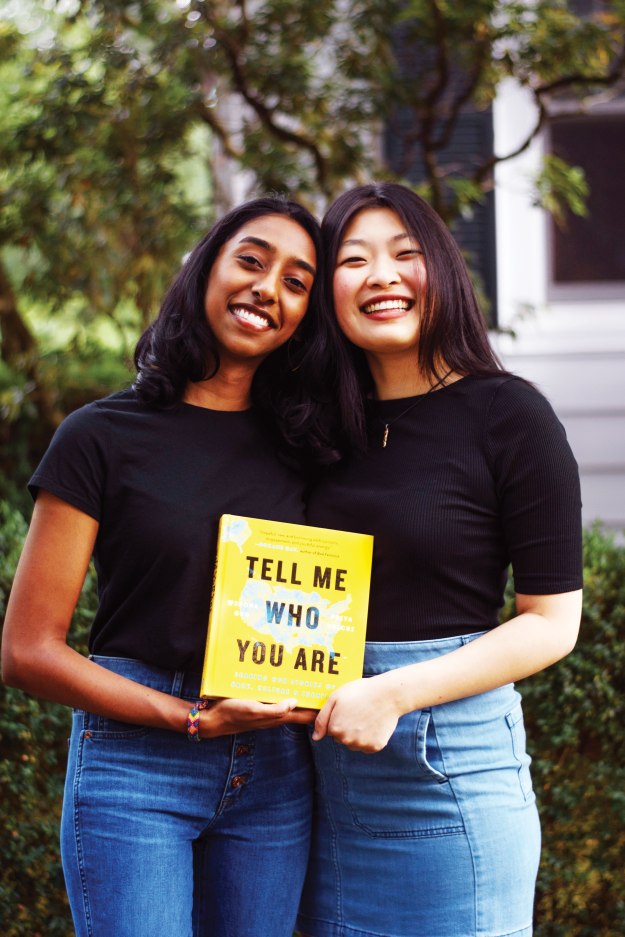
Priya Vulchi (left) and Winona Guo co-founded CHOOSE, which aims to build racial literacy among students. Photo credit: Brenna Kennedy-Moore

By Nellie Ghosheh and Yelena Serrato 

Burbank, ILL. and Floydada, Texas

While walking laps around their high school’s track during gym class, Winona Guo and Priya Vulchi began a conversation that exposed a deep interest in racial literacy. This connection arose from their shared experiences as children of immigrants and women of color.

These conversations led them to co-found CHOOSE in 2014 when they were both sophomores at Princeton High School. The nonprofit aims to drive meaningful conversations about race among grade-school students by creating a curriculum based on racial literacy.

“We had a personal responsibility to do something,” Guo said.

Guo and Vulchi define racial literacy as improving the world by sharing stories about race and identity. They want people to feel proud of their own background while also taking the time to listen to other people’s stories, no matter who they are. To them, racial literacy is not something that can just come to you, you need to aspire to search for it.

Racial literacy, they said, has two different barriers: a heart gap and a mind gap. The heart gap is an inability to understand other people’s experiences, while the mind gap is the inability to understand the systematic racism of many different countries, especially the United States.

Both have given two TED talks and published a book, “Tell Me Who You Are,” which features interviews with more than 150 Americans across the country about race and forms the backbone of the organization.

In order to pursue their understanding of racial literacy, Vulchi and Guo decided to take a gap year before they started college.

Vulchi and Guo are now sophomores at Princeton and Harvard, respectively. By going their separate ways, they were able to reach a wider audience, they said, and spread their message to even more people. “We thought splitting up would be the smarter thing to do,” Vulchi said.

Vulchi and Guo are hoping to expand their knowledge of racial literacy into law enforcement and business, and they are planning to visit Puerto Rico as they vow to immerse themselves in a wide variety of lives.

“This has been a tough challenge for us,” Guo said. “We really love learning.”

Vulchi and Guo said that other students shouldn’t be afraid to start something similar in their own community.

“Do not wait,” Guo said, “until you are out of school to do what you want to do.”

Princeton Eviction Lab Chronicles National Challenge

By Natalee Litchfield

Molalla, Ore.

On his first day as an intern for a legal aid office in Cincinnati, Ohio, Scott Overbey was feeling hopeful. His boss had invited him to witness an average day in court, where he thought he’d see the law making a difference in people’s lives.

But on this day, a grandmother was being sued by her landlord. Her apartment had become mold-infested and her granddaughter had asthma, which made the home a danger zone. The grandmother had been holding her rent in an escrow fund while waiting to get the mold removed from her apartment. But the landlord refused to remove it, and sued her for the money. While the judge was examining her nails and fiddling with her watch, the grandmother gave her testimony. Overbey was aghast at what he saw. He wanted to do something to help people like the woman in court. That’s why he joined sociologist Matthew Desmond’s Eviction Lab at Princeton.

This story is not an extraordinary one, as eviction is a widespread epidemic in the United States. Researchers at Princeton’s Eviction Lab are studying the problem, and trying to figure out precisely how to fix it.

Desmond, who founded the lab in 2017, began his work on eviction in 2008 by living alongside poor tenants in Milwaukee, Wisconsin. Through studying the relationship between tenants and their landlords in poor communities, he became the first to recognize the need for a comprehensive set of data in order to analyze the crisis. In his acclaimed book, “Evicted: Poverty and Profit in the American City,” he coined the idea that “eviction functions as a cause, not just a condition of poverty.”

“Between 2000 and 2016, the number [of evictions] we estimate is 84 million,” said Joe Fish, a newly hired research assistant at the Eviction Lab. That number accounts only for the cases filed in court, meaning the actual total is likely higher.

While there isn’t a singular cause for the eviction crisis, much of it can be attributed to a tremendous imbalance of power between tenants and landlords.

“Landlords definitely know what the rules [are] and what the laws are, but the tenants don’t always,” said Mary- Ann Placheril, an intern at the lab. Although there are restrictions to prevent landlords from discriminating against their tenants, the laws vary from one state to the next. In leases, landlords often use trivial fine print restrictions that are easily violated such as “no pets” or “no loud noises” in order to kick people out of their homes.

Fish and Overbey both hope that the work of the Eviction Lab will spur policy that changes the balance of power between landlord and tenant. In identifying the top 10 cities with the highest eviction rates, the lab was able to prompt community- based legislation that extends tenant rights throughout the United States.

“We have found that cities, when finding out they have high eviction rates, enact legislation,” Fish said. The fact is that the numbers the Eviction Lab are finding matter immensely. It is up to judges, legislators, home developers and landlords to fix the crisis. It means the difference between living and hardly surviving—for grandmothers like the one in Ohio, children, parents, and everyone else too.

For One Reporter’s Family, Eviction Experience Is Personal

By Aminata Touray

East Orange, N.J.

I woke up to banging on my door. I thought it was the kids my mom babysits. Instead, it was my landlord. He barged into our apartment in East Orange, N.J., where my family had lived for 17 years.

“You guys have to leave. Now,” he said.

I will never forget the look in my mom’s eyes: anger and embarrassment.

“You’re gonna do this in front of my kids?” she said. The landlord ushered us out. I was still in my pajamas.

Between 2000 and 2016, more than 84 million evictions happened in America—and that’s almost certainly an undercount. Communities of color, like mine, have been the hardest hit.

These statistics come from the Eviction Lab at Princeton. More than a dozen researchers there are gathering data about evictions to raise awareness and change public policy. Professor Matthew Desmond created the lab after the publication of his book, “Evicted: Poverty and Profit in the American City,” which vaulted the eviction crisis into the national conversation. Joe Fish, a research assistant at the lab, said, “If you don’t have a home, then kind of nothing else matters.”

Fish began working at the lab this summer. He decided to study evictions after seeing a close friend in his hometown of San Francisco kicked out of his place. He was surprised to discover that eviction wasn’t just a symptom of poverty—it was a cause.

There’s an imbalance of power between landlords and tenants, Fish said. Some landlords turn away renters with kids; others reject renters with housing vouchers. Even if you get the apartment, your lease is often larded with clauses that allow a landlord to easily break it if, for example, you have a pet or make too much noise. Because renters are often not aware of their rights, they can fall for discriminatory tactics. Then, once they’ve been evicted, it’s harder to rent a new apartment.

The Eviction Lab researchers hope their findings lead to new laws and more stability for renters. “Housing should basically be a right,” Fish said. People who’ve been evicted aren’t lazy or con artists; in many cases, he said, they’re working people struggling to navigate a system that’s rigged against them.

As for my family, we soon found a new apartment. But within a year, we were threatened with eviction again.