Tag Archives: Princeton

Two Sides of the Same Coin: Princeton’s Independent Businesses Put Customer Service First

By Ashanty R.

The heartbeat of Princeton started in a U-Store parking lot.

For five years, Barry Weisfield bounced between flea markets and college towns, selling records and vinyl from orange crates in his Chevy van. After rolling into Princeton, his van became a community staple, drawing keen ears to the Princeton University Store.

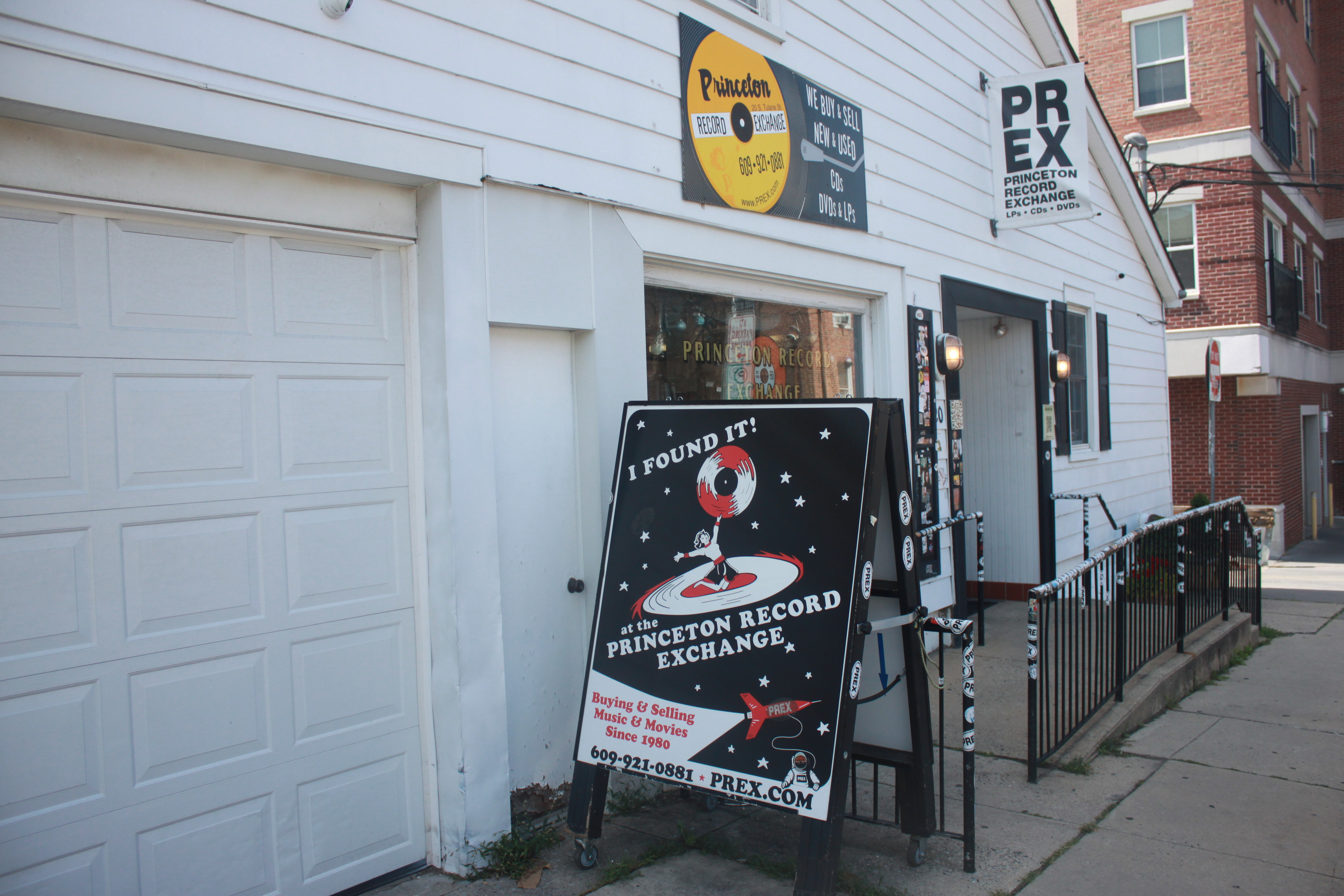
Always on the road, Weisfield laid his heart on Princeton’s streets and couldn’t leave it behind. In 1980, he parked his roots for good, opening the Princeton Record Exchange Store (PREX) on South Tulane Street, a charming cobblestone path off Nassau Street.

Princeton’s location—neatly between New York and Philadelphia—played a role in his decision, offering prime potential for customers. But it was Weisfield’s devotion to customer service that made PREX stand out. He believed the staff should cater to the community, rather than the other way around.

Unlike big-box retailers, PREX emphasizes connection. Staff aren’t just told to sell records—they’re there to make everyone feel welcome, whether first-timers or long-time collectors. Questions are met with enthusiasm, record requests are taken seriously, and the space is decorated for comfort rather than flash.

When Jon Lambert took over in 2015, after years as general manager and close friend to Weisfield, he kept that ethos while adding his own touches. Inside, handwritten canary-yellow tags label the genres, and DIY record dividers keep the vibe simple and accessible.

Overlapping LCD record covers, Vanity Fair spreads of Randy Newman, Ozzy Osbourne concert posters, and artful band collages give the convenience-store–styled building a lived-in charm.

Lambert’s goal is clear: make people want to stay. And they do.

“You know, if you have a business, they [Google] tell you the average length of stay, for people in that organization, and we’re about an hour,” Lambert says with reserved pride. “I think that really speaks to how much people enjoy being there as an event.”

His attention doesn’t stop at décor or inventory—it extends to his hiring.

“I’m pretty picky about picking,” Lambert jokes. He’s less concerned with stacked resumes in the arts and more focused on personality, lived experiences, and values that align with PREX’s mission: to be courteous, kind, and obliging.

He asks potential hires questions like: “What does integrity mean to you?” “How do you live your life?” and “Is it an internal code of ethics or external?”

Lambert sees his staff as an extension of PREX’s promise to Princeton’s community, even when he’s not there. “Those are the things I care about,” he concludes.

Just around the corner, another independent business echoes that sentiment. Labyrinth Books, co-founded by Virginia Harabin, Pete and Cliff Simms, and the late Dorothea von Moltke, serves as a haven for Princeton’s book lovers.

“It’s a place for travelers, it’s a place for locals,” Harabin says.

Labyrinth intentionally sought a large footprint to serve as both a bookstore and a gathering place—though Harabin admits that decision “might have cost [them] a little something in terms of warmth.” Still, thoughtful touches—a cluster of chairs here, a soft rug there, fairy lights strung from the basement ceiling—create cozy pockets for connection.

“I hope that before too long we’ll be able to do something like put a carpet on this floor,” Harabin reflects. “Maybe a different kind of seating area with some softer chairs. I’m emphasizing change and development.”

Warmth at Labyrinth doesn’t just come from décor, but also from decorum. Like at PREX, the staff help create a hub where curiosity meets enthusiasm. Customers openly approach staff, make requests, and linger for informal conversation.

“Somebody comes in and says, ‘Do you have this?’ I look it up; I don’t have it. But I want to have it. I should have it,” Harabin says. “I’m gonna get one for you, but I’m gonna get one for the store too.”

While one caters to sound and the other to story, Princeton Record Exchange and Labyrinth Books share a philosophy: go beyond inventory and revenue. They resist the transactional coldness of big-box commerce, instead valuing personality, conversation, and time spent.

In a town shaped by prestige and tourism, these independent businesses are grounded in cobblestone charm and built on meaningful exchanges. They are more than local commerce—they are the essence of local care, beating steadily under every path.
A Community Built on Stories 

By Alya M.

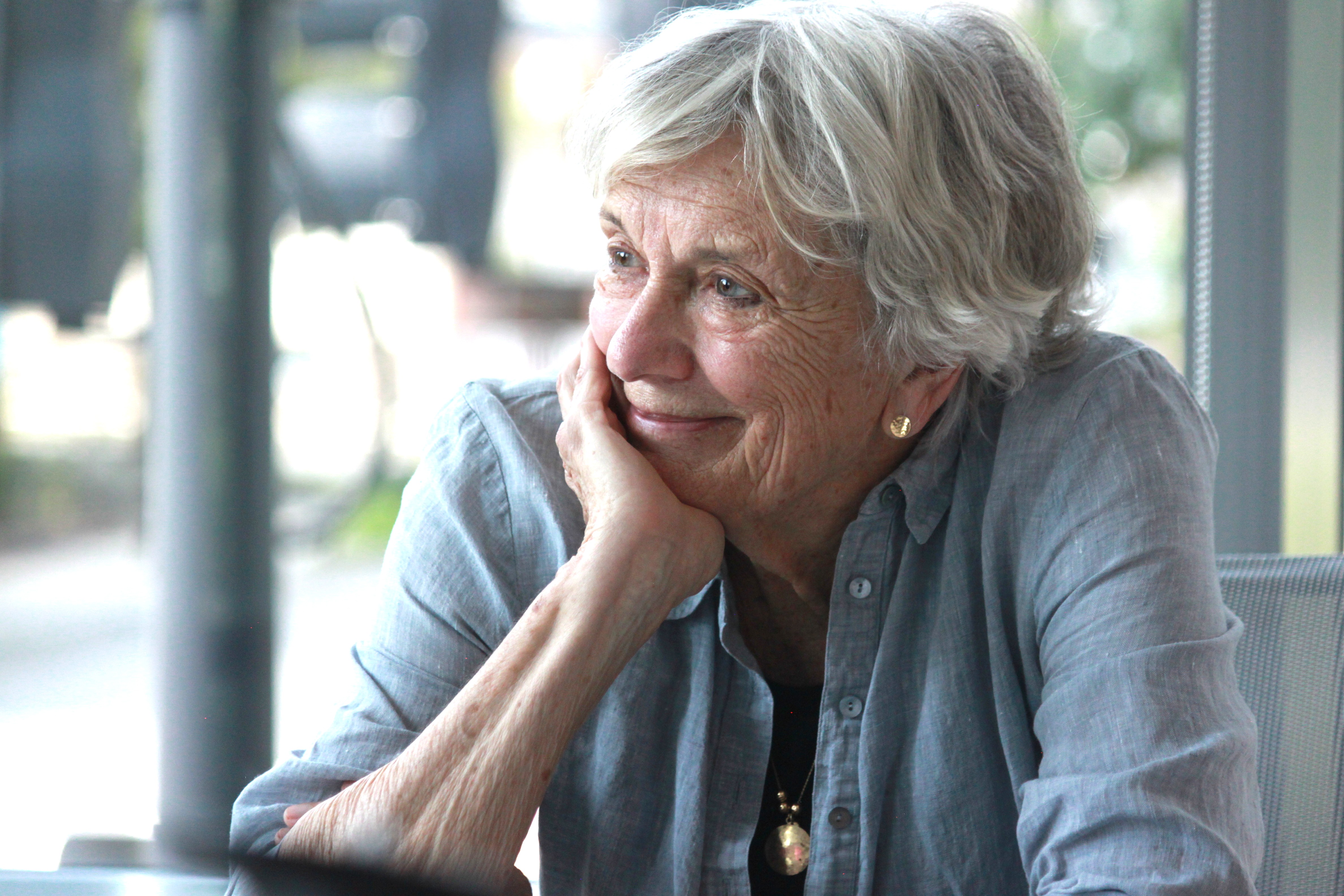
Sonder is the abstract feeling and realization that each person walks around with their own life just as complex and vivid as your own. Through Voices of Princeton, this abstract becomes real. Each story plays as a reminder of how deeply interconnected we really are even as we walk silently past each other. 

The oral history initiative was a result of collaborations between the Princeton Public Library, the Historical Society of Princeton, the Arts Council of Princeton, and the Witherspoon-Jackson Historical and Cultural Society. The goal of the initiative is to collect, save, and store the stories of Princetonians. Princeton is a small town with a population of roughly 30,000, but it is made up of a diverse community with over 50 languages spoken. With the help of Voices of Princeton, all these different people are able to combine their experiences to create culture within the town, strengthening the community.

“When populations from really different backgrounds, different cultural histories, talk together, we become solidly supportive of each other,” said Pamela Wakefield, the inspiration behind Voices of Princeton. Wakefield went on to explain the importance of storytelling when it comes to building a more solid community by allowing people to see each other, not just for who they currently are, but also for who they’ve been and what they’ve experienced. Stories, she emphasized, help uncover the shared humanity beneath our differences, making space for empathy and deeper understanding. In a town like Princeton storytelling becomes not just a form of preservation, but a bridge that connects generations, cultures, and individuals who might otherwise remain strangers. Through Voices of Princeton, that bridge is being built one story at a time.

“I would say that if like in 20 years you have little kids and they say what would it have been like to live here, you can say, let’s listen,” Wakefield said. To her, storytelling is more than memory; it’s a gift we pass on.

Stephanie Schwartz, Curator of Collections and Research at the Historical Society of Princeton, also shared her thoughts on what oral history makes possible. “We’re collecting today for what will become the historic record tomorrow,” she said. Schwartz explained that these stories are valuable not just because of the content, but because of who is telling them and when: “It tells us as much about the person at the time they’re telling the story as it does about the stories they are telling.”

Not everyone feels their voice matters in the bigger picture. “Not everyone thinks their story belongs in history,” Schwartz added. “It’s our job to say: yes, it does.” Voices of Princeton makes that message clear. No one is too new, too quiet, or too ordinary to be remembered.

Cliff Robinson, Public Humanities Specialist at Princeton Public library, reflected that idea. “Just because you’ve been here for a short time doesn’t mean this isn’t your community or that you’re not responsible for it in some way,” he said. In a place like Princeton, where people move in and out often, that reminder matters. Everyone has a place. Everyone contributes to the larger story.

Robinson also spoke about how special it is that the stories are recorded in audio form. “I’ve always been enchanted by the fact that they’re just audio. It requires a different kind of attention—you can close your eyes and just listen.” That kind of listening, quiet and focused, builds a kind of connection. 

Kim Dorman, Community Engagement Coordinator at the Princeton Public Library, added that accessibility is an important part of the project’s mission. “As a public library, we’re making these stories publicly available in a way that’s much more accessible than most oral history projects,” she said. That means anyone in the community or even outside of it can listen to it, learn and reflect. 

Through Voices of Princeton, stories are no longer just something people keep to themselves untold, they become part of something stronger. The initiative is a reminder that history is not made only by the powerful and famous. It’s made by the same people we see everyday. Every person carries a story that matters.

In a town where diversity lives on every block, storytelling becomes not just a form of preservation but a bridge that connects generations, cultures and individuals who might otherwise remain strangers. Through Voices of Princeton, that bridge is built one story at a time.

“We Cannot Protect People From It,” Says Mayor Freda on ICE 

By Grace S.

On June 30, Princeton Mayor Mark Freda attended a press conference with the Princeton Summer Journal, where he discussed recent United States Immigration and Customs Enforcement (ICE) activity in the small New Jersey town. 

“Our police do not work with ICE. We do not support ICE in immigration matters in any way, shape, or form,” he said, expressing his dislike for the federal organization.

“It seems to me that ICE is concentrating on anybody that appears to be Latino. That is their A-number-one target, and so that’s problematic,” Freda said. Of the 15 people taken, he said he was “90-some-percent” sure that at least one had work authorization. “They’re going to work,” he said. “None of them are criminals.” 

Freda went on to discuss what his administration is doing to aid the detainees. One option is for the town to support the proposed New Jersey Immigrant Trust Act, which would protect immigrants and their personal information. The act has faced both pushback and support. 

“The Immigration Trust Act is something the state legislature will hopefully act on at some point,” Freda said. “People are concerned that if we pass the resolution in support of the act, that somehow, ICE and others will pay more attention to Princeton.” 

Freda faced pressure surrounding the legislation at a recent town council meeting. “We had probably about 60 or 70 people show up and were giving us a really hard time,” he said. Freda maintained that the act is a state matter and he is still undecided if he will support it. 

Despite immigration issues being out of his hands on a federal level, Freda still wants to support his constituents, as hard as that may be. 

“Why are we bothering these people? We cannot protect people from it. We just can’t,” he said. “It doesn’t matter. What resolution we pass doesn’t matter. We can’t. Until [things change] at the federal level, all we can do is offer help.”

Princeton Mayor Mark Freda Addresses ICE Raids, Public Discord, and the Fight for Trust

By Jayden W.

Princeton Mayor Mark Freda has officiated weddings, shaken hands at hundreds of community events, and spent decades fighting fires for his hometown, but these past few months have proven some of the most difficult of his career. Not a blaze in a building, but a firestorm of public outcry.

The mayor, who joined Princeton’s volunteer fire department at just 15 years old, grew up in a Catholic household rooted in community service. That foundation shaped him into a leader who takes pride in public service, but the present political climate has tested even his strongest foundational principles.

At last week’s town council meeting, nearly 70 attendees packed the room, demanding answers after a disturbing encounter between community members and the United States Immigration and Customs Enforcement (ICE).

According to Freda, ICE agents stopped a van carrying 15 people to work. The organization was reportedly looking for one individual, but detained everyone onboard, regardless of legal status or criminal history.

“It seems to me that ICE is concentrating on anybody that appears to be Latino,” Freda told the Princeton Summer Journal. He said he was “90-some-percent” sure that at least one person arrested had work authorization. “None of them are criminals,” he said. 

Freda noted that many who attended the council meeting were not Princetonians, but outsiders who were not focused on useful outcomes. “They were more concerned with how they were going to look on those film clips,” Freda said.

At the heart of the debate is the New Jersey Immigrant Trust Act, a proposed law to protect undocumented residents from deportation by restricting cooperation between local law enforcement and ICE. The Princeton town council is considering a resolution to support the act.

“People are concerned that if we pass the resolution, ICE and others will pay more attention to Princeton,” Freda said. “I don’t know if that’s actually true.”

The New Jersey State Legislature has the final call. Despite this tension, Freda remains steadfast in his love for the community that raised him.

“I’ve been here forever,” Freda said. He went on to share that what he wants is for his critics to say: “That guy was okay. I didn’t agree with him all the time, but you know what? He was okay.”

For Freda, the goal isn’t perfection, it’s presence. In a town that often demands both, “okay” might just be the most human standard of all.

The Future for a Meritocracy is Unsure

By Jace L. and Tahia F.

On the first day of Princeton’s Summer Journalism Program, reporters were set loose to answer a question: Is the United States a meritocracy? Or could it ever be one? With each answer, it became increasingly clear: The future of our government has never been as unpredictable as it is now, according to the people of downtown Princeton.

The common opinion was that the U.S. was not a meritocracy, and many added that it would be impossible to go down that path. The question also opened the door to the disparities that plague American society, from nepotism to unqualified politicians.

“We have a lot of nepotism,” says Jolita Auguste, 38. “We’ve had that since the founding. I don’t think we’re going to get rid of that because most people, even when you ask them, what are you working so hard for? It’s so that my kids can have a better life.” She raised a point that others also communicated: In many ways, the U.S. is based on connections.

Grace O’Donnell, 23, offered an alternative system for elections. “I think there would have to be qualifications for certain positions within the government,” she says. “Right now, I feel it’s more like who can command a room, who can get votes… But I think certain people should be excluded. There should be certain barriers to even run for positions.” 

Networking is a major part of American society—in corporate jobs, in internships, and in the government. “In the government, especially in the United States system, I think a lot of it is who you know,” says Sejal Joshi, 22. “It is a game, and I don’t know if the people who have the correct and the most beneficial skill sets that the country needs are often the elected ones.”

Despite the current situation, Auguste stressed that the idea of a meritocracy is worth pursuing.

“There’s always a level of bias that happens in all interactions, but we do know that there are huge disparities,” she says. “So when you see such wide gaps, I do think that it’s important to at least acknowledge those and try and even them out in the meantime.”

Is the American Dream Still Achievable?

By Brianna A. and Grace S.

For years, Americans have held the “American Dream” as a classic ideal of success, believing that through hard work and determination, anyone can climb the social ladder. 

But some believe that the battle for equality and the American dream has waned and that hard work has taken a back seat to privilege, where race, gender, and economic background determine success. Can a meritocracy—the idea that rewards are earned by talent and effort—even work in the modern United States?

Residents of Princeton, New Jersey, had lots to say on that.

“I found that until I worked hard, I couldn’t achieve anything,” says Jyoti, 46. Her belief in the value of persistence is rooted in personal growth, she says.

The idea of hard work is a major factor among those who believe in a meritocracy. 

“If you work hard and have the talent, you can make a decent living,” Sunil Suri, 54, says. 

He says he strongly believes that no matter where one comes from, they can succeed in the U.S., remembering classmates from his university in India who immigrated.

“Some of them are actually billionaires now. So coming from nothing, literally, they walked in,”  Suri says.

But others in Princeton challenged the idea of a meritocracy, arguing that while hard work matters, it’s not the only factor and often not even the most important one. 

Tim Quinn, a 67-year-old former journalist from a working-class background, doesn’t believe America functions as a true meritocracy. 

“The meritocracy as it exists now is kind of a fraud,” he says. “We have an education system that favors kids who are really good at school…. If you’re good at taking tests… then you will go on to a better college. And a lot of that is based on your ZIP code.”

Reflecting on his own experience, Quinn says, “as a white man, I was born on first base. Even though I came from a working class family…it’s only because my father had got a union job that I was the first in my family to be able to go to college.”

Allegra Brennan, 19, a Princeton native, believes that it is harder for women and minorities to succeed, especially in the current political environment.

“I think to be successful, especially as a woman, or as a person of color, especially now in Trump’s America, you have to jump through ten more hoops,” Brennan said. 

Is America on a path to success based on background or a meritocracy?

“I know now that there was some Black woman somewhere who was as smart as I was and who could have written what I wrote and edited papers that I wrote,” Quinn said, reflecting on the advantages he had as a white male. “She was just getting in the batter’s box.”

Meritocracy: Ideal vs. Reality

By Gabrielle B. and Alya M.

If knowledge, skills, and talent determined an individual’s power and influence in society, would a meritocracy result in a fair system for the United States? For Princeton residents, this question revealed a common understanding: meritocracy is the ideal, but not always a reality. 

Most explained that it is complicated to define meritocracy and the role it plays in the U.S., as everyone has different experiences that shaped their perspectives. 

In today’s society, success can be determined by one’s connections, wealth, and privilege, from college admissions to education to social capital. Yet, meritocracy is supposed to award ability over affluence, but who would really benefit? 

“Will [merit] open doors to certain conversations about you going far? Yes. Will you go far? I don’t know about that one. That’s a bit iffy,” said 28-year-old product analyst Kasheif Harrison. 

While he understood the dictionary definition of meritocracy, he believed that merit alone can’t ensure success, instead it’s the people you meet, the connections you form, and the impressions you make that will help you flourish. 

George Cohen, 66, a former New Jersey Deputy Attorney General, said that meritocracy correlates to work ethic: “If you’re the fastest runner, you win, you study the hardest, and you do the best, you’re the smartest.” 

Nevertheless, he added, success and equal access to opportunities are also determined by privilege. Not everyone starts on an “equal playing field,” he said.

Many people also shared a similar sentiment, that while meritocracy is fair in theory it does not account for barriers such as gender, race, class, as well as unequal access to resources, education, and opportunities. 

Cohen believed he had an upper hand compared to his high school classmates, because everyone did not have the same opportunity and time to dedicate to activities that could build merit.

“That’s why SATs ought to come back, because as much as they may be biased, everyone was taking the same test.”

On the other hand, Harrison believed that it’s the people you know that matters, and that merit alone will not help you succeed.

Hungtang Ko explained that merit did help him to an extent, but there were other factors involved. “I was lucky enough to get into Princeton and they thought I got in through merit, —which is probably true—for a certain part, but there’s a lot of luck involved. Just like anything,” he said.

While most Princeton residents agreed that meritocracy exists in the U.S., they said it does not operate effectively in society to promote fairness. 

Harrison said the main problem with meritocracy is that it “oversimpli[fies] how the world really works.”

Hearing Stories from the Voices of Princeton

By Ipichiesimhe I.

Pam Wakefield, a longtime community member of Princeton, describes what the moments following the devastating terrorist attack on September 11, 2001 felt like. “Everyone gravitated towards Princeton University,” says Wakefield. “Hearing the church bells, funeral after funeral after funeral of people who had died.” 

In that moment, people felt isolated; families were torn apart, businesses closed, and community morale was at an all-time low. Then, more than ever, people needed a means to share how they felt. This feeling of isolation and uncertainty loomed over the busy streets of Princeton, filled with citizens going in and out from work.

Many years later, an initiative was born to capture stories from the community like what unfolded after 9/11. Voices of Princeton stands as a medium for people to share the intimate details to the world that they were too afraid to share with their family.

The journey of creating Voices of Princeton was not a linear one. Wakefield previously proposed the idea to the staff of the Princeton Public Library in 2004, when the library was just being built; however, it did not work out. Still, Wakefield is considered the inspiration: “a part of the Voices of Princeton since before it was born,” says Cliff Robinson, the Princeton Public Library’s Public Humanities Specialist. Originally, Wakefield suggested the idea as a means of expression amongst the various individuals who lived and worked in Princeton. She was previously heavily involved in religious organizations, including as a member of her church community, along with contributing to churches surrounding hers.

It is apparent that Wakefield cares deeply about the program. She cares about her community, the people living in it, and the progress it has made over the years. But she also has a relationship with the city’s main attraction. When asked how the community has affected her life, Wakefield first lists the fact that she “[worked] for the university” and says that her former employer changed her life.

Voices of Princeton is one thing that Wakefield is proud about. She sees how much it’s impacted the lives of the many people around her. Even as the interview was coming to a close, Wakefield urged us to explore the library and the many resources available for us throughout it.

But Wakefield isn’t the only one who cares deeply. Library staff, including the program’s organizers, were interviewed: Cliff Robinson; Kim Dorman, the library’s community engagement coordinator; and Stephanie Schwartz, the Historical Society of Princeton’s curator of collections and research.

Over the years, each organizer contributed to the project in different ways. Their expertise ranged from areas of history to human connection. Schwartz talked about why she appreciated Voices of Princeton so much, stating that she was “really fascinated by the creation of history and what we choose to remember, and how the historical narrative is written.” She also says that “it tells us as much about the person at the time they’re telling the story as it does about the stories they are telling.”

Even though Voices of Princeton is a relatively new program, its effects are still being felt by those sharing their stories, those listening to stories, or those doing the work behind the scenes to ensure that the legacy of the people last.

How Undocumented Students Experience College

By Tahia F.

The Trump administration’s crackdown on illegal immigration affects millions of immigrants, including the 408,000 undocumented students at American colleges and universities. A.H., who requested to be anonymous, is a student at City University of New York, and Gabriela, who attends a university in Oregon, are just two of the many undocumented students who share this struggle. Their experiences paint a bigger picture about the association between immigration status and education in the United States.

Gabriela’s family uprooted themselves from Guatemala and moved to a majority-Hispanic neighborhood in Maryland when she was 13. She missed the leisure of playing soccer outside without fear of deportation. “I loved going next door and sitting there for hours until my mom picked me up, or playing with the kids in the neighborhood,” Gabriela says of her hometown in Guatemala. “I used to play on the dirt without shoes on. The football balls were made out of plastic, just plastic with air.” 

In Maryland, she was surrounded by Spanish speakers, but having no prior English education, she was placed in specialized classes for English language learners.

The language barrier was just one of many obstacles in her path. But with the odds against her, Gabriela knew her dream was to help people in any way possible. This dream led her to take an interest in becoming a surgeon, however she ultimately decided against it. “You cannot ask for loans, you cannot ask for aid,” Gabriela said. “Most of the scholarships require status.” Ultimately, she was forced to reshape her dream, which led to her newfound interest in social work. 

On the other side of the country resides A.H, a biochemistry major from Bangladesh. A.H. came to the U.S. unexpectedly five years ago with her two older siblings, leaving their parents behind. She planned to apply for asylum but that turned out not to be possible. “I was told I would be documented,” she says, “but that wasn’t the case.” 

Similar to Gabriela, A.H. didn’t experience much cultural shock after moving to the U.S. The bustling city of New York reminded her a lot of her home in Dhaka. Her fluency in English and the rigorous education she received in Bangladesh’s school system helped her thrive in U.S. schools.

While both A.H. and Gabriela are striving to achieve their goals, they remain uncertain about their futures. Things for each of these students — financial stability, physical safety, job security — can change in an instant.

“Every year when I have to do the FAFSA it is scary,” Gabriela says, referring to the inconsistency of financial aid. “Okay, if this is the amount I have to pay then I am not continuing my education.”

A.H. agreed. “It’s kind of hard for me to envision a job job because I’m undocumented,” she says.

A.H., who is able to attend college with the support of a generous scholarship, hasn’t been deterred from pursuing her initial career choice: becoming a professor. It is more than just a personal goal. “The reason that we don’t feel seen is the reason that we try,” she says. “Where is a Bengali career woman? I think a lack of representation is a motivator for me.”

A.H. shows this dedication by volunteering with various political movements, including Desis Rising Up and Moving, one of the first groups to support New York City Democratic mayoral nominee Zohran Mamdani. 

Gabriela, too, expressed a desire to help others. “I know that I have the potential to help people, I have always helped people and I want to work with them. I know that I could be an inspiration to the students,” she says. “I have that mentality that other people are looking up to me.”

Both students dedicate their time to support others in spite of the lack of support they receive themselves.  “There’s no guarantee,” A.H. says. “If ICE shows up on campus, there could be a collateral arrest.”

The constant threat of deportation and loss of financial resources has taken a toll on both Gabriela’s and A.H.’s mental health.

“I don’t get any mental health resources or [support from my class],” Gabriela says. “When the presidential election was going on, it was a time when I really needed support. There were no ways for me to stay on campus.”

A.H. expressed similar concerns. “There is a lack of understanding on how faculty can support students. I’m tired of therapy circles, I need actual organizing efforts,” she says.

Despite the hurdles, Gabriela and A.H exemplify the courage, perseverance, and resilience it takes for undocumented students to succeed. Undocumented people are more than just statistics. By continuing to pursue their dreams in a system that works against them, they challenge narratives that reduce them to numbers.

Gabriela and A.H. are just one part of a larger story, as undocumented students continue to rise above intolerant policies to keep learning and accomplishing their dreams.

Summer Fun in Princeton

By Zahra A.

With their sandals and drinks to the side and their beaming smiles on full display, a family of four sits in the middle row. The parents sit in camp chairs, enjoying live music as their two kids, one daughter and one son, read comics on a picnic blanket.

This is what a typical week-end afternoon at Palmer Square looks like during the Summer Music Series, which kicks off in June and continues through August. The small series began after the COVID-19 pandemic, when the larger festivals they used to host were no longer appropriate.

Palmer Square events are free and coordinated by Palmer Square Management LLC, a property management company that owns real estate in the heart of Princeton. Director of Marketing Elizabeth Egan organizes the events, which range from a tree lighting during Christmas time to movie nights to outdoor concerts and arts showcases. Along with all the fun, the main goal of the events is to promote a sense of togetherness.

“We’re looking to bring people to town and make things flourish, and there’s nothing better than seeing a packed square, of course,” Egan said. She saw how community members came together to shop at small stores during the COVID-19 pandemic. “What are we doing if not giving back to them?” she said. “And that’s our mentality as we move forward.”

Community mutual aid happens in many ways, but the promotion of local artists doesn’t normally get a lot of attention. Those artists include the Erik Daab Trio, a local band started after 2020 when Erik Daab, the lead guitarist, started making music with Wilbo Wright, the bassist, and Michael Castro, the drummer. The band has played at Palmer Square four times a year for the past three years, but it’s more than just a gig for them.

“It’s just rewarding to know that people like what we do and that we could give back to the community, because this is the community I grew up in,” Erik Daab said.

The Trio intentionally cultivates a relaxing and family friendly atmosphere, aiming for the audience to be able to make themselves part of the music. They avoid singing lyrics so no one has to worry about their kids hearing a bad word. 

“You can play the words on the guitar,” Daab likes to say. While Castro drums, he closes his eyes and in between every song, Daab tells a little joke. The calming nature of their music seems to come from their attitude towards it.

“There’s no wrong notes for us. If you play something that sounds crazy, you’ll think ‘Oh, was that crazy or was that cool?,” Daab said. “Also, if youdo it twice, it becomes a [thing],” said Castro.

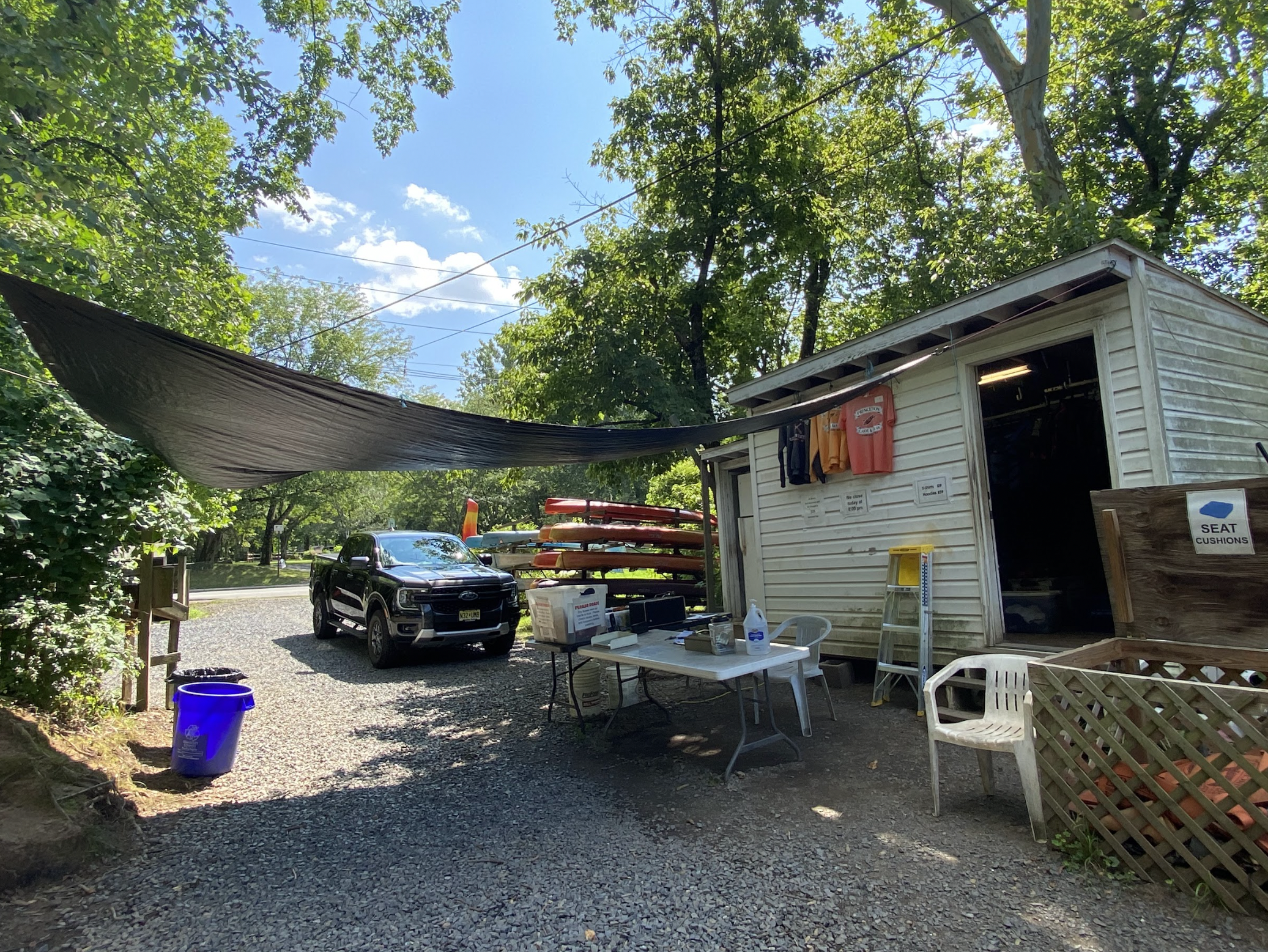
But the compassion in Princeton goes far beyond Palmer Square. Another option to enjoy the summer fun is to go kayaking and canoeing. Owned by Stephen Androsko, Princeton Canoe & Kayak Rental has been around for 32 years and is the perfect way to disconnect and see some turtles, which many say are the stars of the canal.

However, it is important to note that once, just once, an otter jumped into a canoe and bit its

riders.”[It’s important to] disconnect from all the different types of media and all the different types of distractions that people have, whether it’s work or family, and just to be able to go out and see nature and look at turtles and get the joy out of that,” Androsoko said.

During the COVID-19 pandemic, Princeton Canoe & Kayak Rental became a big attraction,

as there were few options to maintain social-distancing during outdoor activities. For many, it’s a community staple because of Androsko’s care for his customers. 

One woman lives near a kayak rental, but comes to Princeton Canoe & Kayak Rental because of the amenities they offer, from free dry boxes for phones and keys to laminated maps and seat cushions.

So whether it is Danielle Daab swaying along to her husband’s music at Palmer Square, the rows of camp chairs, or the beaming smiles of children, summer in Princeton isn’t just summer. It’s a time of togetherness. But beware of the otters when canoeing, they might just bite.