
By Ashanty R.
The heartbeat of Princeton started in a U-Store parking lot.
For five years, Barry Weisfield bounced between flea markets and college towns, selling records and vinyl from orange crates in his Chevy van. After rolling into Princeton, his van became a community staple, drawing keen ears to the Princeton University Store.
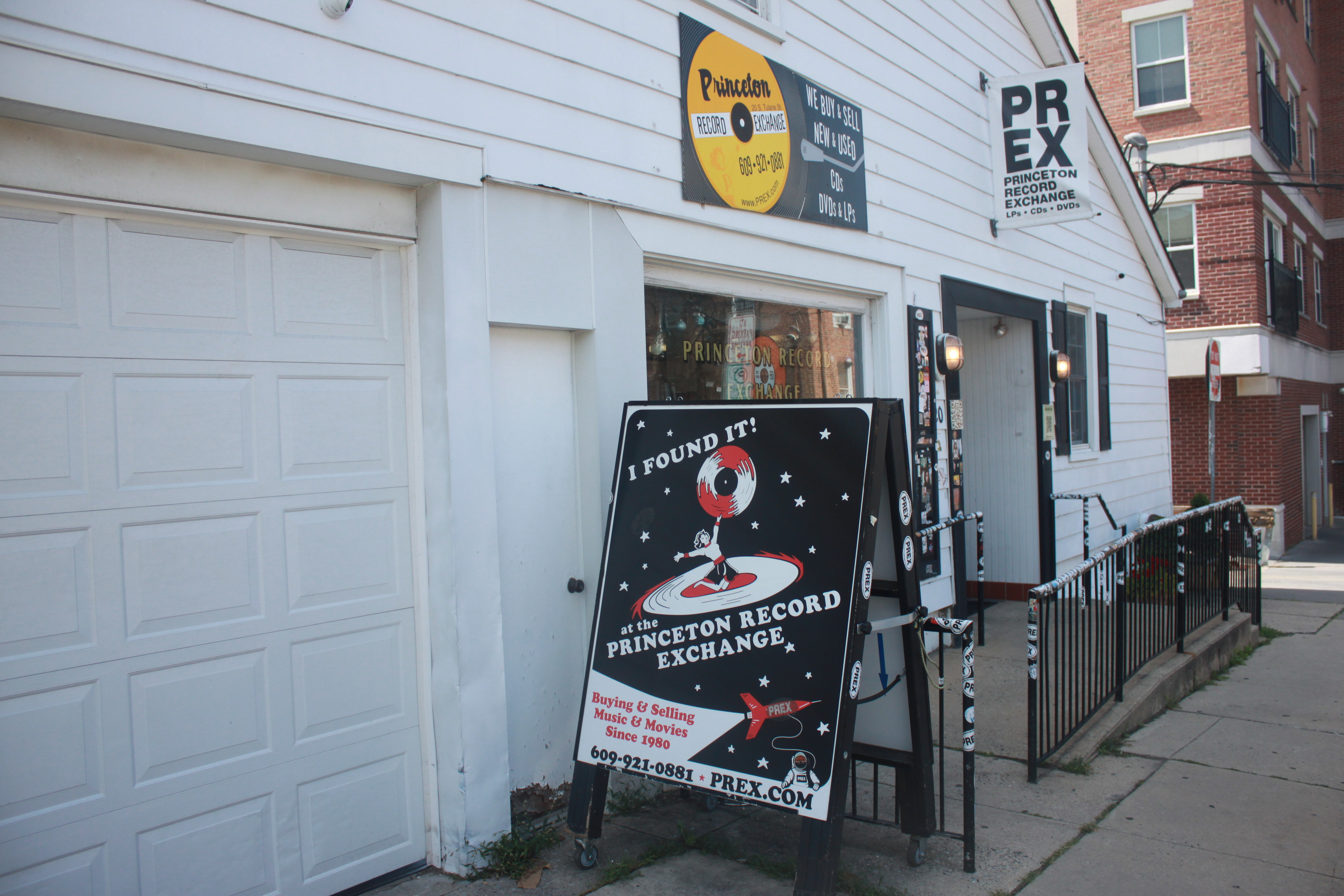
Always on the road, Weisfield laid his heart on Princeton’s streets and couldn’t leave it behind. In 1980, he parked his roots for good, opening the Princeton Record Exchange Store (PREX) on South Tulane Street, a charming cobblestone path off Nassau Street.
Princeton’s location—neatly between New York and Philadelphia—played a role in his decision, offering prime potential for customers. But it was Weisfield’s devotion to customer service that made PREX stand out. He believed the staff should cater to the community, rather than the other way around.
Unlike big-box retailers, PREX emphasizes connection. Staff aren’t just told to sell records—they’re there to make everyone feel welcome, whether first-timers or long-time collectors. Questions are met with enthusiasm, record requests are taken seriously, and the space is decorated for comfort rather than flash.
When Jon Lambert took over in 2015, after years as general manager and close friend to Weisfield, he kept that ethos while adding his own touches. Inside, handwritten canary-yellow tags label the genres, and DIY record dividers keep the vibe simple and accessible.
Overlapping LCD record covers, Vanity Fair spreads of Randy Newman, Ozzy Osbourne concert posters, and artful band collages give the convenience-store–styled building a lived-in charm.
Lambert’s goal is clear: make people want to stay. And they do.
“You know, if you have a business, they [Google] tell you the average length of stay, for people in that organization, and we’re about an hour,” Lambert says with reserved pride. “I think that really speaks to how much people enjoy being there as an event.”
His attention doesn’t stop at décor or inventory—it extends to his hiring.
“I’m pretty picky about picking,” Lambert jokes. He’s less concerned with stacked resumes in the arts and more focused on personality, lived experiences, and values that align with PREX’s mission: to be courteous, kind, and obliging.
He asks potential hires questions like: “What does integrity mean to you?” “How do you live your life?” and “Is it an internal code of ethics or external?”
Lambert sees his staff as an extension of PREX’s promise to Princeton’s community, even when he’s not there. “Those are the things I care about,” he concludes.
Just around the corner, another independent business echoes that sentiment. Labyrinth Books, co-founded by Virginia Harabin, Pete and Cliff Simms, and the late Dorothea von Moltke, serves as a haven for Princeton’s book lovers.
“It’s a place for travelers, it’s a place for locals,” Harabin says.
Labyrinth intentionally sought a large footprint to serve as both a bookstore and a gathering place—though Harabin admits that decision “might have cost [them] a little something in terms of warmth.” Still, thoughtful touches—a cluster of chairs here, a soft rug there, fairy lights strung from the basement ceiling—create cozy pockets for connection.
“I hope that before too long we’ll be able to do something like put a carpet on this floor,” Harabin reflects. “Maybe a different kind of seating area with some softer chairs. I’m emphasizing change and development.”
Warmth at Labyrinth doesn’t just come from décor, but also from decorum. Like at PREX, the staff help create a hub where curiosity meets enthusiasm. Customers openly approach staff, make requests, and linger for informal conversation.
“Somebody comes in and says, ‘Do you have this?’ I look it up; I don’t have it. But I want to have it. I should have it,” Harabin says. “I’m gonna get one for you, but I’m gonna get one for the store too.”
While one caters to sound and the other to story, Princeton Record Exchange and Labyrinth Books share a philosophy: go beyond inventory and revenue. They resist the transactional coldness of big-box commerce, instead valuing personality, conversation, and time spent.
In a town shaped by prestige and tourism, these independent businesses are grounded in cobblestone charm and built on meaningful exchanges. They are more than local commerce—they are the essence of local care, beating steadily under every path.
 The Princeton Summer Journal