Tag Archives: cultural criticism

True West Explores the Strengths and Weaknesses of Brotherhood

By Asmaa Mohamed

True West, a play by Sam Shepard showing at the Princeton Summer Theater, draws in audiences by portraying the reality of a dark, atypical relationship between two brothers. Heavily influenced by Shepard’s life story, the play explores how addiction can destroy a family, framing it as a genetic trait that cannot be escaped. This cycle is hammered into the plot. 

The complex dynamic between brothers Austin and Lee is fueled by jealousy. One brother, Austin, has an Ivy League degree and a big job as a screenwriter; the other, Lee, is struggling with homelessness and lives in the desert. Their tense dynamic is shown by how the brothers react to one another. An envious Lee becomes triggered by Austin’s success and begins to show abusive tendencies. Yet the play is unique in how it depicts the brothers as having a relationship that cannot be understood by others. They have their own little bubble — even if it’s rough, it’s what their comfort space is. 

By focusing on the dynamic between Austin and Lee, True West is subverting the stereotype of the typical suburban American family. Shepard does this by showing what it’s like to see the brothers behind closed doors and how they act towards one another within the safety of their home.

Notably, the events of the play take place in Austin and Lee’s childhood home, playing on the audience’s expectations of comfort and nostalgia. The dim lighting in the house creates an eerie and unsettling mood. The music parallels the evolution of the brothers’ dynamic. It’s quiet and settled in the beginning, then progresses into sharp, loud and tense sounds when the brothers are arguing or yelling. 

In a talkback, Princeton professor R.N. Sandberg told the audience that Austin’s car (which Lee keeps borrowing without permission) is symbolic of the freedom that both characters are chasing. They ultimately don’t experience that freedom, since Austin eventually kills Lee. When Lee comes back and the pair begin fighting, we don’t know if it’s actually Lee, his ghost or Austin’s coping mechanism after he strangled his brother. It’s a losing fight that they are both stuck in, like staring into your reflection and wanting to be that version of yourself that’s just out of reach.

For me, the play expressed the real, raw experience of what it’s like to have a sibling. It’s beautiful to have the possibility of friendship, but it’s hard to grow up with them, too — especially because mental illness, trauma and addiction can make that sibling bond either grow stronger or break. Yet the play missed an opportunity to go deeper. While it hints at the brothers’ trauma because of their father, the beginning of their lives is not shown. Nor does it include much about their father. While Shepard’s goal is to capture the tense bond of the brothers, the play fails to fully depict to the audience why they are the way they are. 
The Odyssey: A Case Study in Male Ingenuity

By Mohamed Omer

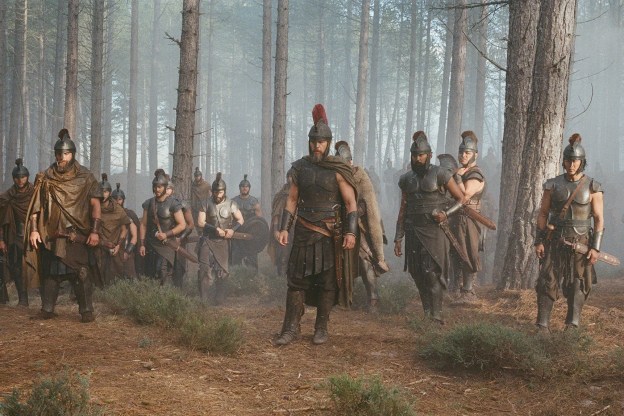
From the mind that brought you the genre-bending Inception, existentially terrifying Interstellar, and cult classic The Dark Knight, director, writer, and producer Christopher Nolan spearheads a feature film reimagination of a centuries-old tale: The Odyssey. The movie’s main cast includes Tom Holland as Telemachus, son of Odysseus; Robert Pattinson as Antinous, a hard-headed suitor looking to challenge the throne; and Oscar winners Anne Hathaway and Matt Damon as Penelope and Odysseus, Queen and King of Ithaca, respectively. 

In his undertaking of The Odyssey — a Greek epic that is notoriously controversial to translate and adapt — Nolan forgoes consistency and character development to devote ample screentime to Odysseus’ voyage, producing a movie that fails the Bechdel test with flying colors.

Nolan’s Odyssey begins: A bard, played by Travis Scott, delivers an ambiguous warning about a man, a king, a son, a war. Penelope reveals that her husband Odysseus has been missing since his army ambushed the kingdom of Troy. In his absence, her suitors have made themselves comfortable in the castle’s basement, feasting ceaselessly on her food. However, the introduction to this movie is littered with mismatched cuts, unconvincing fight scenes, and dispassionate line delivery. The film spends its first act fighting against immersion — until Odysseus embarks on his journey. 

Suddenly, Nolan can do nuanced cinematography. He is thorough in following the all-male crew led by Odysseus and the details of the trials they endure. The B plot follows Telemachus as he reckons with the absence of his father, but unfortunately, Telemachus comes off less as a hopeful son and more as a rookie broadcaster reading off a teleprompter. Despite this fact, the Ithaca storyline centers him and resigns Penelope to the C plot, where her entire arc is built upon her suffering.

Penelope spends twenty years loyal to the King while he rampages land, gods and myth. Her characterization is not historical accuracy as much as it is objectification. She does not live outside of being an accessory to the suitors, to Telemachus, to Odysseus. Her personhood is acknowledged briefly by Antinous, when he reveals to the viewer that Penelope weaves thread in the morning and unravels it at night, so as to delay her marriage to a suitor. 

Here is her savior! Nolan couldn’t sacrifice thirty extra seconds of screentime for the cause of showing Penelope’s nightly unraveling, but he had time to write up a monologue for Pattinson to deliver. A similar phenomena occurs with Circe, a witch who transforms Odysseus’ men into pigs; her story is told to her by Odysseus, in a moment meant to display infinite male wisdom.

The Odyssey gives its male characters the privilege of intelligence, delegating their female counterparts the roles of damsel, villain or servant. There is no instance — save for one contested dialogue between Penelope and Melantho — where the women in this film conversate without centering men. In spinning The Odyssey for modern times, Nolan neglects the fact that women are people, insteading pushing Odysseus’ story to the forefront — making what could’ve been a great film a disappointment.

The Odyssey: An Epic Journey

By Kaelyn Tan

I go into every Christopher Nolan movie wondering what new precedent he will set for cinema. Nolan’s brave undertaking of Homer’s classic epic, The Odyssey, is no different. Nolan’s retelling of the story was phenomenal, but not over-the-top. Even so, the characters were diluted and lacked depth.

The Odyssey is the movie of the summer, garnering widespread online attention and a historic box-office run, grossing an estimated $652 million in its first ten days of release. The film follows Odysseus (Matt Damon) as he navigates the waters and land to return home to his wife, Penelope (Anne Hathaway). He encounters monsters, witches and the dead in the years following the Trojan War. While there were some parts of the story that only Greek mythology enthusiasts could fully appreciate on first watch, Nolan masterfully tells a complex story that appeals to a general audience.

The movie particularly excelled at exploring themes of trauma, grief and war through a nonlinear structure, slowly revealing pieces of Odysseus’ complete journey. As the story unfolded, it was as if we were also experiencing the shock, depression and remorse along with Odysseus during his return home. In one scene, he travels to the border of the underworld, where he speaks with the dead souls who perished in the Trojan War. Odysseus learns harsh truths about the fallen heroes and is haunted by deep emotional grief — and the violence he perpetuated. 

In addition to their view into Odysseus’ internal world, the audience can also see the impact of the story’s events on Odysseus’ loved ones, especially Penelope. Upon Odysseus’ disappearance, Penelope is bombarded by over 100 aggressive suitors who assume Odysseus has died. She is essentially left alone to fortify the kingdom by stalling the suitors for twenty years and protecting her son Telemachus (Tom Holland) from external threats. (The suitors also planned to murder him.) Scenes between Penelope and Telemachus are mainly arguments about Telemachus’ immaturity and their approach to the aggressive suitors. 

As much as I loved the movie, most of the characters, especially Odysseus and Penelope, were two-dimensional and stiff. Matt Damon’s Odysseus is flattened into a conventional good character, rather than preserving the cunning, sometimes merciless personality that shines through in Homer’s epic. He is portrayed as a guilt-ridden man who struggles to lead his crew and make executive decisions, thereby watering down Odysseus’ original, colorful traits. Penelope’s character growth and influence were largely stunted. The movie largely neglects Penelope’s active strategic plots and only focuses on her role as Odysseus’ loyal wife at home,  as if Penelope’s sole purpose is to function as a thematic checkpoint rather than showing her as an individual. The film could have included more scenes that demonstrated Penelope’s resilience and decision-making. 

While the characters were sanitized, Nolan has successfully delivered a massive story on a massive scale to the audience, making The Odyssey the latest in a line of movies by the director that have raised expectations for the cinematic world. 

The Oddity of the Odyssey: Polyphemus

By Dakshina Lazo-Escobar

Peculiar yet surreal, the 2026 film adaptation of The Odyssey, directed by Christopher Nolan, was a surprise in its own right. By utilizing motifs like the melodic strum of the bow and the rush of a fight, Nolan manages to condense twelve thousand lines of plot into an unbelievable three-hour movie. Yet nothing could have prepared viewers for Polyphemus, aka the Cyclops (Bill Irwin).

The audience’s first glance at Polyphemus is during the first trial of The Odyssey. Following his victory in the Trojan War, Odysseus (Matt Damon) changes course to journey home, where his wife Penelope (Anne Hathaway) and his son Telemachus (Tom Holland) await his return. However, as his ship touches the ocean and his crew sets out on their expedition home, they quickly realize that the brutalities of the war they incited are not unpunishable.

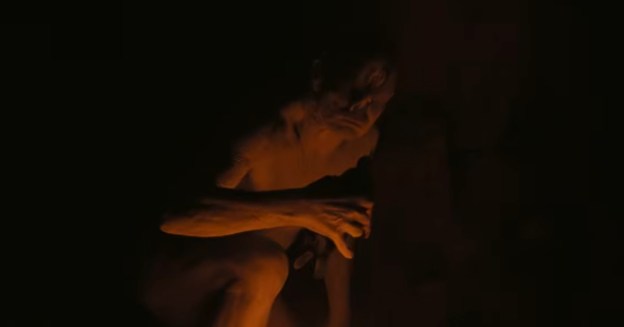
This harsh awakening arrives when they unknowingly make their way into Polyphemus’ cave, where they soon become his prey. Polyphemus is a beast. He is not crafted like a Greek god, nor is he as cute as his sheep; rather, he fully resembles an alien-like entity intentionally meant to disturb watchers. Nonetheless, his horror-like design makes him very appealing.

Before settling on a visual concept, Nolan and his team mulled over various depictions of cyclopes. Specifically, they turned their attention towards the imbalance of their facial features in other forms of media — a characteristic they desperately wanted to change. After much back and forth, the team settled on rotating his face sideways, ultimately focusing on the lopsidedness to make it uncanny. 

What makes Polyphemus such an effective character, though, is the fact that he is designed after Spanish painter Francisco Goya’s artwork Saturn Devouring His Son. Goya’s piece depicts the Roman god Saturn after a prophecy predicts that one of his children will steal the throne from him. Frightened and outraged, Saturn prompts his wife, Cybelle, to bring him every child she has, then eats them to prevent the premonition from coming true. When Polyphemus consumes one of Odysseus’ men, he crouches down into the same stance Saturn takes, echoing the painting in how he bites down on the man’s flesh.

Nolan implemented the atmospheric horror found in that artwork into the character of Polyphemus, but managed to add more. The tale bleeds into the epic, a foreboding technique which says more about the story without the need for more details. By doing so, Nolan further explores themes of time, death, destiny, and human cruelty — all aspects that are critical to The Odyssey. These messages are all tethered to Odysseus: He loses twenty years of his life out at sea, witnesses the deaths of thousands of his men, resists a forced destiny by confronting god-like trials and faces the consequences of his brutality.

Polyphemus is more than a trial. Nolan’s stylistic choices make him an unspoken prophecy. In his design of the cyclops, Nolan unfolds the future tension of The Odyssey.

True West: A Burden on Stage

By Ariana Estrada

The play True West, by playwright Sam Shepard, is situated twenty miles from Los Angeles and San Gabriel, California. In it, brothers Austin (Jordan Rashdan) and Lee (Joseph McLean) are trying to navigate who they are while caught between alcoholism and a bad family dynamic. Yet this play goes beyond the two brothers, hinting at the idea that there are multiple identities hidden within us. The play is driven by humorous lines and the characters exhibiting emotional switches when exploring their identities; but suffers by promoting the unrealistic idea that every household needs a woman to maintain the home.

The Princeton Summer Theater’s production of True West, directed by Wasif Sami, begins with Austin typing on his typewriter in a room filled with yellow, dimmed lighting. Suddenly Lee bursts into the kitchen after coming back from his home in the desert, causing a commotion. He grabs a beer from the fridge and makes himself at home. This distracts Austin from the script he is writing, and Lee scares Austin into writing a Wild West script for him after throwing beer cans across the kitchen and screaming in Austin’s face. As Lee bangs on counters and backs his brother into a corner, the audience becomes similarly fearful, practically jumping out of their sets. Lee creates a sense of suspense about what is going to happen next — will he act with his anger and become violent? 

Later, the brothers create a mess, spreading papers all over the floor, spilling beer and scattering cans all around the kitchen. According to the director, the mess in the kitchen was meant to represent a home without a mother present. However, not every household has a mother, and many parents do not raise irresponsible men. The irresponsibility is not because households do not have a woman present, but rather because of the incapabilities of some parents who raise kids. Shepard was raised in an unstable household and struggled with alcoholism, the same as his father. Shepard’s mother and father were present in his childhood and he still went down a difficult path. Whether or not you have certain parents in your life, it is unrealistic to blame them for your actions. I believe that the director should have recontextualized the play in order to accommodate modern times and realities. 

As the play continues, the brothers switch their goals. Lee is attempting to create a Western script while Austin wants to explore the desert, steals toasters and operates chaotically. It fits in with the constant theme of the brothers attempting to conquer each other’s lives. The actors embody Shepard’s play by successfully etching self-identity as a deeper theme of the play. Yet the ideas behind the set, and ideas of household as espoused by the director, are outdated and could be offensive to viewers.

The Stonewall Monument Is Falling—and Trump Pushed It

By Norman S.

During the month of June, protest signs bounce up and down.
“Trans Rights Are Human Rights,” one of them reads.
Parades light up streets all across the United States.

Now flash forward five years: That same sign is blacklisted. Celebrating anything that strays from the “norm” is criminalized.

Sound scary? That’s the path we’re currently on.

The Stonewall National Monument—located at the site of a New York City bar—is dedicated to the uprising that sparked the LGBTQ+ rights movement in the 1960s. Before Donald Trump’s second term, the official government website for the site openly described this history using terms like “lesbian,” “gay,” “bisexual,” and “transgender.”

Today, “bisexual” and “transgender” have been removed.

The Republican Party has increasingly framed the LGBTQ+ community—especially trans people—as predators targeting children and women. This harmful narrative is being used to justify systemic rollbacks. And the quiet deletion of LGBTQ+ labels from government platforms is just the beginning.

There is precedent for this. After the attack on Pearl Harbor, anti-Japanese xenophobia surged. President Franklin D. Roosevelt responded with Executive Order 9066, creating military zones on the West Coast and forcibly relocating Japanese Americans to internment camps under inhumane conditions.

The parallels to today’s political moment are hard to ignore.

Trump and other conservative leaders regularly label LGBTQ+ identities as threats, using slurs and dehumanizing language—words like “mutilation,” “trap,” and “she-male.”

If this framing continues unchallenged, displacement or even criminalization may follow.

Removing terms like “transgender” and “bisexual” from government websites is not just erasure—it’s a warning.

If these dominoes fall, the gay and lesbian communities could be next.
And after that, all of our personal freedoms may be on the line.