Tag Archives: Arts

The Movie was Super, Man!

By Rida M.

I never believed in superheroes. Sure, I saw them in advertisements, but to me, they were just regular heroes, conquering identical monsters in different costumes. There was nothing super about them—besides the fact that their costumes were super ugly.

But James Gunn, the writer and director of Superman, changed my mind.

Despite having no popcorn or blanket, Gunn cleverly instilled a sense of optimism in his film, using surprising elements like antiwar messaging and positive masculinity. It sank me into my seat and pulled me into the world of the DC Universe. By touching on real, sensitive topics, Gunn made this superhero story something genuinely super.

The film opens with Clark Kent (David Corenswet), and I was immediately captivated by his insane face card. Working at the Daily Planet, a media company, Kent juggles a full-time job with being a superhero. This double life adds humor and depth right from the start. Since he’s a journalist who helps give a voice to the voiceless, it ties perfectly to his hero identity—and the fact that he goes as far as saving a squirrel mid-battle says a lot about his character.

The first few scenes of Kent’s “normal” life are light and playful, with jumpy screen-panning that feels cute and comic book–like. But it doesn’t last long—something Gunn’s known for, especially from his Guardians of the Galaxy films. Clark is soon ousted by the villain Lex Luthor (Nicholas Hoult—yes, the guy with the horrendous bald cap), who alienates him from his friends and the public.

Instead of portraying Superman as cold and unbothered during this rough time, Gunn takes a different approach. He shows Kent crying and expressing emotion. Rather than the stoic, tough-guy hero, this Superman is vulnerable, human, and real.

The film also explores the devastating war between two nations, Boravia and Jarhanpur, in a way that’s rare for the superhero genre. Gunn takes it further by tying the fictional war to real-life politics—specifically, the Israeli-Palestinian conflict. By having Superman support Jarhanpur (a clear stand-in for Palestine), Gunn makes a bold choice in a time when public support for Palestine in the U.S. is controversial. He may have faced backlash, but this moment proves that pop culture—especially a franchise as mainstream as Superman—can be a powerful tool for change.

That said, the movie isn’t perfect. There are sexist portrayals that made me raise an eyebrow. For example, Daily Planet reporter Cat (Mikaela Hoover) wears a revealing top and comes off more like a character built for viewer pleasure. It becomes even more obvious when she starts jumping in joy during one of Superman’s fights—a moment that felt super weird and unnecessary. Another character, Eve (Sara Sampaio), is reduced to a “dumb blonde” stereotype and mostly used to pass along information. It was disappointing to see these female characters used mainly for comic relief.

Still, Gunn’s thoughtful takes on masculinity and war are what truly set Superman apart from other superhero movies…no shade. That’s why I can say this film left a lasting impact on me… even as someone who’s never really enjoyed superhero movies before (guilty).

“Bad Shabbos” Critique: Dysfunctional Dinner, Flat Comedy

By Gabriela Q.

We rarely see a vape used as a subtle critique of Gen Z’s problematic tendencies—except in Daniel Robbins’ 2024 comedy Bad Shabbos, where it’s played with the same charm as a cigar in a film from the ’60s.

Except in Robbins’ case, it felt like a drag.

The main tragedy of the Gelflands—the family at the center of this chaotic Shabbos—is sparked by the youngest son, Adam. Played by Theo Taplitz, Adam’s stereotypically rebellious teen behavior sets off a series of events that ends with the death of Benjamin, the not-so-permanent boyfriend of his older sister Abby. The cause? A roofied drink—though the drug in question is just crushed laxatives.

Now, not only is Benjamin gone, but so is his vape addiction.

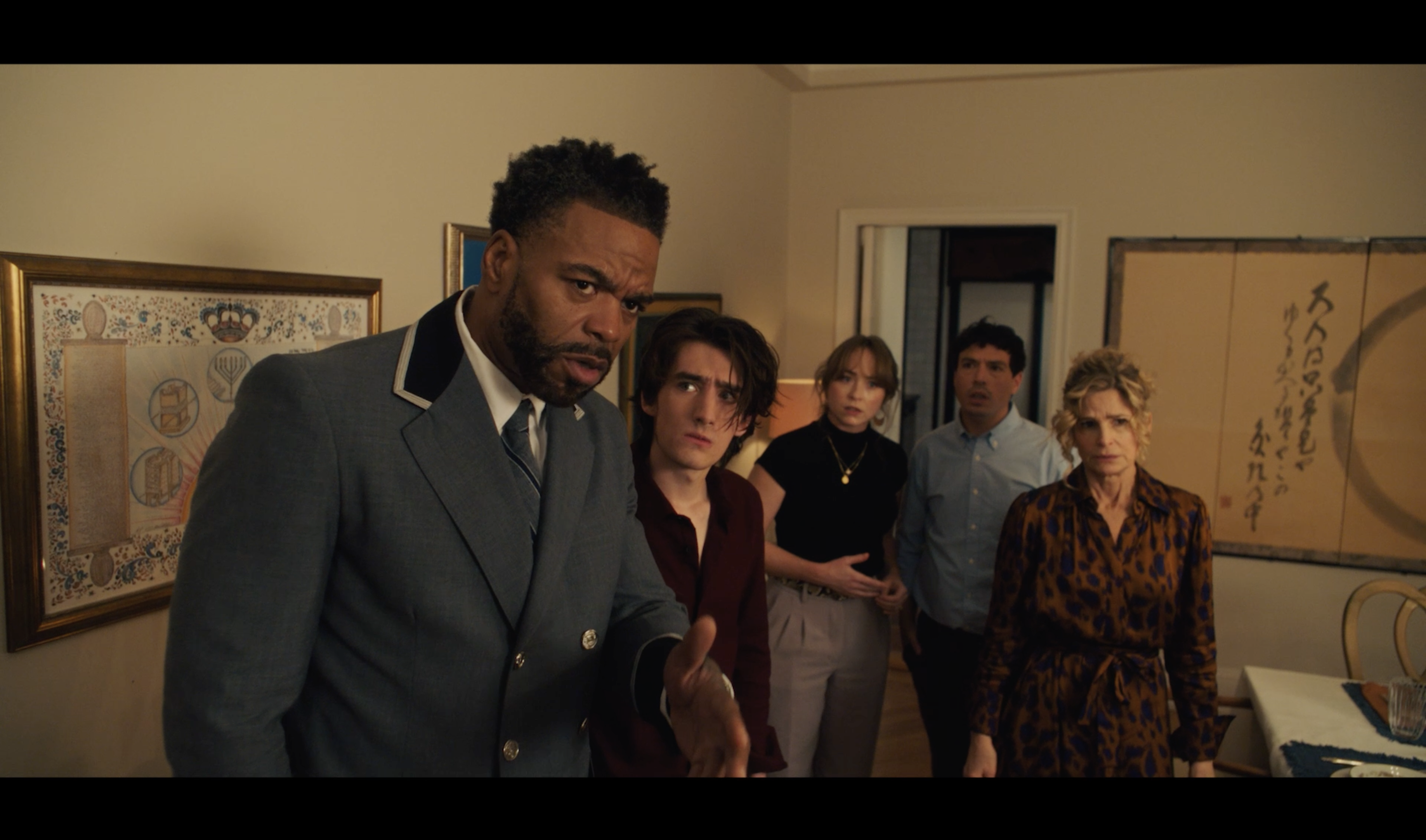
The vape, alongside other absurd plot points—like a misplaced Japanese tapestry and a hellish doorman named Cano (played by Alok Tewari)—allows the film to spiral into a comedy of dysfunction, but ultimately leaves a theater full of unfulfilled viewers.

At one point, Ellen (Kyra Sedgwick), the strong-willed matriarch, makes a questionable oral fixation joke that seems like an attempt to unify the audience. The question is: are we supposed to laugh, or cringe?

Beyond Abby’s mishaps, the real stars of the show are David (Jon Bass) and Meg (Meghan Leathers), a newly engaged couple still navigating their relationship—and Ellen’s stiff resistance to Meg as a future daughter-in-law.

The film clearly wants to appeal to fans of chaotic family comedies like Meet the Fockers, but it stumbles before the halfway point.

From random flashbacks to Benjamin’s bloodied corpse (including a particularly bizarre moment where the family cat licks his forehead) to drawn-out awkward moments, Robbins seems hesitant to move beyond the cringeworthy family comedy trope.

But once dinner begins, the momentum finally picks up.

Infusing an awkward family dinner with a murder twist isn’t easy—but making it funny is even harder.

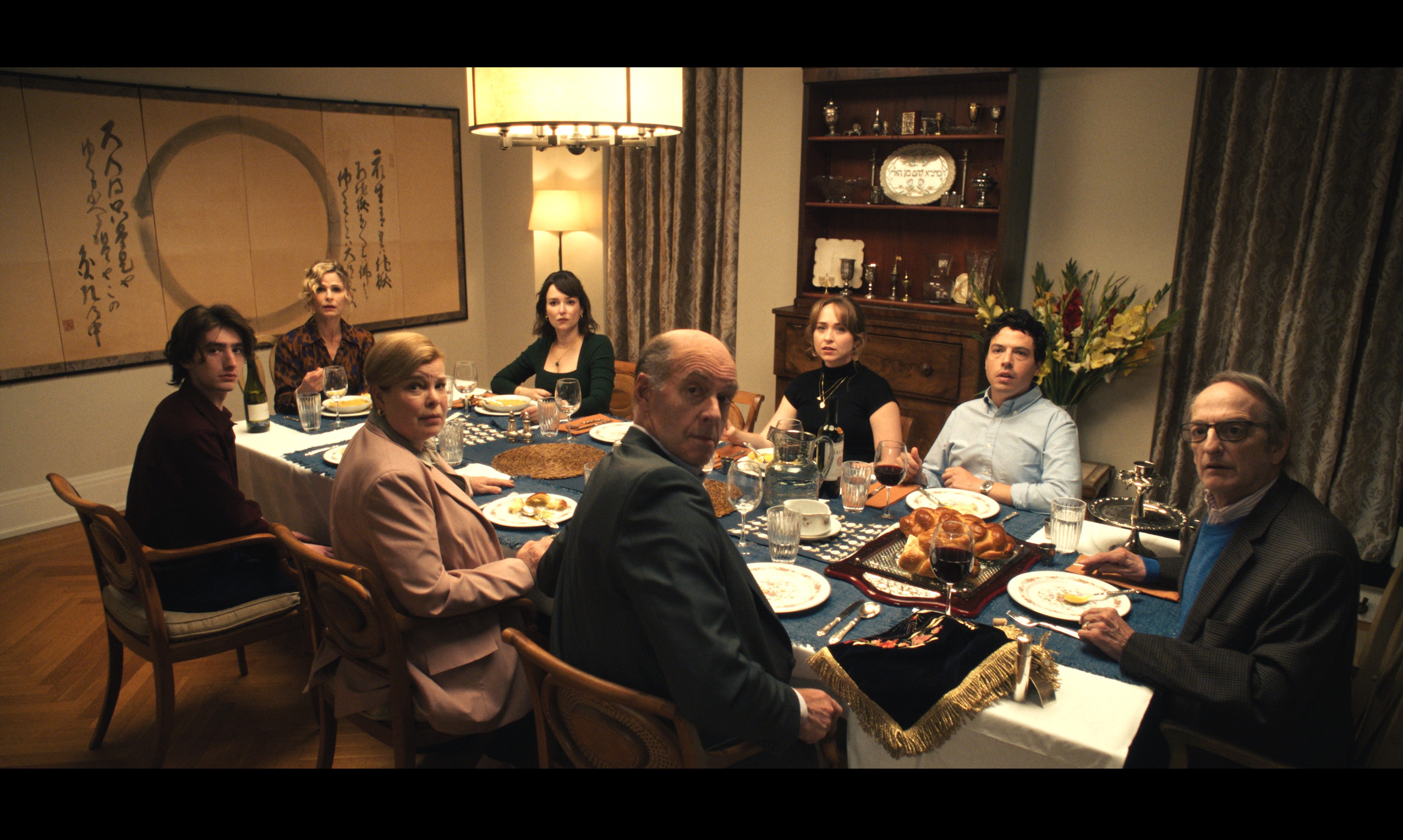
The best humor in the film comes from the back-and-forth between Richard (the family patriarch) and John (Meg’s father). Soup flies across the table like it’s a kindergarten cafeteria fight. Bloodied sleeves lead to uncomfortable, off-key chants. The most memorable scenes aren’t built on the thin murder plot, but on the chaos at the dinner table.

Bad Shabbos doesn’t shine in its shock value—it shines, occasionally, in its honest depiction of what it feels like to sit through a deeply uncomfortable family holiday. That’s where the real comedy lies.

‘Bad Shabbos’ Review: Dinner Conversation Hits a New Low After Someone Drops the Topic–and a corpse.

By Yullianne L.

What would it take for you to hide a dead body for your family member? In Bad Shabbos, directed by Daniel Robbins, that question is not a hypothetical. In the indie film, David (Jon Bass) and Meg (Meghan Leathers)’s interfaith Sabbath dinner takes a dark comedic turn, when their attempt to bring together the in-laws plunges into chaos after discovering one of their guest’s dead body on the bathroom floor. As religion, tradition, and family dynamics blend together, the film turns a sacred evening into a panicked scramble to cover up a body and to keep the peace between families. 

Set in the heart of the Jewish community of New York’s Upper West Side, Bad Shabbos manages to balance being both a cultural comedy and a portrait of chaotic family dynamics. Robbins and Co-writer Zack Weiner capture the discomfort and deeply-rooted love that defines family gatherings and the culture shock that the interfaith families experience. While some jokes in the dialogues lean into Jewish stereotypes, all of the jokes are incredibly chuckle-worthy and better to watch with a crowd. They also take on several dysfunctional family dramas in their dialogues, highlighting universal family tensions: sibling rivalries, parental judgement, and desperate desire to make a good impression. Throughout the film, the cold, lifeless body in the bathroom ironically becomes a vessel that helps reconnect the family with their love for one another.

At the film’s core is David’s spiraling anxiety, which is both hilarious and heartbreakingly familiar. As he tries to keep his opinionated Jewish parents away from Meg’s Catholic parents, he struggles to satisfy everyone. Robbins doesn’t shy away from exploring pressures placed in interfaith relationships, the film shows particularly of Meg’s expectations to convert, as she was pressured to convert to Judaism to be “good enough” specifically for David’s mother. These moments of tension keeps the film relatable and real, as it balances the fast-paced comedy with lasting emotional impressions to the audience.

Family relationships are the film’s strongest element. The dinner table becomes a war zone of conflicting personalities and egos: Abby (Milana Vayntrub), David’s argumentative sister, constantly provokes their teenage brother Adam (Theo Taplitz), whose slightly sociopathic edge adds to the unpredictable element during dinner. Benjamin (Ashley Zukerman), Abby’s cocky boyfriend, adds fuel to the fire with his personal conflict with Adam. David clings to Jordan (Method Man), the building’s doorman, who becomes an emotional anchor for him as things continue to spiral out of control. 

Visually, Robbins enhances the film’s anxiety and absurdity with sharp editing and cinematography. The quick jump cuts, particularly during David’s mirror pep talks, reflects his inner chaos, while the warm and symmetrical color grading brings out a similarity in Wes Anderson’s film-making style. The camera’s smooth panning when David’s parents are discussing the dinner allows more perspective to be shown to the audience, like they’re actually in the room when they’re speaking. 

 Bad Shabbos is ultimately more than just a dark comedy– it’s a heartfelt and hilarious look at what we’re willing to do for our families, even if it means hiding a body. 

“Bad Shabbos” Is Actually Bad: A Comedy That Misses Its Mark

By Jiondae D.

The laws of Shabbat argue that if one is not bedridden, even minor medications should be prohibited. While this violates Shabbat rules, nothing is worse than betraying the Ten Commandments—arguably in the worst way: murder.

These conflicting ideas collide in Daniel Robbins’ film Bad Shabbos.

After joining his girlfriend’s family for Shabbat dinner, Benjamin’s fate is sealed the moment he reveals his colitis diagnosis—and makes a few offhand comments to his girlfriend’s brother, Adam. Soon after, Adam drugs him with laxatives.

Despite losing Benjamin early on, his death fails to create suspense. Instead, it becomes an excuse to launch into a series of underwhelming scenes that make the moment feel almost comedic.

The film takes place in an Upper West Side apartment in New York City, home to Mr. and Mrs. Gelfland and their youngest son, Adam. They invite their two older children and their partners to celebrate Shabbat dinner. Roughly 20 minutes in, Benjamin drinks laxatives. After a comical struggle with his pants and a race to the toilet, he slips, hits his head, and passes away—off-screen, in the bathroom.

Typically, a film’s climax occurs about 90% of the way through. But in Bad Shabbos, Benjamin’s death happens so quickly and chaotically that the rest of the film struggles to find purpose. Audiences don’t pay over twenty dollars to watch a twenty-minute movie, and unfortunately, the remaining runtime becomes a collection of scenes that are more mediocre than meaningful. The cat’s unhinged behavior and wasted food do little to elevate the tone.

Even more jarring is the hypocrisy on display. The Jewish parents mock their daughter for using a car during Shabbat while their son—who killed a guest—is shielded from consequences. This contradiction darkens the already uneven tone of the film.

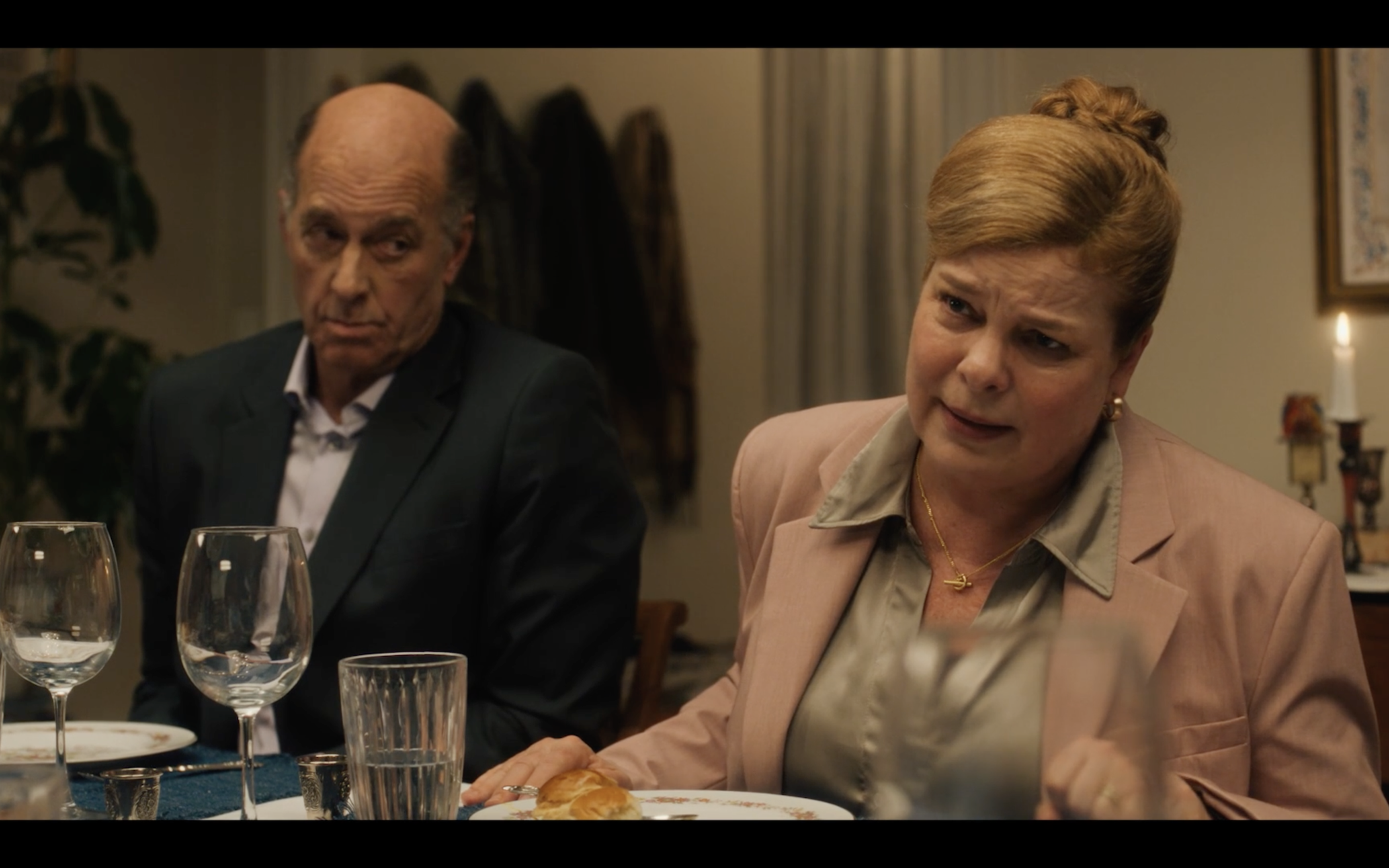
And just when it seems the chaos is over, the future in-laws arrive. What should be an opportunity for dramatic tension turns into another shallow gag. Glaring looks from the mother and spilled soup are played for laughs, but it’s not as funny as the filmmakers may have hoped. Instead, it feels like filler—lacking imagination and failing to build on earlier scenes that had at least a little more personality.

Benjamin’s death becomes less important with every scene. What could’ve grounded the film in something dark and compelling instead becomes tasteless. This isn’t just an ordinary Shabbat.

It’s the epitome of carelessness.

In “Bad Shabbos,” Daniel Robbins Paints Gritty Family without the Tropes

By Ashanty R.

In apartment 10B on the Upper West Side, wingback chairs and towering bookshelves decorate the living room. Untouched plates set the stage for an orderly Friday Sabbath banquet. The audience is immediately pulled into the world of an upper-middle-class family putting on their brightest smiles.

Caught up by the highbrow decorum, it wouldn’t cross a viewer’s mind to check the bathroom for a body. 

Director Daniel Robbins delivers a dark comedy that upends the “dysfunctional family” trope by leaning all the way in. Bad Shabbos follows an interfaith couple, Meg and David, attending a Shabbat dinner with David’s family; hyper-observant matriarch Ellen; mild-mannered patriarch Richard; wisecracking sister Abby, her philandering boyfriend, Benjamin, who has unfortunate digestive problems; and Adam, the socially awkward younger brother known for impulsive pranks. 

Then Adam kills Benjamin.

To be fair, it was an accident. A subtle wrist flicking crushed laxative pills into a cocktail sends Benjamin rushing down the hall with a gurgling gut. Futile attempts to pull down his pants cause him to crack his head on the bathroom sink, and from there, he’s a goner.

While there was some finger-pointing in the beginning – because who wouldn’t blame a murderer for murder? –  they make a choice: protect their own.

Was it morally wrong? Absolutely. 

But Bad Shabbos couldn’t care less about moralizing, and they never said they did. It’s alluring because of the messy, contradicting truths about family that lie under each dynamic, each decision, and each quip.

The biggest one?

They fight like feral dogs, nipping at each other’s wounds and beaming when the other bites back. But they would pull their teeth before turning one of their own in. 

“We’re not good people,” Abby mutters as she begrudgingly drags Benjamin’s body toward the fire escape, “but we’re our people.”

Robbins refreshingly rejects the posterboard Hollywood route to family. Trading in the estrangements and disownments, he brings a murkier take to the table. These characters do more than skip hand-in-hand into the horizon. They snap, snark, and plot just like we do – but when a crisis hits, they become one..

It’s especially clear in a scene when Adam, once the black sheep of the family, is herded by his siblings through the decently-competent clean up posed by their lobbyist, Jordan, who his siblings managed to pull into the coverup. Adam’s parents are fully complicit, too. Ellen’s well-timed “kitchen mishap” delays all talks of dinner and deflects suspicion from the incriminating hallway, while Richard hosts “Shabbat hymns” at the table with closed eyes – buying David enough time to turn his bloody cuff inside-out.

Admittedly, Bad Shabbos plays some scenes for laughs. But emotional residue sticks to the audience even as they leave the screening. 

The film holds up a mirror, calling to mind every subtle elbowing and quick-whipped insult that burns tongues at home. But it also brings to mind also every caring hand wiping away tears and every smothering bear hug. It’s every eye roll and painstakingly grunted, “I love you,” followed-up with a quick jab — because we can never get too comfortable with family, right?

While your misfit family may not lug around a body, scrub bathroom tiles, or trash damning lobby footage, Bad Shabbos makes it clear that even a disjointed herd still moves as one.

“Bad Shabbos”, Good Movie: A Chaotic Dinner Worth Watching

By David R.

Director Daniel Robbins’ tour de force, Bad Shabbos begins with the end. Two elderly Jewish men stroll down a New York City street at night. One begins telling a joke. The punchline? A corpse plummets from a nearby building, landing in front of them. The film then rewinds to tell the story of the night preceding this event.

David and Meg, portrayed by Jon Bass and Meghan Leathers respectively, are an interfaith couple engaged to be married. Unfortunately, there are a few problems for the young lovers.

The first issue is Meg’s parents, conservative Catholics from Wisconsin, who—while never stating it outright—are clearly displeased with Meg’s conversion to Judaism. Another issue is David’s mother, whose passive-aggressive remarks toward Meg create tension in their relationship.

These concerns come to a head on the night of Shabbos—the weekly Jewish day of rest from Friday sunset to Saturday sunset. While Meg gives Judaism her best effort, David’s mother (played by Kyra Sedgwick) is slow to accept her. In spite of her better judgment, Meg invites her staunchly religious parents to Shabbos dinner.

Upon arriving at the apartment, the audience is introduced to David’s screw-up brother, Adam (Theo Taplitz). Taplitz’s performance is wickedly delightful. His character is sharply written, offering a thoughtful and provocative satire of toxic masculinity. Taplitz’s acting, combined with clever writing by Robbins and Zack Weiner, keeps the audience riveted whenever Adam appears.

Other notable characters include David’s sardonic sister Abby (Milana Vayntrub), Abby’s philandering boyfriend Benjamin (Ashley Zukerman), David’s eccentric father Richard (David Paymer), the charismatic doorman Jordan (played by rapper Cliff “Method Man” Smith Jr.), and Meg’s stiff parents (John Bedford Lloyd and Catherine Curtin). Every actor adds something memorable, with Lloyd and Curtin portraying unintentionally bigoted parents in a grounded yet hilarious way.

Early in the evening, Benjamin and Adam begin to clash. After enduring one too many sarcastic remarks, Adam slips laxatives into Benjamin’s drink—unaware that Benjamin has colitis. In a frantic attempt to reach the bathroom, Benjamin slips, fatally hitting his head. What follows is a hilarious scramble to hide the body, roping the entire family into an increasingly absurd cover-up.

My one complaint? The twist was a bit predictable. As soon as Benjamin was introduced, I suspected he was the corpse from the opening scene (no character that unlikable escapes punishment). Still, the execution was funny, and the moment remained an effective plot device.

Finally, what I appreciated most was the sincerity of the film. Many comedies that center on American subcultures tend to satirize or undermine the communities they depict. Bad Shabbos, however, is better described as a celebration of Jewish-American life. From the reprise of “Bum Biddy” from Adam Sandler’s Eight Crazy Nights to the heartfelt speech by David’s sister Abby, the film honors Jewish culture and finds humor in the most unlikely places.