
By Dakshina Lazo-Escobar
Peculiar yet surreal, the 2026 film adaptation of The Odyssey, directed by Christopher Nolan, was a surprise in its own right. By utilizing motifs like the melodic strum of the bow and the rush of a fight, Nolan manages to condense twelve thousand lines of plot into an unbelievable three-hour movie. Yet nothing could have prepared viewers for Polyphemus, aka the Cyclops (Bill Irwin).
The audience’s first glance at Polyphemus is during the first trial of The Odyssey. Following his victory in the Trojan War, Odysseus (Matt Damon) changes course to journey home, where his wife Penelope (Anne Hathaway) and his son Telemachus (Tom Holland) await his return. However, as his ship touches the ocean and his crew sets out on their expedition home, they quickly realize that the brutalities of the war they incited are not unpunishable.
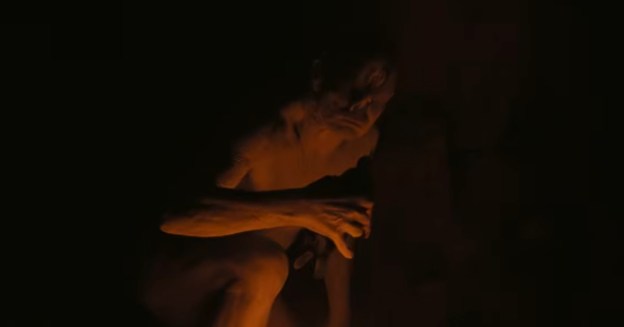
This harsh awakening arrives when they unknowingly make their way into Polyphemus’ cave, where they soon become his prey. Polyphemus is a beast. He is not crafted like a Greek god, nor is he as cute as his sheep; rather, he fully resembles an alien-like entity intentionally meant to disturb watchers. Nonetheless, his horror-like design makes him very appealing.
Before settling on a visual concept, Nolan and his team mulled over various depictions of cyclopes. Specifically, they turned their attention towards the imbalance of their facial features in other forms of media — a characteristic they desperately wanted to change. After much back and forth, the team settled on rotating his face sideways, ultimately focusing on the lopsidedness to make it uncanny.
What makes Polyphemus such an effective character, though, is the fact that he is designed after Spanish painter Francisco Goya’s artwork Saturn Devouring His Son. Goya’s piece depicts the Roman god Saturn after a prophecy predicts that one of his children will steal the throne from him. Frightened and outraged, Saturn prompts his wife, Cybelle, to bring him every child she has, then eats them to prevent the premonition from coming true. When Polyphemus consumes one of Odysseus’ men, he crouches down into the same stance Saturn takes, echoing the painting in how he bites down on the man’s flesh.
Nolan implemented the atmospheric horror found in that artwork into the character of Polyphemus, but managed to add more. The tale bleeds into the epic, a foreboding technique which says more about the story without the need for more details. By doing so, Nolan further explores themes of time, death, destiny, and human cruelty — all aspects that are critical to The Odyssey. These messages are all tethered to Odysseus: He loses twenty years of his life out at sea, witnesses the deaths of thousands of his men, resists a forced destiny by confronting god-like trials and faces the consequences of his brutality.
Polyphemus is more than a trial. Nolan’s stylistic choices make him an unspoken prophecy. In his design of the cyclops, Nolan unfolds the future tension of The Odyssey.
 The Princeton Summer Journal