
By Kaelyn Tan
I go into every Christopher Nolan movie wondering what new precedent he will set for cinema. Nolan’s brave undertaking of Homer’s classic epic, The Odyssey, is no different. Nolan’s retelling of the story was phenomenal, but not over-the-top. Even so, the characters were diluted and lacked depth.
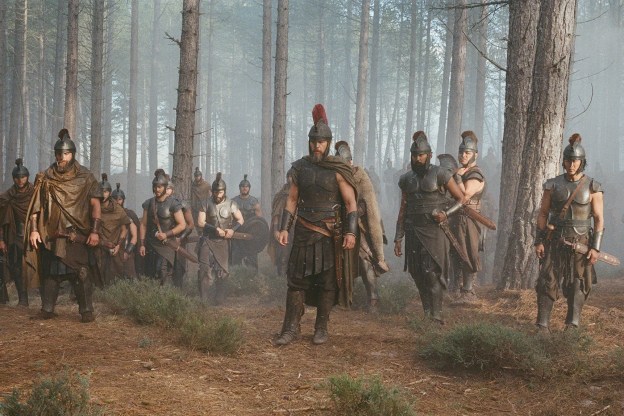
The Odyssey is the movie of the summer, garnering widespread online attention and a historic box-office run, grossing an estimated $652 million in its first ten days of release. The film follows Odysseus (Matt Damon) as he navigates the waters and land to return home to his wife, Penelope (Anne Hathaway). He encounters monsters, witches and the dead in the years following the Trojan War. While there were some parts of the story that only Greek mythology enthusiasts could fully appreciate on first watch, Nolan masterfully tells a complex story that appeals to a general audience.
The movie particularly excelled at exploring themes of trauma, grief and war through a nonlinear structure, slowly revealing pieces of Odysseus’ complete journey. As the story unfolded, it was as if we were also experiencing the shock, depression and remorse along with Odysseus during his return home. In one scene, he travels to the border of the underworld, where he speaks with the dead souls who perished in the Trojan War. Odysseus learns harsh truths about the fallen heroes and is haunted by deep emotional grief — and the violence he perpetuated.
In addition to their view into Odysseus’ internal world, the audience can also see the impact of the story’s events on Odysseus’ loved ones, especially Penelope. Upon Odysseus’ disappearance, Penelope is bombarded by over 100 aggressive suitors who assume Odysseus has died. She is essentially left alone to fortify the kingdom by stalling the suitors for twenty years and protecting her son Telemachus (Tom Holland) from external threats. (The suitors also planned to murder him.) Scenes between Penelope and Telemachus are mainly arguments about Telemachus’ immaturity and their approach to the aggressive suitors.
As much as I loved the movie, most of the characters, especially Odysseus and Penelope, were two-dimensional and stiff. Matt Damon’s Odysseus is flattened into a conventional good character, rather than preserving the cunning, sometimes merciless personality that shines through in Homer’s epic. He is portrayed as a guilt-ridden man who struggles to lead his crew and make executive decisions, thereby watering down Odysseus’ original, colorful traits. Penelope’s character growth and influence were largely stunted. The movie largely neglects Penelope’s active strategic plots and only focuses on her role as Odysseus’ loyal wife at home, as if Penelope’s sole purpose is to function as a thematic checkpoint rather than showing her as an individual. The film could have included more scenes that demonstrated Penelope’s resilience and decision-making.
While the characters were sanitized, Nolan has successfully delivered a massive story on a massive scale to the audience, making The Odyssey the latest in a line of movies by the director that have raised expectations for the cinematic world.

