Category Archives: Uncategorized

Asian Discrimination Hits New Peaks In Pandemic Era

By Aigner Settles

Pennsauken, N.J.

It was an early June morning when Nicholas Wu, 24, decided to go for a casual jog in
Washington D.C. Wu had been jogging by himself with his headphones, when he was suddenly disrupted by an older Caucasian woman screaming at him to stay away.

He had not approached the woman, nor had he been any closer than six feet because of social distancing, but the woman continued to shout until he had passed her.

Moments later, another jogger passed the same woman, but came in closer distance than
Wu had. However, the woman seemed to not give the jogger a second thought. The only visible difference between Wu and the second jogger were that he was Asian, while the other person was white.

“I decided not to engage and kept going. I stopped a little bit further down to catch my breath, looked back and saw a white woman pass within two feet of this person and there was no reaction,” he recalled.

Since the nation’s shutdown in early March to slow the spread of COVID-19, Asian Americans have faced an increase in discrimination. The virus originated in Wuhan, China, and much of the recent racism comes as a result of people blaming Asians for the spread of the coronavirus.

As of July, nearly 40 percent of Asian Americans have reported negative experiences because of their race over the course of the pandemic, according to a recent Pew Research Center survey. Within a month of the pandemic’s sweep across the nation, the Stop Asian American and Pacific Islander Hate Reporting Center collected more than 1,500 reports of racially charged violence against Asian Americans, though there are likely many more cases.

“Because there’s been such underreporting of hate-related incidents, the data is dodgy,” said Wu, a Chinese-American reporter for USA Today. “We know this is happening, but the magnitude is tricky to measure.” Wu describes the surge in these instances as “concerning, annoying, and saddening in many ways.”

Many attribute the rise in discrimination to President Trump, who has publicly referred to COVID-19 as the “Chinese virus” and “Kung Flu” multiple times. He’s since stated that the alternative names for coronavirus were meant to reference where the virus originated, rather than the people themselves. However, the phrases have already proved to be problematic for the Asian community as a whole.

“The disease itself doesn’t discriminate, but people often do, and the fact that our nation-
al leader is coming on T.V., on the media and saying that has ripple effects,” said Audrey Pan, an organizer for Revolutionizing Asian American Immigrant Stories On the East
Coast (RAISE), a youth group that advocates for undocumented Asian immigrants.

“A lot of people might think that it’s okay to say, but those racist remarks have real physical implications for people. People have been beaten up, people have been kicked out of stores, not let into public places because of this type of language,” she added.

Mos Neammanee, 22, a member of RAISE, has been a victim of anti-Asian discrimination as well. “In person, I’ve experienced [it] mainly when I commute to school,” he said. “A lot of people, I’ve noticed when the pandemic hit, tried to avoid me … I still remember this one guy said, ‘Why are they letting these people into the country?’”

Asian American organizations have launched campaigns to bring attention to the growing harassment, including the NEA Asian and Pacific Islander Caucus’s “I Am Not a Virus” campaign and the IW Group’s #WashtheHate hashtag. U.S. Rep. Grace Meng
from New York’s 6th District introduced legislation to combat discrimination amid the coronavirus outbreak.

Though instances of blatant racism towards Asian Americans have increased since the beginning of the pandemic, they are not new to American history.

“COVID has acted as an accelerant on existing inequities in American life,” said Wu. “Asian Americans simply seem to be a part of that.”

Pandemic Boosts Pet Adoptions

Credit_ Laura Wagner image7Jake, a Jindo terrier mix, has been treated to longer walks with his owner, Laura Wagner, during the pandemic. (Photo by Laura Wagner)

By Chastina Simmons and Sarah Furtado

Stone Mountain, Ga. and Vero Beach, Fla.

The global pandemic caused by the coronavirus has hit everyone like a truck. Health scares, quarantines, and school closings are changing the lives of millions of humans. But there is another, less-talked about population that’s also being affected: pets.

Right now, because of quarantine, many people are stuck at home with more free time than we used to have. Many are filling this void by adopting pets.

“They’re flying out the doors, not in,” said Jill Van Tuyl, the director of shelter operations at SAVE, a shelter for homeless dogs and cats in Skillman, New Jersey. From her experience, she noted that more people are considering adopting cats and dogs during the pandemic.

“Because of COVID and so many adoptions, right now, a good portion of my day is dedicated to scheduling transports to bring animals in and also reviewing adoption applications for potential adopters,” Van Tuyl said. Both sides benefit: The new owners get an addition to the family, and these animals get a start to a new, and most likely better, life.

Credit_ @furio_gram on Insta 1

Furio, a Shiba Inu mix, lives with Kate Knibbs in Brooklyn, N.Y. (Photo by Kate Knibbs)

Laura Wagner and Kate Knibbs of Brooklyn, New York, have recently adopted puppies during this pandemic. However, the process of adopting their pets wasn’t easy. According to Wagner, “because everyone was trying to adopt dogs during quarantine, it was really difficult to get a dog or even get an interview with the various different rescues in Brooklyn.”

Although the adoption process was lengthy, both owners thought the pets were worth it.

In addition to offering companionship, Wagner said that having a dog helped her physical health. Every morning, Wagner takes her Jindo terrier mix, Jake, for a long walk.

“I went from averaging 700 steps a day to averaging 15,000 steps a day,” she said. “Your physical health is tied to your mental health, so definitely being more active is good.” She also noted that just cuddling with her dog during her breaks helped lift her mood.

Knibbs’ Shiba Inu mix, Furio, also keeps her spirits lifted despite demanding quite a bit of work. “I mean, it’s pretty hard to stay in bed when there’s this incredibly cute creature who needs your attention,” she said.

Cute creatures don’t just include dogs.

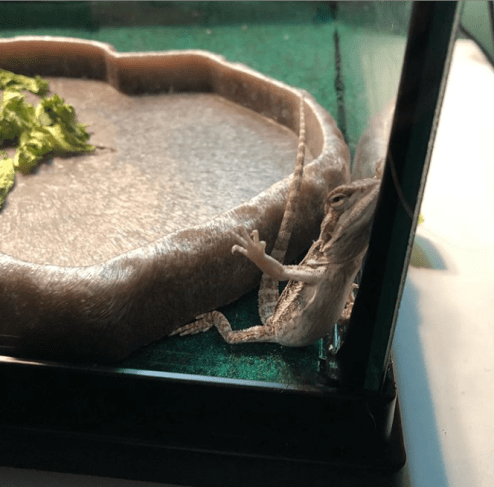
Credit_ @freddieyourbeardie on Insta

Zimmerman’s bearded dragon, Freddie, sunbathing. (Photo by Kier Zimmerman)

During these long, lonely months of quarantine, Kier Zimmerman was thankful to have a new bearded dragon lizard as a friend. “They like to be cuddled, they like to hang out. They’re very social, and they’re very easy,” said Zimmerman, a recent Harvard graduate cooped up at their parents’ home in Minnesota.

Their lizard, Freddie, has a compact build, a sand-colored complexion, and an apparent love of the TV show “American Horror Story.” “He will fall asleep on me or in my hand a lot, which is very cute,” Zimmerman said. “And he nuzzles into the corner of my hand and tries to bury himself in there.”

In a world in turmoil, these pets offer refuge to their owners. That’s apparent watching Zimmerman and Freddie. Zimmerman cradled their bearded dragon and reassured him: “Calm down. It’s OK.”

As Pandemic Threatens Pocketbooks, Black Activists Promote ‘Mutual Aid’

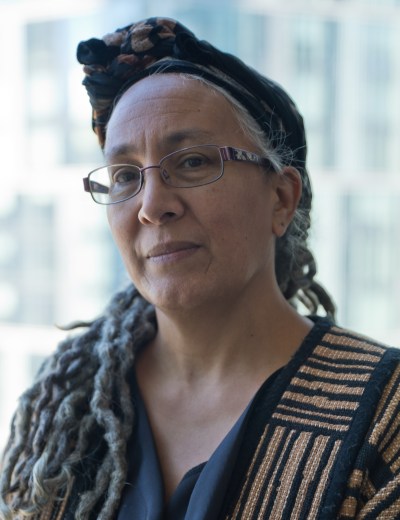
JGordon-Nembhard2018

Jessica Gordon Nembhard

By Daniel Sanchez

Boca Raton, Fla.

A natural opening for this story might have been focused on an individual, a relatable human being who was assisted by a mutual aid fund. But focusing on just one person would defeat the purpose of looking at a cooperative economic initiative.

Jessica Gordon Nembhard, an economics professor at John Jay College specializing in community-based approaches to justice, views mutual aid funds as precursors to cooperative economic systems. The difference? Mutual aid funds have been practiced by “every population in the world … continuously,” she said.

Nembhard describes mutual aid funds as informal collections of money that are distributed to the community based on need. Each member of the group contributes through dues, with people designated to oversee the fund. They are usually specialized for specific circumstances, such as to pay health care bills or to plan funerals. The story of these grassroots programs spans generations, and continues to subvert traditional economic norms to provide opportunities to members of historically disenfranchised groups.

Founded in 1966, the Black Panther Party developed social programs like the Black Panthers’ Free Breakfast for School Children Program, which gave free breakfast to tens of thousands of children in underserved communities. They also had cooperative housing for the homeless in the surrounding communities of local chapters. Nembhard said there are not many historical examples of large organizations like the Black Panthers using “humane economics.”

A major reason why, according to Nembhard, is because productivity threatens the system. “If we show this system works well, why would you want to exist in a capitalist society?” Nembhard asked.

Now, young Black activists are picking up the gauntlet thrown down by their predecessors.

Red curtains framed the lightning bolts hitting New York as Tropical Storm Isaias passed the Northeast coast. Diligently answering questions while glancing at hurricane warnings on their phone, Asanni Armon explained their passion for assisting the LGBTQ+ and Black communities.

A 2017 Princeton graduate, Armon founded the organization For The Gworls, which raises money for Black trans people for rent and gender-affirmation surgeries. Their method for fundraising is throwing rent parties that generate revenue. In this sense, For The Gworls is a textbook mutual aid fund, one that focuses on a specific problem faced by minority residents in New York. Armon receives applications for aid and accepts everyone who fits within the scope of the organization.

However, Armon is adamant about preserving solidarity within the organization, a guiding principle which differentiates it from the non- profit industrial complex. “I don’t want to play into that,” Armon said, referencing non-profit organizations that attempt to ensure the fiscal responsibility of those to whom they provide funding. Instead, they trust the word of those who apply for assistance. Armon’s goal is to grow For The Gworls, but only in a sustainable way that ensures a community, people-centered approach.

With a pandemic and protests for racial equality raging throughout the United States, many people view mutual aid funds as a way to contribute to improving their community. “We got this boost [in fun- draising] in June,” Armon said, when protests and recent killings of Black Americans pressured many to consider their values. Now they hope the donations will continue throughout the year, as racism is an ongoing, systemic issue.

::::::::::::::::::::::::::::::::::::::::::::::::::::::::::::::::::::::::::::::::::::::::::::::::::::::::::::::::::::::::::::::::::::::
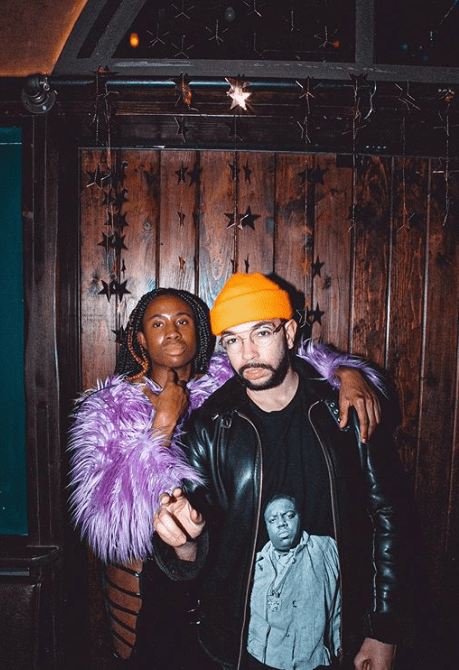
forthegworls

Asanni Armon (L.) founded a mutual aid group that provides financial assistance for rent and gender-affirming surgery.

By Abednego Togas

Silver Spring, MD.

Asanni Armon did not know what to do when their two friends were facing eviction in late June 2019. With roommates of their own, Armon had no room to house additional people, so in an effort to help their struggling friends, they devised a collective way to provide immediate assistance.

Pooling resources, Armon put together a 4th of July party that required a fee of five dollars to enter. The money would then go directly to Armon’s friends, all of whom are Black and transgender. “The rest was history,” Armon said.

Armon’s strategy of hosting New York City ‘rent parties’ to raise funds to put directly into struggling Black trans people’s pockets continued to take place well after their July 4th occasion. Armon’s initial party led to the creation of the For the Gworls fund, an assistance program that fundraises money for rent and gender- affirming surgery.

For the Gworls is an example of mutual aid funding, a method of collectively raising money or pooling resources for the benefit of a community. Mutual aid funds are often relief efforts that take place after a sudden natural disaster, and focus on collecting resources such as water after an earthquake or masks during a pandemic.

Mutual aid has been predominantly used by marginalized groups to address and alleviate ongoing social needs. The Black Panther Party’s Survival Programs, for example, provided services such as free breakfast for children, and funded community health clinics to combat socioeconomic disparities in the Black community.

Jessica Gordon Nembhard, professor at John Jay College, specializes in community economics and says that collective efforts like For the Gworls often come about from mainstream society’s neglect of marginalized groups. “The reason why most people start cooperatives … is because whatever was the norm, the mainstream, wasn’t doing what was needed,” Nembhard said.

A r m o n founded the For the Gworls mutual aid fund after facing discrimination in the workplace because, to their knowledge, there was no sustainable form of assistance for Black trans people. “When I started this last year, there was nobody else in New York doing this work,” Armon said. “People had been crowdfunding for individuals… but it was never a sustained effort.”

Unlike charities, nonprofit organizations, or other forms of assistance, For the Gworls puts money directly into recipients’ pockets with little to no follow-up because their main purpose is to help struggling Black trans people, and not to provide care with strict stipulations. “We should be trying to move away from that and move towards just radically caring about someone,” Armon said.

Mutual aid is also dissimilar from other methods of fundraising due to its collective and collaborative nature, historically forming out of a collective feeling of frustration due to economic discrimination and segregation. “It’s the racism, it’s the economic discrimination … in almost every case African-American people were excluded from something or marginalized by something,” Gordon Nembhard said. “A lot of the housing co-ops started because African-Americans couldn’t get access to housing.”

Instead of operating as a stringent corporation, mutual aid goes against capitalism and involves a community coming together and solving immediate problems to remedy each other’s needs. “Mutual aid to me is, at its core, very anti-capitalist,” Armon said.

The rise of COVID-19 has disrupted the Gworls’ rent parties, but Armon continues to crowdfund on social media, garnering the attention of several mainstream celebrities. COVID-19 and the resurgence of the Black Lives Matter movement in June have also led to a host of other mutual aid funds being created to address community issues.

But for Armon, the sole existence of mutual aid highlights a society’s failure to provide resources to all of its members. Until Black trans people are provided the same protections and support as others, Armon will continue to run For the Gworls to help their community.

“We are here, helping each other in the ways that we need to help each other, showing up for each other the way that we need to show up for each other,” Armon said.

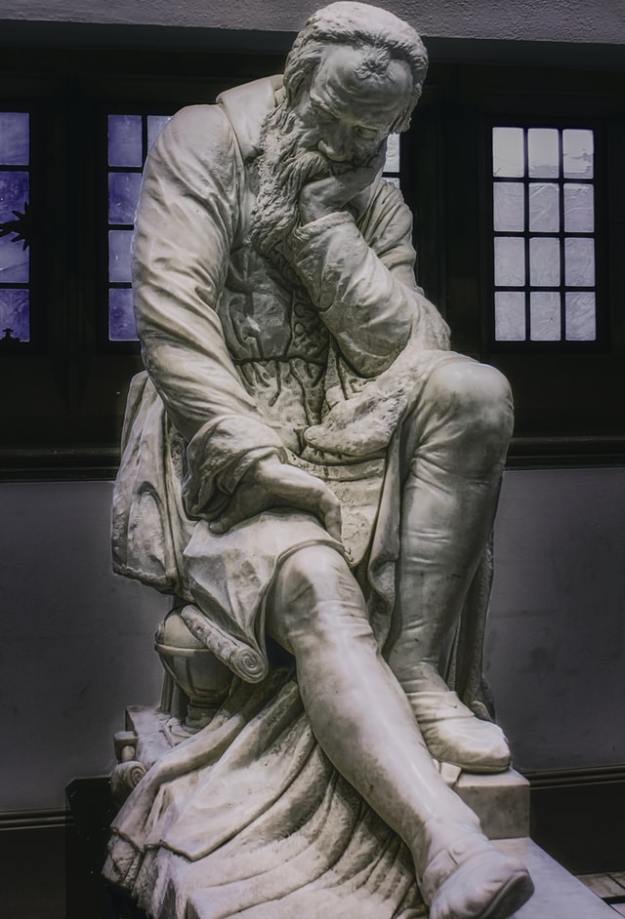
Is philosophy dead?

Credit K. Mitch Hodge on Unsplash
K. Mitch Hodge

By Stephanie Garcia

Bronx, N.Y.

It is human nature to question what is around us. In the ancient world, questioning and seeking answers to life’s mysteries was met with mixed opinions. Nonetheless, the contributions of these philosophers are valuable to our contemporary society. They ultimately paved the way for intellectual curiosity.

The question now is whether the study of philosophy is still relevant in our science-based society. Today, philosophy may not be as highly valued as science, but does that mean it should die off?

“It’s still relevant,” said Daniel Dorsey, a philosophy enthusiast from New York City. “But it’s slowly dying because some people aren’t using their brains to question the world around them — something that is necessary for philosophy.” He believes that philosophy is still relevant in our personal lives rather than in society more generally.

Teniesea Russell from New York City is a college advisor who chooses to live by a wide range of her own personal philosophies. Her beliefs regarding the subject differ from Dorsey’s. She believes that she and many others use philosophy on a daily basis and that it cannot easily die off because of its relevance to our lives.

Russell

Teniesea Russell

Russell elaborated: “Some individuals like referring back to historically popular statements conveyed by philosophers concerning morals or virtues such as ‘patience is bitter, but its fruit is sweet,’ which derives from a philosophical notion. We still talk about philosophers like Aristotle and sometimes apply their ways of thinking in our society or lives.”

While some people, like Dorsey, argue that philosophy is at risk of dying, there are others who say that it is already dead. In an interview from 2011, Stephen Hawking claimed that philosophy is dead because of its inability to catch up with science, which Hawking called “the torch for discovery.” However, he then went on to say that while philosophy may no longer be able to discover anything new, “it is still relevant in people’s day-to-day lives.”

Hawking’s claims about philosophy’s contemporary significance seem to contradict one another, but they do raise a question: Has science replaced philosophy? Both fields push us to question our world, yet science focuses more on actually finding answers.

Dorsey emphasized that in order to progress, it is important to “question why things exist, like a philosopher, and then find answers to anything and everything that can be answered, much like scientists do.” He concluded, “in order to progress, both must coexist.”

Russell believes in the application of philosophy to science, particularly when developing sentient technologies such as artificial intelligence. “I believe we still need both because they provide different aspects of thinking,” she explained. “By having philosophical thoughts, we can continue to use science to get into the microscopic details surrounding these thoughts, which can pave the way for more scientific achievements.”

It is likely that philosophy will always be a part of society due to our natural curiosity. Science relies on philosophy to provide some of the ethics surrounding our new scientific endeavors and it is likely that philosophy will transcend into a new field of study: one vital to the ethics behind scientific progression and societal life. As long as these questions are asked and explored, philosophy may never truly die.

‘Old Guard’ Has Little New To Show

Untitled drawing (1)Maggie Salinas

By Tara Monastesse

Warwick, R.I.

Andromache, or Andy, played by Charlize Theron, is the battle-hardened leader of a group of immortal warriors who serve as de facto protectors of the planet. In “The Old Guard,” Andy finds her crew targeted by greedy scientists who plan to kidnap them, extract their biological data, and replicate their powers of regeneration. Directed by Gina Prince-Bythewood, the film brings impressive choreography and new concepts to the action genre. But it stops just short of transcending it.

Perhaps the biggest flaw with “The Old Guard” is the risks it doesn’t take. While the rogue group of scientists is clearly immoral, the movie never delves into the serious question posed by their attempt to create a drug that extends human life: What do we owe to the rest of humanity? Moral questions like this present themselves throughout the movie, but instead of exploring them further, Prince-Bythewood always swerves back to more traditional fight sequences.

There’s certainly nothing wrong with that—after all, who doesn’t love watching Charlize Theron bring a sword to a machine gun fight? For a movie that’s trying to bring new depth to the genre, however, the lack of commitment to challenging storytelling in favor of gunshots and bloodshed feels tiresome. When a new member of the immortals’ group, Nile Freeman, played by KiKi Layne, questions Andy about the lives she takes without hesitation, the film appears to be on the cusp of an engaging conversation about the nature of life and death. Instead, they part ways and return to their action-flick adventures.

The immortals in the film feel almost hollow, as if their centuries of life had no role in shaping the people they’ve become. While Andy has mastered multiple languages and fighting styles over the course of human history, she ultimately presents herself as any other 21st century woman would. This is understandable, since hiding her immortality is easier if she blends in. But Theron doesn’t quite convey the burden you might feel defending humanity over centuries; often, she just looks tired.

However, I enjoyed the dynamic between the immortals, their camaraderie and constant wise-cracks, as well as the compelling romantic relationship between immortals Joe (Marwan Kenzari) and Nicky (Luca Marinelli). Despite its shortcomings, “The Old Guard” is a fun addition to the world’s pandemic playlist. I just wish it were more than that.

Immortals In ‘Old Guard’ Also Show Their Human Side

MV5BNDJiZDliZDAtMjc5Yy00MzVhLThkY2MtNDYwNTQ2ZTM5MDcxXkEyXkFqcGdeQXVyMDA4NzMyOA@@._V1_Official Release Poster

By Hana Hammad

Debary, Fla.

The Old Guard” follows a strong female lead, Andy (Charlize Theron), an immortal trying to change the world she’s lived in for eternity. Andy stands at the head of a group of immortal warriors—Booker (Matthias Schoenaerts), Joe (Marwan Kenzari), and Nicky (Luca Marinelli)—that she discovered and trained over centuries.

One night, the immortals have a collective dream of a female Marine, Nile (KiKi Layne), a soldier who was killed in Afghanistan but mysteriously comes back to life. Andy seeks out the Marine to join her immortal warrior team—but Nile resists, confused about what is happening to her. Having lost her father a few years prior, she’s hesitant to leave her family.

Andy and her immortal warrior team are betrayed by an ex-CIA agent, Copley (Chiwetel Ejiofor), who traps them in an evil scientific research lab. The lab captures Nicky and Joe to perform tests on them for medical research. Along the way, a betrayal and plenty of action ensue.

The movie was enjoyable because it didn’t take long for the plot to pick up. The love story between Nicky and Joe was beautiful. Seeing that they had been by each other’s sides for hundreds of years softened the movie’s hard edges.

In many action movies, the theatrical fighting and explosives can be too raw, or even boring. But “The Old Guard” was able to tie in elements of love and action to make the characters seem more human, despite their immortality. Similarly, Andy’s backstory with Quynh—an immortal whose fate is revealed through a series of flashbacks—made me love the movie so much more. The strength of them together in battle scenes fighting side by side was magical.

The only downside to this movie was the predictability of some of the plotlines. The big betrayal of the film is similar to many others, such as “Big Hero 6,” “The Matrix,” and “Star Wars Episode III: Revenge of the Sith.” But overall, “The Old Guard” has to be one of my favorite action movies. I typically don’t care to watch action movies but this one kept me engaged the whole time.

A Digital Summer To Remember

Staff Editorial PictureSTAFF EDITORIAL

This year’s Princeton Summer Journalism Program (PSJP) was built on virtual connections. Due to the ongoing coronavirus pandemic, participants couldn’t convene together on campus, and there was no space to build in-person connections. A 10-day program was, with little notice, transformed into a 7-week one, forcing us to adapt in order to make the most of our summer. But program participants are a resilient bunch, and students from a variety of backgrounds united under one common love: journalism.

PSJP empowered students from backgrounds underrepresented in journalism to harness our unique life experiences in order to tell important journalistic stories.

Our cohort faced numerous trials and tribulations during our virtual summer program: poor WiFi connections, different time zones, Zoom mishaps, and the distractions that came with the raging chaos of COVID-19. Sitting at our desks, on our beds, and beside kitchen tables did not align with our initial expectations of PSJP. We overcame Zoom fatigue, sore shoulders and backs, and eyes burning from the bright screens of our phones, computers, and tablets. Sitting at home, without much contact with the outside world, became more difficult as the summer went on. Yet the students and counselors of PSJP prevailed, finding ways to stay connected instead of simply missing out and mourning what could have been.

Through weekly Zoom sessions and a group chat active almost 24 hours a day, we shared our doubts, dreams, and goals throughout the seven-week program. We attended lectures that exposed us to a variety of subjects and workshops that taught us about different types of journalism. And each week we put our new skills to the test, writing news stories, opinion articles, features, and more.

With support from our peers, interns, counselors, and PSJP alumni, we were able to come together as the world around us seemed to be falling apart. Though the pandemic, emerging social movements, and economic upheaval impacted our individual communities in different ways, we formed a community of our own, a haven protected from the unrest. We came together not knowing the people and family we would become. Now, we leave with a network of counselors who have supported us from day one and what are sure to be life-long friendships.

On August 11, our lives will go back to normal—well, our new normal. We will enter our senior year with a newfound perspective on both life and journalism. Despite having to endure a global pandemic and a plethora of other conflicts, we were still able to immerse ourselves in a transformative PSJP experience. We now leave the program having gained invaluable knowledge and bonds strong enough to last a million lifetimes.

Hollywood’s Pervasive Color Problem


The book cover of “The Hate U Give” by Angie Thomas (on the left) featured a dark-skinned Black girl while the movie adaption stars a light-skinned actress (on the right).

By Anne Tchuindje

Washington, D.C.

The critically acclaimed movie “The Hate U Give” began as a book. It’s the story of Starr Carter, a young Black girl who tries to balance two worlds—her low-income Black neighborhood and her wealthy white prep school—while still fighting misogyny and racism. On the cover of the book, the illustrator draws Starr Carter as a Black girl with Afro-textured hair and brown skin. The actress who plays Starr in the movie, Amandla Stenberg, is a lighter-skinned Black girl with braids.

Stenberg’s casting is an example of a lack of diversity in Hollywood that new awareness about race and representation has yet to fix: colorism. The term means “prejudice or discrimination against individuals with a dark skin tone, including prejudice held by members of their own ethnic or racial group.”

People of color have slowly, but surely, made a significant impact on the big screen. Diversity, especially in Hollywood, allows people from different backgrounds to see themselves reflected in popular culture. But when it comes to the representation of darker-skinned Black people, the movies haven’t made much progress. Executives tend to hire lighter-skinned actors to play Black roles, or to consider darker-skinned actors only for roles that fulfill a specific stereotype. Until colorism is addressed within the filmmaking industry, there will never be true diversity.

The illustrator of “The Hate U Give,” Debra Cartwright, has said in interviews that she “wasn’t thrilled” about the choice of Stenberg to play Starr. In a meeting with Fox, executives told her that they’d have to lighten her illustration, and “change the hair.”

Author Angie Thomas also criticized the colorism infecting the film adaptation, which omits the references to colorism in the Black community expressed in her original book. “It’s disheartening, because I do feel like so much money was thrown behind the movie, and so much marketing was thrown behind it,” Thomas said. “You can tell who Hollywood is pushing to be in the limelight, and everybody knows it has a lot to do with appearance, but it also is still being driven a bit by colorism.”

“The Hate U Give” is far from the only example. Among others, actress Zendaya has spoken up about issues of colorism within Hollywood and admitted to having a privilege over her “dark skin brothers and sisters.” She vowed to continue to use her platform to bring attention to issues of colorism within the industry. “Guardians of the Galaxy” actress Zoe Saldana, cast in the role of singer and songwriter Nina Simone despite her lighter skin and looser hair texture, expressed great regret for playing the role.

“I should have never played Nina,” Saldana said. “I should have done everything in my power with the leverage that I had 10 years ago, which was a different leverage, but it was leverage nonetheless.”

Colorism is also apparent in animated movies. In recent Disney films, a variety of princesses from different backgrounds and cultures have been featured— and through each movie we witness the development of each princess as she embarks on an adventure that ultimately changes her life forever. But colorism remains.

In “The Princess and the Frog,” the first Disney film to depict an African American princess, main character Tiana was trapped in the form of an animal for over 80 percent of the movie. Disney’s decision to make this princess a frog throughout the movie is not only racist, but colorist, in the sense that this plot is only used in a movie containing a dark-skinned princess.

Issues of colorism within Hollywood do not only affect who is cast to play roles, but also how they tell the story of those they play. When Hollywood does cast dark-skinned actors, they are given less screen time or made to play demeaning characters; for instance, dark skin characters make frequent appearances as maids and servants. It’s important to cast actors and actresses of darker skin in order to show more diversity, be more inclusive, and break down these stereotypes.

We need stories that spotlight more people within the Black community. Actors and actresses with a platform and leverage should give other actors and actresses of darker skin tones more opportunities and voices within casting decisions. Representation within film builds character and identity for Black people.

How Can We Mitigate Bias In AI?

By Mahbuba Sumiya

Detroit, Mich.

Facial recognition software—used by millions—doesn’t properly identify people of color. This technology was meant to provide accurate results, but alarmingly, “nearly 40 percent of the false matches by Amazon’s tool … involved people of color,” according to Queenie Wong, a staff reporter for CNET News. Amazon’s face-ID system recognized Oprah as male, wrongly matched 28 members of Congress to a mugshot database, and detected a Brown University student as a Sri Lanka bombing suspect.

Algorithms are learning to adapt to society’s stance on racial biases. They’re programmed and trained by showing millions of human pictures; however, if the algorithms are trained with only white faces, they won’t be able to recognize any other types of faces. Artificial intelligence (AI) can only be smart if they are trained with fair data. If an AI is trained with millions of faces that are people of color, then it would not have a hard time recognizing those faces accurately.

Joy Buolamwini, founder of the Algorithmic Justice League, researches the social implication of artificial intelligence, and recognized the biases that companies like Microsoft, IBM, and Amazon have in place for AI services. While at MIT as an undergraduate, Buolamwini tried out an algorithm called Coded Gaze as part of an assignment. She learned that the system recognized her light-skinned friend’s face better than her own. When Buolamwini put on a white face mask, it was able to detect her face.

Racism exists in computer algorithms because of individual values. If people did not care about how the person next to them looked, racism would not still be America’s biggest problem. People being wrongly arrested because of false detection is not ethical. If people are fighting for justice, they must fight for justice in everything. Racial justice must equal algorithm justice.

Plus, even if algorithms are trained with antiracist databases, accuracy continues to be an issue. The National Institute of Standards and Technology (NIST) stated in May 2020 that Asians and African Americans had false positive rates even when they programmed computers with 8.49 million faces. Will AI ever be fair to people of color?

Growing up in a generation where algorithms are becoming more and more prevalent, it’s hard to recognize machine bias—a problem that will continue to amplify inequality in future generations, if left unchecked. We must train AI to be fair and neutral. But with the current state of the field, this may prove difficult. Computer science tends to attract more men than women—only about 25 percent of computer scientists in the United States are women. Minority racial groups are also not represented equally in tech industries. Having more diverse points of views in this field can prevent us from training computers with biased data. In society, a woman might be associated with teaching, childcare, or nursing, but we should not use these existing societal assumptions when building an algorithm.

Luckily, some businesses are taking small steps to measure and minimize bias, including IBM’s Fairness 360 (an open source allowing developers to examine, report, and mitigate bias within the machine learning model), according to Macy Bayern, as associate staff writer for TechRepublic.

After all, the only way we can eventually move forward with AI fairly is by allowing diverse people to be engaged with tech industries.

Bill de Blasio Has Failed Enough New Yorkers

By Aima Ali

Brooklyn, N.Y.

In late March, New York City Mayor Bill de Blasio and chancellor of education Richard Carranza announced that schools would close. Now, with 232,000 reported cases and more than 23,000 deaths in the city, the mayor is planning on reopening schools in the fall. Reopening schools with the proposed hybrid learning model will only result in more unnecessary death.

Though cases are decreasing in the city, allowing some businesses to reopen, people still die from the virus every day. Before schools closed, more than 60 Department of Education employees—including 25 teachers—contracted COVID-19 and eventually died. Opening schools will inevitably lead to more cases and will raise the risk of students being exposed to the virus. School students and staff often have to commute using trains or buses. Though the Metropolitan Transportation Authority, the city’s transit agency, has been cleaning trains nightly, those who use public transportation during rush hour know how crowded trains can be. Some MTA employees have even refused to come to work after their colleagues contracted and died from the virus. As a result, already unpredictable buses run on even more unreliable schedules and remain packed at all hours of the day.

The Department of Education released guidelines limiting the number of students per classroom, but keeping up with these requirements will be more difficult for schools with larger classroom sizes. Those are often schools serving low-income students. Low-income, Black, and Latino individuals are already more likely to both contract COVID-19 and die from the disease. Larger classroom sizes and fewer teachers will only increase these inequalities.

Those pushing for reopening claim that it will not affect death rates, as students are less likely to die from the virus. However, older students are still susceptible to becoming extremely sick and may suffer from other symptoms, such as loss of taste and smell. Students can be symptom-free carriers, infecting high-risk family members without even knowing. Older teachers will also go to work fearing for their safety each day. Teachers’ unions are predicting that teachers who can retire will, causing an even greater shortage of teachers and making it more difficult for class sizes to remain small.

Poor planning caused New York City to hesitate before closing schools when a COVID-19 case was first detected in Manhattan. Still, with months to plan, the best the mayor and his fellow politicians have been able to come up with is a plan that will ultimately result in the deaths of more New Yorkers. We cannot bring back those 63 DOE employees that were exposed early on, but we can make sure that no other teacher, school staff member, or student dies a preventable death.